McLaren won the final Dutch Grand Prix, but Mercedes may have produced the better strategic race.
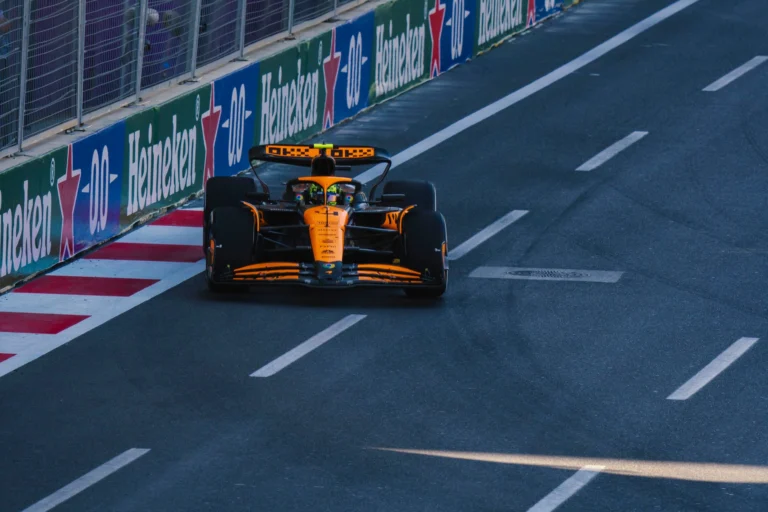
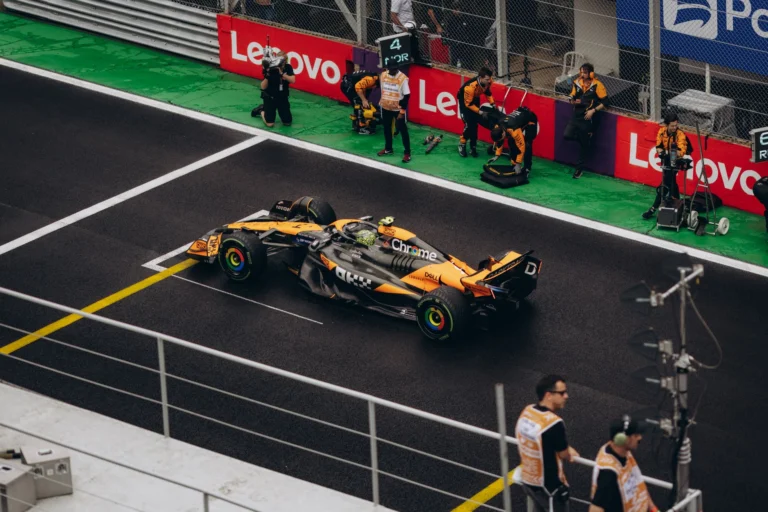
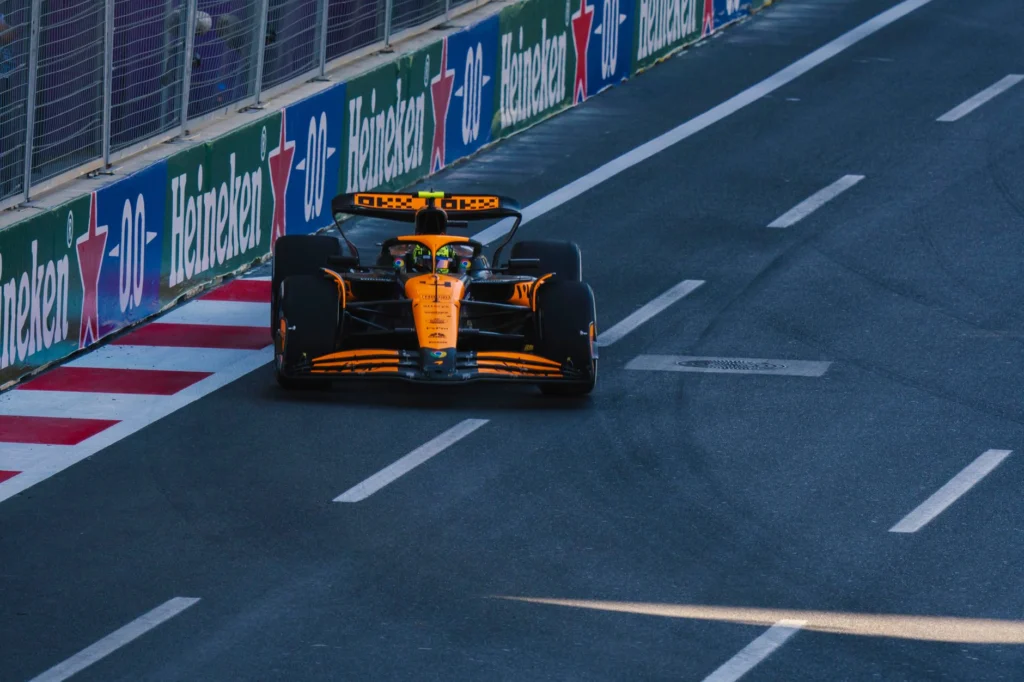
Lando Norris took victory at Zandvoort on August 23, beating Kimi Antonelli by 11.536 seconds and George Russell by 15.906 seconds. The result was McLaren's second consecutive win and Norris's second victory of the 2026 season. (formula1.com)
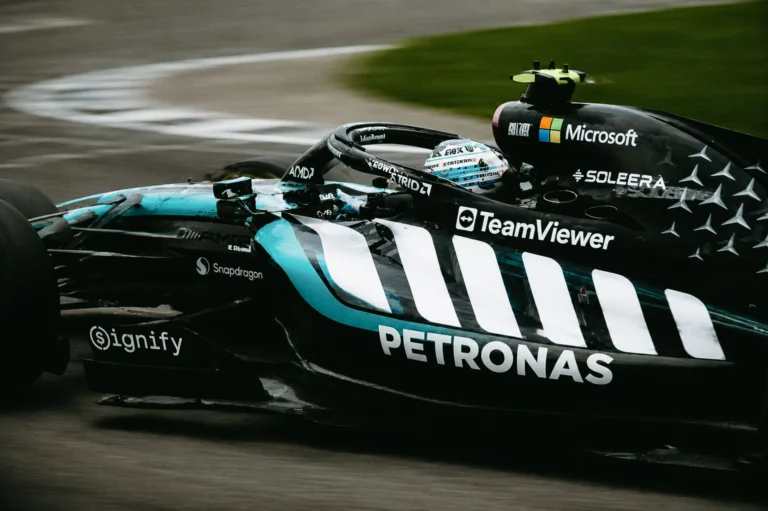
Yet the race's most interesting strategic decision came much later. When a Virtual Safety Car appeared with 14 laps remaining, Antonelli stopped for fresh soft tyres while Norris and Russell stayed out. Antonelli emerged behind Russell, and Mercedes then instructed Russell to let his team-mate through on Lap 65.
That decision turned what could have been a lost podium into a Mercedes 2-3. Russell then had to defend against two Ferraris on older tyres and held them off by less than a second. (formula1.com)
So which team had the best race strategy?
The answer depends on what "best" means. McLaren executed the strategy that won the race. Mercedes executed the better two-car strategy. On the evidence of Zandvoort, Mercedes gets the narrower strategic victory.
McLaren's winning strategy was built around Norris, not both cars
The race began with an unusual strategic reset.
Rain had fallen before the start, leaving parts of Zandvoort damp. Most of the field chose soft tyres, apparently targeting a one-stop race, while Norris, Antonelli, Russell and several others started on mediums. After Max Verstappen's Lap 1 crash caused the red flag, Norris changed to softs for the restart, while the Mercedes drivers stayed on mediums and Oscar Piastri switched to hards. (formula1.com)
Antonelli immediately took the lead at the restart. Norris remained close, but his soft tyres were already becoming a concern. By Lap 16, he told McLaren that he had essentially run out of pace.
The first round of stops then reshaped the race. Russell stopped on Lap 16 for hards, Piastri followed one lap later, and Antonelli and Norris both stopped on Lap 22 for hards. Hamilton stayed out until Lap 26. (formula1.com)
The crucial difference came later.
Norris made his second stop on Lap 48 and returned behind Antonelli, but his fresher tyres allowed him to close rapidly. By Lap 52, Antonelli was reporting rear-tyre problems. Norris passed him for the lead and then moved past Hamilton, who had stayed out longer. (formula1.com)
That was excellent race management. McLaren did not simply pit Norris whenever the tyres became uncomfortable. The team created a second opportunity to attack Mercedes, and Norris had the pace to exploit it.
But calling McLaren's entire race strategy perfect would be too generous.
Piastri suffered a slow first stop and later another slow stop, while his race pace deteriorated enough for both Ferraris to pass him. He finished sixth. The result therefore tells a story about an excellent Norris strategy rather than a flawless McLaren operation. (formula1.com)
Mercedes made the most consequential call when the race was nearly over
The most difficult strategic decision came during the late Virtual Safety Car.
Esteban Ocon's stopped Haas triggered the VSC, creating a cheaper-than-normal opportunity to pit for fresh tyres. Antonelli took it. He switched to softs and returned to the circuit in third, behind Russell and Norris, who had stayed out. (formula1.com)
On paper, this was risky.
Antonelli had been running second. After the stop, he was third. Russell was ahead of him, and Norris had a substantial lead.
But Mercedes had changed the strategic objective. Antonelli now had much fresher tyres, while Russell had track position. The team could use its two cars differently: Antonelli could attack, while Russell could act as a buffer against Ferrari.
Mercedes eventually decided that the two cars should switch positions.
On Lap 65, Russell was instructed to give second place to Antonelli. Russell was unhappy with the call and warned that Mercedes might have sacrificed a double podium. He then had to defend against Hamilton and Charles Leclerc. (formula1.com)
He succeeded.
That is what makes the decision look better in hindsight. Russell ultimately finished less than a second ahead of Hamilton, while Leclerc finished fifth. (formula1.com)
Mercedes did not win the race, but it maximised the points available once victory had slipped away.
Toto Wolff's explanation reveals what Mercedes was actually protecting
Mercedes team principal Toto Wolff described the swap as the logical consequence of the strategy.
The key consideration was not simply giving Antonelli second place because he was the championship leader. Mercedes did not want its drivers fighting each other while Ferrari closed in. Antonelli had fresher tyres after the VSC stop, and Russell was already carrying the risk of being attacked by the Ferraris. (formula1.com)
That distinction matters.
A team can make a strategically correct decision even when the driver immediately affected by it dislikes the call. Russell's complaint was understandable because he had to surrender track position and then defend with older tyres. But Mercedes had correctly identified that Antonelli's fresh softs were the stronger strategic asset.
Russell's job became defending the remaining podium place.
He did exactly that.
Ferrari shows what happens when the strategy gets caught between two objectives
Ferrari's race provides the clearest contrast.
Lewis Hamilton finished fourth and Charles Leclerc fifth. Both cars were competitive enough to threaten the Mercedes podium, but Ferrari lost time managing its own two-car strategy.
Hamilton was on fresher tyres when he caught Leclerc, and he asked Ferrari to let him through. Instead, Leclerc remained ahead until his eventual stop. Hamilton was visibly frustrated, later comparing Ferrari's hesitation unfavourably with Mercedes' immediate decision to let Antonelli past Russell. (skysports.com)
The problem was not simply that Ferrari chose the wrong tyre.
It was that the team allowed two different strategic objectives to overlap. Hamilton was pursuing the podium while Leclerc was on a different plan, and the delay cost Hamilton valuable time.
That matters at Zandvoort because the margins at the front were small. Russell ultimately finished less than a second ahead of Hamilton. Ferrari did not need a dramatically different car to take third; it needed to avoid giving away seconds in traffic.
Mercedes did not have the fastest strategy in every phase
There is also a reason not to overstate Mercedes' performance.
Wolff himself said Mercedes believed it had the pace to win but lost that advantage when the cars went onto the hard tyre. The team did not fully understand why the hard compound produced the problem. (formula1.com)
That weakness allowed Norris to recover from losing the lead after the restart.
The race therefore was not a case of Mercedes strategically outthinking McLaren from start to finish. McLaren's second stint on the hard tyre was strong enough to bring Norris back into contention, and the second stop gave him the tyre advantage needed to take the lead.
Mercedes' strategic strength appeared later, when the priority changed from winning the race to securing the maximum possible team result.
That is a different kind of strategy.
The strongest evidence is the result Mercedes salvaged from the VSC
The late VSC is where the comparison becomes clearest.
Norris stayed out and won comfortably. Mercedes split the decision: Antonelli stopped for softs, Russell stayed out, and then the team switched their positions.
Ferrari also pitted into the VSC window, but Mercedes' execution left both Silver Arrows ahead of both Ferraris. Antonelli finished second and Russell third. (formula1.com)
Pirelli's post-race assessment described Zandvoort as particularly unpredictable from a strategic perspective, with all three dry compounds used and teams moving between two- and three-stop possibilities after changing weather conditions altered the expected tyre picture. (formula1.com)
That context makes Mercedes' decision more impressive. The team did not have a clean, predetermined race script. It reacted to the VSC, accepted the risk of dropping Antonelli behind Russell, and then used team orders to restore the intended order once the tyre advantage became clear.
So, who actually had the best race strategy?
If the question is which team created the winning strategy, the answer is McLaren.
Norris recovered from losing the lead, managed the tyre sequence effectively, made his second stop at the right point, and used the resulting pace advantage to take the lead. He then stayed out during the late VSC and had enough pace to make that gamble work. McLaren's strategy was central to the victory. (formula1.com)
If the question is which team maximised its result with two cars, Mercedes has the stronger case.
It identified Antonelli's fresh-tyre advantage, accepted the temporary loss of track position, ordered Russell to move aside, and then relied on Russell to defend against Ferrari. The result was P2 and P3 rather than a potentially compromised one-car podium.
That is why Mercedes gets the strategic edge at Zandvoort.
McLaren found the route to victory. Mercedes found the route to the maximum team haul after victory was no longer available.
And in a 72-lap Formula 1 race, those are not necessarily the same thing.