Lando Norris won the Dutch Grand Prix on August 23, but Kimi Antonelli left Zandvoort with the more valuable result for the championship.
Antonelli finished second, George Russell third, and Norris took 25 points. The Mercedes driver therefore extended his championship lead to 59 points over Russell, while Norris cut his deficit to 83 points. With 11 rounds completed before Zandvoort and 12 races now in the books, Antonelli has 242 points to Russell's 183 and Norris's 159. (formula1.com)
That sounds straightforward until the race itself is examined.
Norris did not simply lead from pole to flag. Max Verstappen's first-lap crash caused a red flag. Antonelli then took the lead at the restart. Different tyre choices produced different strategic problems. A slow McLaren pit stop damaged Oscar Piastri's race. A late Virtual Safety Car gave Antonelli a chance to switch to fresh soft tyres. Mercedes then asked Russell to surrender third place to his championship-leading team-mate.
Zandvoort was a useful demonstration of how quickly the championship arithmetic can move when several small decisions collide.
Norris won because McLaren changed the race with its tyre strategy
Norris started on the medium tyre, while many drivers had initially chosen the soft. The conditions had already complicated the teams' pre-race assumptions: an unexpected rain shower had altered the track surface and temperature profile, and Pirelli reported that tyre degradation turned out to be significantly higher than expected. (formula1.com)
The first red flag changed the race again.
After the restart, Antonelli moved ahead of Norris and built enough of a gap to protect against the undercut. Norris initially struggled to stay with the Mercedes. The hard tyre, however, changed the balance between the two cars.
At the first major round of stops, Antonelli and Norris both switched to hards. Norris found substantially better pace on the compound and began putting pressure on Mercedes. Mercedes eventually had to react, and Norris was able to use the strategic sequence to put himself into position to attack later in the race. (formula1.com)
That distinction matters.
The victory was not created by a single lucky pit stop. McLaren found a tyre combination that gave Norris a better race car than he had during the opening stint, then used that pace to force Mercedes into decisions.
Norris eventually passed Antonelli for the lead at Turn 1. He later described committing to the outside there as the move that won the race. (formula1.com)
The late Virtual Safety Car could have changed the winner
The most consequential strategic moment came after Norris had taken control.
With 16 laps remaining, a Virtual Safety Car was deployed when Esteban Ocon stopped on track. Mercedes brought Antonelli into the pits for fresh soft tyres. The stop was strategically attractive because the VSC reduced the time penalty of entering the pit lane.
The problem was track position.
Antonelli rejoined behind Russell, who had not made the same stop. Norris stayed out and therefore retained the lead. The Mercedes strategy had effectively traded position for tyre advantage. (skysports.com)
For a championship leader, that is a rational calculation. A fresh-tyre Antonelli had a chance to recover positions, while remaining on older rubber would have left him vulnerable to the Ferraris behind.
But the VSC ended before Norris could make his own stop, leaving McLaren with the advantage of track position and Mercedes with the advantage of newer tyres.
Antonelli eventually passed Russell. He did not, however, get close enough to Norris to turn the strategy into a victory.
That is the part of the race that makes Zandvoort relevant to the championship rather than merely interesting as a race result.
A single neutralisation created two competing assets: Norris had track position; Antonelli had tyre performance.
Norris had the more valuable one.
Mercedes then protected the championship lead
Antonelli's second place was not guaranteed when he emerged from the VSC stop.
Russell was ahead.
At Zandvoort, that matters because overtaking is difficult. Mercedes could not simply assume that Antonelli would pass his team-mate without losing time. With the Ferraris also in contention, allowing the two Mercedes cars to fight freely could have created an unnecessary risk.
Mercedes therefore instructed Russell to let Antonelli through.
Russell eventually complied, leaving Antonelli second and himself third. Toto Wolff later defended the decision, arguing that the championship situation made the call straightforward. (skysports.com)
That decision was worth two championship points to Antonelli compared with finishing behind Russell.
Two points does not sound significant against a 59-point lead. Across a 24-race season, however, these are exactly the small margins that accumulate.
The important point is not that Mercedes handed Antonelli a victory. It did not. Norris remained comfortably ahead.
Mercedes instead made sure its two cars were ordered in the most useful way for the championship leader.
Ferrari showed the opposite problem: strategy can create points without creating a clean race
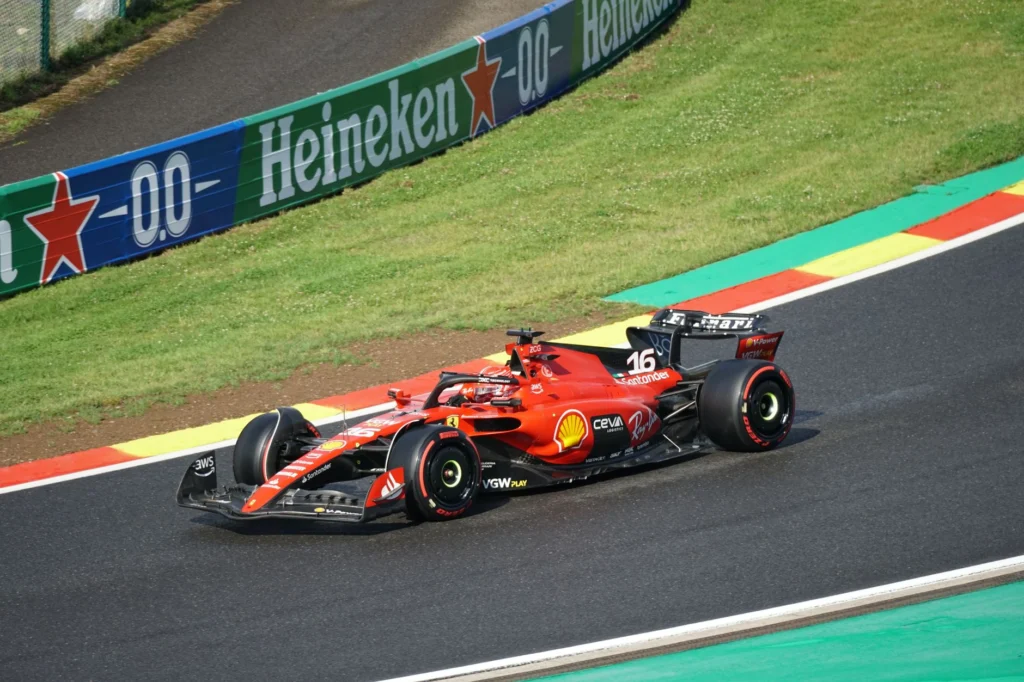
Ferrari finished fourth and fifth with Lewis Hamilton and Charles Leclerc, respectively, but its race illustrated how difficult strategy became at Zandvoort.
Hamilton was kept out longer than several rivals. Ferrari was considering the possibility of taking him to the finish, while Leclerc was eventually called in on Lap 44. Hamilton later complained about the strategy decisions over team radio. Ferrari team principal Fred Vasseur said the team had deliberately avoided revealing the full plan because it did not want to give competitors strategic information. (formula1.com)
The late VSC ultimately allowed Hamilton to make his final stop.
That did not produce a podium, but it demonstrated why the championship cannot be assessed purely by looking at qualifying pace or the apparent strength of a car. A driver can gain or lose positions because of a tyre decision made many laps earlier, then have that decision effectively rewritten by a safety-car period.
Zandvoort was particularly extreme because all three available compounds were used during the race. Pirelli said almost ten different strategies emerged after the red flag, with some leading drivers using two stops and others effectively moving toward three-stop approaches. (formula1.com)
Piastri's sixth place shows how a small operational error becomes championship damage
Oscar Piastri provides an even cleaner example.
Piastri made an early move on Russell and was running strongly, but a slow pit stop dropped him behind Russell. He later made another slow stop and eventually finished sixth, behind both Ferraris. (formula1.com)
That result matters because Piastri entered the Dutch weekend as Norris's McLaren team-mate and a driver still within the broader championship picture.
Instead of challenging for the podium, he collected eight points.
The difference between a podium and sixth can be substantial in a championship. Third place pays 15 points; sixth pays eight. That is seven points lost before considering any knock-on effects from track position, tyre life or the ability to attack another driver.
Those are not theoretical points. They are the kind of margins that eventually determine whether a title contender remains mathematically and competitively alive.
Antonelli's lead is large, but the calendar makes the gap less decisive than it looks
Antonelli now leads on 242 points, 59 ahead of Russell and 83 ahead of Norris. There are still 12 Grands Prix remaining after the Dutch round, beginning with Monza on September 4-6 and ending in Abu Dhabi on December 4-6. (formula1.com)
That leaves a substantial amount of scoring still available.
It also means Norris's back-to-back wins in Hungary and the Netherlands cannot be dismissed simply because he remains 83 points behind. He has taken 50 points from two consecutive victories, while Antonelli scored 18 in Zandvoort after finishing second.
The bigger problem for Norris is consistency, not the existence of a mathematical route to the title.
He needs to keep winning while Antonelli stops converting strong Mercedes weekends into podiums and victories. Russell and Hamilton are also sitting on 183 points each, meaning the championship battle behind Antonelli is crowded enough to create additional opportunities for points to move between rivals.
The standings therefore tell only half the story.
One Grand Prix changes the championship when several small margins arrive together
The Dutch Grand Prix did not produce one dramatic championship swing. It produced several smaller ones.
Norris gained 25 points and won a second consecutive race. Antonelli gained 18 and extended his lead. Russell finished ahead of Hamilton and moved into second in the standings on countback of points. Piastri lost ground through pit-lane execution. Mercedes used a team order to protect Antonelli's position. Ferrari's longer strategic experiments produced fourth and fifth rather than the podium it was chasing. (formula1.com)
That is how an F1 championship usually changes.
A red flag alters the starting conditions. A tyre works better than expected. A driver gets stuck behind a team-mate. A pit stop costs a few seconds. A VSC creates a cheap pit window. A team then chooses championship security over an intra-team battle.
None of those events has to decide a title on its own.
Together, they can decide who arrives at the final races with control of the championship.
At Zandvoort, Norris controlled the race. Antonelli controlled the championship. With 12 rounds still to run, the distinction between those two things is exactly why one Grand Prix can matter so much.
If your company or product is mentioned in this article, you're welcome to share it.