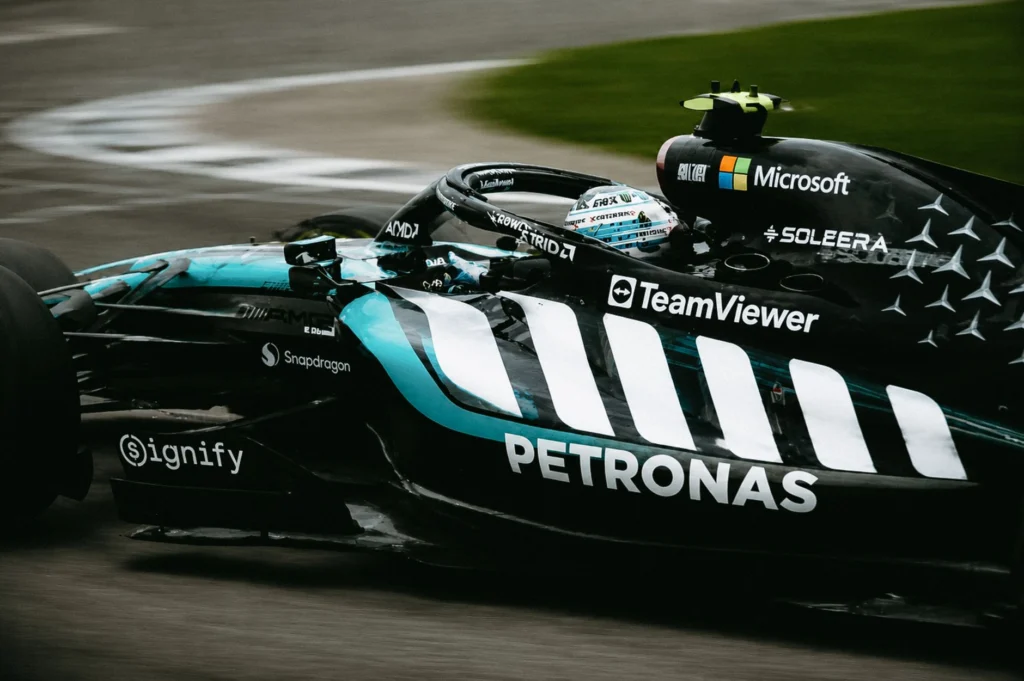
Mercedes still leads both 2026 Formula 1 championships after the Dutch Grand Prix, but the gap to Ferrari no longer looks like the one established in the opening part of the season.
Kimi Antonelli leads the Drivers' Championship with 242 points, while George Russell and Ferrari's Lewis Hamilton are tied on 183. Charles Leclerc is fifth on 155. Mercedes also remains ahead in the Constructors' Championship, but Ferrari has won three of the last six Grands Prix, with Hamilton taking Barcelona and Leclerc winning at Silverstone before Antonelli answered at Spa. (formula1.com)
That makes Ferrari vs Mercedes a more interesting comparison than simply asking which car is faster. Mercedes has generally been the more complete package over the season. Ferrari, however, has become increasingly capable of turning a slightly less consistent car into race-winning results through tyre management, pit timing and driver execution.
The clearest evidence came at Barcelona, Spa and most recently Zandvoort.
Mercedes had the stronger early-season baseline, and Antonelli converted it
The first half of 2026 established Mercedes as the benchmark.
Russell won the season-opening Australian Grand Prix, while Antonelli followed with victories in China and Japan. Antonelli then added wins in Miami, Monaco and Belgium, giving Mercedes a sustained run of front-running results. (formula1.com)
The driver standings tell the same story. Antonelli has 242 points and six wins, while Russell has 183 and one win. The difference is not simply qualifying speed or one-lap performance. Antonelli has repeatedly been able to convert competitive starting positions into race results.
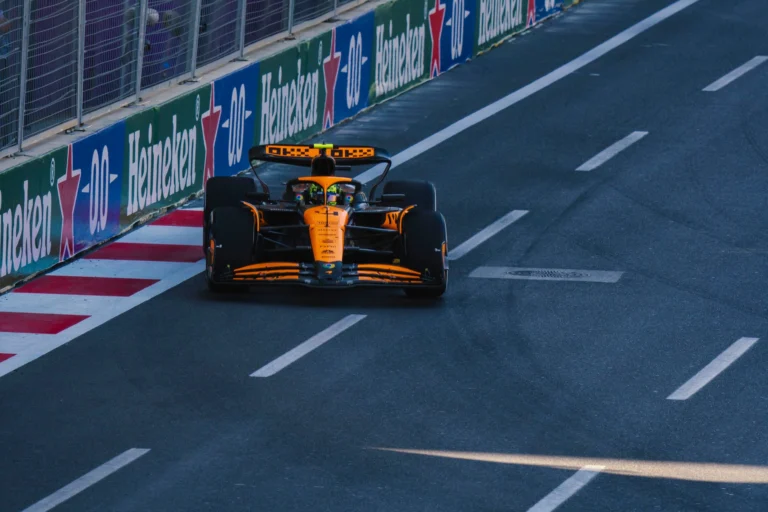
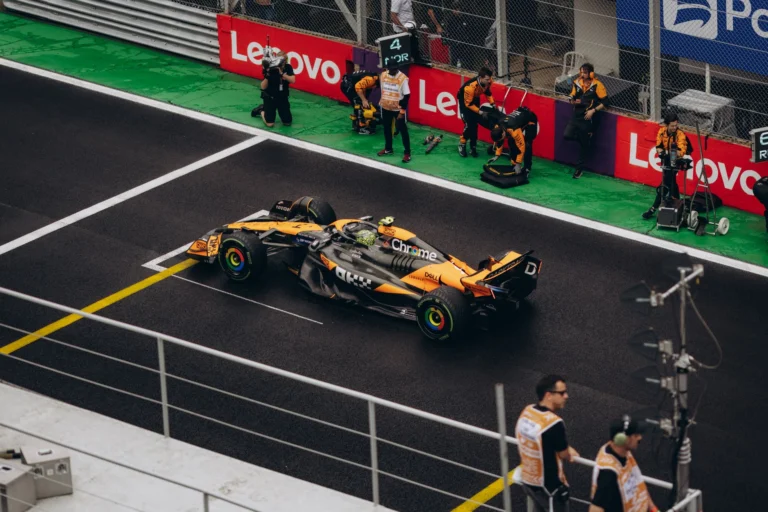
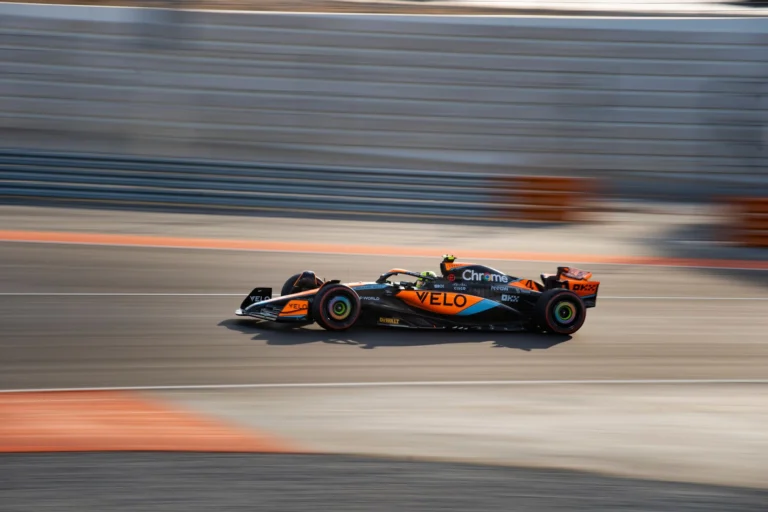
His Belgian Grand Prix victory is a useful example. Russell retired after early contact with Hamilton, while Antonelli eventually passed Leclerc to take the win. At Zandvoort, Antonelli again demonstrated that Mercedes could produce strong race pace even when McLaren had the faster overall package. (formula1.com)
The championship position therefore reflects something real: Mercedes has been the more reliable points-scoring operation across the season.
But that does not mean Ferrari lacks comparable race pace.
Ferrari's biggest improvement has been its ability to make race strategy matter
Barcelona was the clearest demonstration.
Hamilton qualified second, only 0.064 seconds behind Russell, but Ferrari's decision to start him on soft tyres initially looked questionable because Mercedes had chosen mediums. Hamilton did not gain the lead at the start, and Ferrari subsequently committed to a three-stop strategy in conditions where a two-stop race had been expected. (formula1.com)
That decision became decisive.
Hamilton's pace on the fresh tyres allowed Ferrari to keep him in contention, while Mercedes stayed on the more conventional strategy. When a Virtual Safety Car created a cheap opportunity for Hamilton's final stop, Ferrari took it. He emerged with the lead and eventually won by 19.5 seconds. (formula1.com)
The important point is that Ferrari did not simply stumble into a victory because of a neutralisation. Hamilton had already demonstrated enough pace on the medium and hard tyres to remain a threat. The VSC converted that threat into track position.
Mercedes had the quicker-looking strategy on paper. Ferrari found the strategy that worked in the actual race.
That distinction has become increasingly relevant as the season has progressed.
The Dutch Grand Prix showed Ferrari may now have stronger late-race pace
Zandvoort provided a different comparison.
The Mercedes pair started second and third, while Hamilton and Leclerc started fifth and sixth. Antonelli moved into the lead after the restart and controlled the opening part of the race, while Russell spent much of the afternoon defending from the Ferraris. (formula1.com)
By the middle stages, Leclerc was repeatedly attacking Russell. Hamilton eventually passed Piastri and joined the fight.
The strategic sequence then became more revealing. Russell stopped for hard tyres on Lap 41, while Antonelli followed. Ferrari delayed Leclerc's stop until Lap 44, with Hamilton initially remaining on the alternative strategy. Leclerc's pit stop was slow, and Hamilton was frustrated that Ferrari did not immediately reverse the order when he caught his team mate on fresher tyres. (formula1.com)
Hamilton eventually finished fourth, only 0.849 seconds behind Russell. Leclerc finished fifth, less than half a second behind Hamilton.
That result does not prove Ferrari had the faster car in every phase of the race. It does show that, once the race developed into a tyre and traffic problem, both Ferraris had enough pace to put sustained pressure on Mercedes.
Mercedes still took second and third. Ferrari finished fourth and fifth. On the scoreboard, that is a Mercedes advantage. On the final stint, the picture was much closer.
Mercedes has been better at converting pace into championship points
This is where the driver comparison becomes important.
Antonelli is not merely benefiting from a fast Mercedes. His season has combined qualifying performance, race pace and consistency well enough to build a 59-point lead over Russell after Zandvoort. (skysports.com)
Russell, meanwhile, has been a strong second driver in championship terms. His 183 points equal Hamilton's total, but the paths are different. Russell has spent much of the season operating from the front with Mercedes, while Hamilton has had to extract results from a Ferrari package that has developed considerably during the year.
Hamilton's Barcelona victory was the obvious high point. He also finished second in Canada and Monaco and third in China, according to the season results. Ferrari's official results show how much more competitive the team has become after a less convincing start. (formula1.com)
Leclerc has been equally important. His Silverstone victory was achieved by controlling the race from the front, while his second place at Spa came after Ferrari used a VSC pit stop to put him into the lead before Antonelli eventually passed him. (formula1.com)
There is therefore no simple Ferrari driver-versus-Mercedes driver verdict.
Antonelli has produced the strongest championship campaign. Hamilton and Leclerc have increasingly shown that Ferrari can compete with Mercedes when the circumstances suit the car.
Mercedes' advantage is consistency; Ferrari's advantage is becoming adaptability
The difference between the teams is perhaps clearest in how they respond when a race stops following the expected script.
Mercedes has often started with the stronger baseline and controlled races from there. Ferrari has had more occasions where strategy has been central to turning competitive pace into a result.
Belgium demonstrated this particularly well. Pirelli described the race as relatively straightforward from a strategy perspective, but Ferrari was the only leading team to extend its opening medium-tyre stint specifically while waiting for a neutralisation. The VSC arrived, and Ferrari gained the opportunity it had been positioning itself for. (formula1.com)
At Zandvoort, Mercedes had the opposite problem. Antonelli had led comfortably at one stage, but Norris's pace eventually brought McLaren back into the fight. When Antonelli stopped, Norris stayed out and later reclaimed the lead. Mercedes then used team orders to swap Antonelli and Russell late in the race, protecting the championship leader's second place but exposing Russell to Hamilton's Ferrari. (formula1.com)
Russell ultimately held Hamilton behind him.
That was good damage limitation, but it also illustrated the pressure Ferrari is now putting on Mercedes. Earlier in the season, the question was whether Ferrari could keep up. At Zandvoort, Mercedes was making tactical decisions partly because Ferrari was close enough to punish them.
Hamilton versus Russell is closer than the points table suggests
Hamilton and Russell are level on 183 points after the Dutch Grand Prix, but their 2026 seasons have been shaped by very different machinery and circumstances. (formula1.com)
Russell has the advantage in Mercedes machinery and has converted that into a stronger overall qualifying and championship position than most rivals expected at the start of the year. Hamilton has had to learn Ferrari while Ferrari itself has been developing its package.
The most revealing comparison may be Barcelona. Russell started from pole and was controlling the race before Ferrari's alternative strategy transformed the contest. Hamilton then produced the pace required to make the strategy work and won by almost 20 seconds. (formula1.com)
At Zandvoort, the result reversed the order: Russell finished third, Hamilton fourth. Yet Hamilton was close enough at the finish to threaten the Mercedes driver, despite starting three positions further back. (formula1.com)
That makes the rivalry difficult to reduce to a single driver advantage. Russell has had the more naturally competitive car for much of the season. Hamilton has shown the greater ability to turn unusual race circumstances into major results.
Antonelli is the driver Ferrari now has to beat, not just Mercedes
For Ferrari, the immediate problem is no longer simply Mercedes as a constructor.
It is Antonelli.
The 19-year-old has built a 59-point championship advantage over Russell and 59 points over Hamilton as well after Zandvoort, with Ferrari's two drivers sitting fifth and third respectively in the standings. (formula1.com)
Mercedes is also preparing for a difficult Monza weekend because Antonelli is expected to take a grid penalty after a planned power-unit change. The team decided to accept the penalty to avoid further reliability problems, including the mechanical failure that ended Antonelli's Barcelona race while he was fighting for second. (formula1.com)
That matters because Ferrari has now shown enough race pace that a compromised Mercedes starting position could become costly.
The season has already moved beyond the stage where Mercedes can assume that a pole position or front-row start will automatically translate into victory.
Ferrari has closed the race-pace gap, but Mercedes still owns the season
The evidence through Zandvoort points to a fairly precise conclusion.
Mercedes remains the stronger championship operation. Antonelli's 242 points, Russell's 183 and Mercedes' sustained run of victories make that difficult to dispute. Ferrari, however, has narrowed the performance gap enough that strategy and driver execution can now change the outcome between the two teams. (formula1.com)
Ferrari's strongest races have not all looked alike. Barcelona was won through an aggressive three-stop plan and a perfectly timed VSC. Silverstone was a more conventional victory for Leclerc. Spa depended on extending the first stint and exploiting neutralisation. Zandvoort showed Ferrari's late-race pace was strong enough to put both Mercedes drivers under pressure even though Mercedes finished ahead.
That is the real shift.
Mercedes still has the better championship package. Ferrari has become dangerous enough that Mercedes can no longer rely on having the fastest overall car to settle the race.
And with Antonelli leading Hamilton by 59 points, Russell tied with Hamilton, and Ferrari continuing to close the gap, the next phase of 2026 will be decided less by which team can produce the fastest lap and more by which team can make the right decision when the race stops behaving as expected.