F1 2026: Mercedes vs McLaren — Which Team Has the Better Overall Package?
Lando Norris won the Dutch Grand Prix at Zandvoort on August 23, but the more revealing result was what happened behind him. Kimi Antonelli finished second, George Russell third, and McLaren’s Oscar Piastri ended up sixth after a slow pit stop and a loss of grip. Mercedes left the Netherlands with a double podium and an extended lead in both championships. McLaren left with its second straight Grand Prix victory and, more importantly, evidence that its car could beat Mercedes on sustained race pace. (formula1.com)
That makes the question more interesting than simply asking which team is leading.
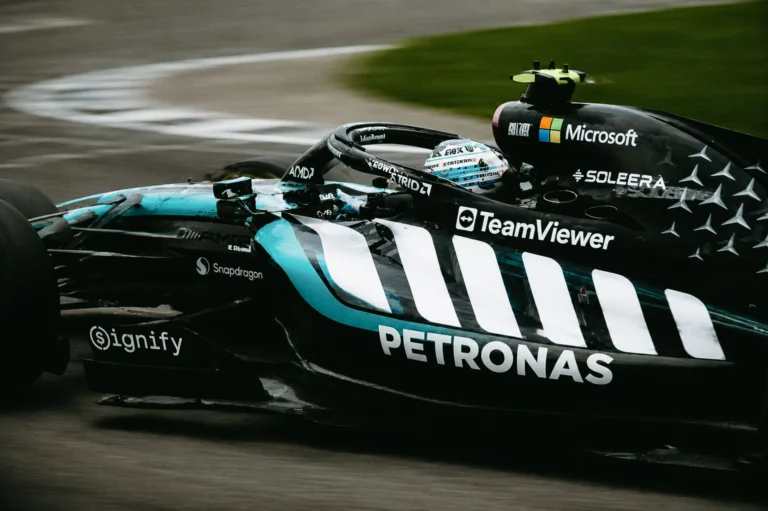
On the evidence available after Zandvoort, Mercedes still has the better overall package across a season. McLaren, however, may have the more convincing race pace at the moment.
Those are not the same thing.
Mercedes has the much stronger championship package
The numbers make the first part difficult to argue with.
After the Dutch Grand Prix, Mercedes leads the constructors' championship with 425 points. Ferrari is second on 338, while McLaren sits third on 263. That gives Mercedes a 162-point advantage over McLaren with the season still running. (formula1.com)
The drivers' standings tell a similar story. Antonelli leads with 242 points, Russell has 183, Norris has 159 and Piastri has 104. Mercedes therefore has both of its drivers ahead of both McLaren drivers. (formula1.com)
That is not simply the result of one dominant weekend.
Mercedes opened 2026 with a one-two in Australia, and Antonelli subsequently won in China, Japan, Miami, Canada, Monaco and Belgium. Russell added victories in Australia and Austria. At the midpoint of the season, Mercedes had scored at least one podium in every Grand Prix to that point. (formula1.com)
There have been reliability problems, and they have been serious enough to cost points. Antonelli retired from second place in Barcelona because of a mechanical issue, while Russell lost a likely victory in Canada when his power unit failed. Mercedes itself has acknowledged reliability as a weakness. (formula1.com)
But that weakness has not erased the fundamental advantage: Mercedes has generally put two cars in the fight for the front.
That matters enormously over a 24-round championship.
McLaren's recent race pace is harder to dismiss
The picture changes when the question becomes: which car looks fastest right now?
Zandvoort provided the clearest recent answer.
Norris started from pole but lost the lead to Antonelli after the restart following Max Verstappen's first-lap crash. Antonelli then controlled the opening phase. Mercedes had track position and appeared to have the race under control. (formula1.com)
Then the tyre picture changed.
After the first stops, Norris found considerably more pace on the hard compound. Antonelli struggled with the Mercedes on the same broad phase of the race, and Norris gradually closed the gap before eventually taking the lead. Mercedes later stopped Antonelli again under the Virtual Safety Car, putting him onto fresher soft tyres, but he did not have enough of a pace advantage to recover the win. (skysports.com)
The most significant detail is that Norris did not need a conventional late-race tactical rescue to win.
McLaren's race pace had become strong enough that Norris could pass Antonelli and then pull away. Despite remaining on older tyres after the late VSC rather than making another stop, Norris finished more than 11 seconds ahead of Antonelli. (formula1.com)
That is a meaningful signal.
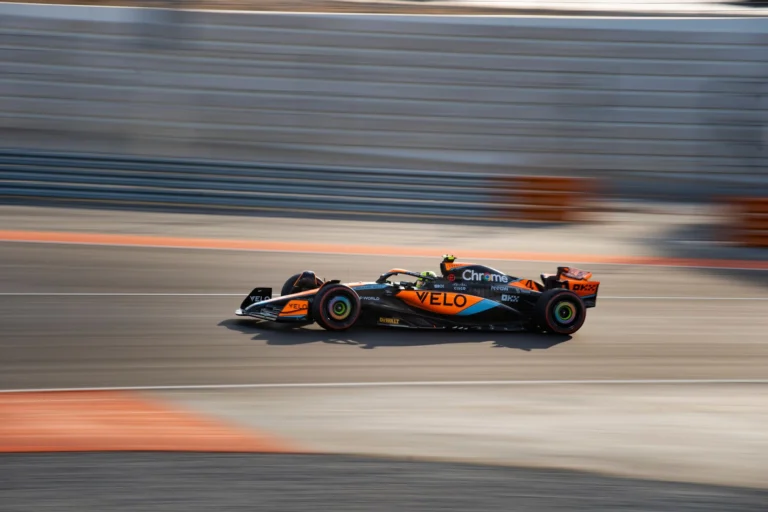
It does not prove that McLaren is now the fastest car at every circuit. Zandvoort has its own aerodynamic and tyre demands, and the race was heavily shaped by the early red flag and subsequent strategy. But it does show that the McLaren MCL40 can produce a stronger long-run performance than the Mercedes W17 under the right conditions.
Zandvoort also exposed a Mercedes weakness: tyre performance over a stint
Antonelli's own race tells the story better than the final classification.
He made an excellent restart, passed Norris for the lead and initially had enough pace to create breathing room. But once the race developed, Mercedes could not maintain the same advantage.
The team said Antonelli had struggled for pace in the second stint and that Norris's McLaren had superior pace. Mercedes eventually chose to pit Antonelli again under the late VSC, hoping the fresh Soft tyres would give him enough performance to attack. They did not. (formula1.com)
That creates an interesting distinction between the two cars.
Mercedes appears capable of producing outstanding peak performance and qualifying speed, but McLaren has shown that it can become particularly dangerous when a race settles into a sustained tyre-management battle.
The Dutch qualifying session reinforced how close the underlying performance had become. Norris took pole with a 1:11.163, beating Russell by 0.102 seconds and Antonelli by 0.133. Piastri was only another 0.009 seconds behind Antonelli. (formula1.com)
Those are tiny margins.
The championship table says Mercedes is comfortably ahead. The stopwatch increasingly says McLaren is close enough to make the remaining races uncomfortable.
McLaren also has the better recent development trajectory
McLaren's 2026 campaign did not begin like a championship defence.
The team suffered a particularly damaging start: Piastri did not take the start in Australia, and both McLarens missed the Chinese Grand Prix. The team then spent much of the early season trying to recover lost ground. (formula1.com)
That makes its recent resurgence more significant.
Norris won in Hungary immediately before the summer break, then followed it with victory at Zandvoort. McLaren also introduced rear-car upgrades at the Dutch Grand Prix as part of a development push. (formula1.com)
The result was not simply a qualifying improvement. Norris converted pole into a win after initially losing the lead and having to chase Mercedes on track.
That is the sort of development trend Mercedes needs to watch.
A championship leader can afford to be slightly slower at one race. It becomes much more dangerous if the rival's upgrades are steadily converting a deficit into a genuine performance advantage.
But McLaren's second car is still a major disadvantage
This is where Mercedes retains perhaps its biggest practical advantage.
Norris is fourth in the drivers' standings with 159 points. Piastri is seventh with 104. The difference between them is 55 points. Mercedes' Antonelli-Russell gap is also substantial, but both Mercedes drivers are much further ahead in absolute terms. (formula1.com)
Zandvoort illustrated the problem perfectly.
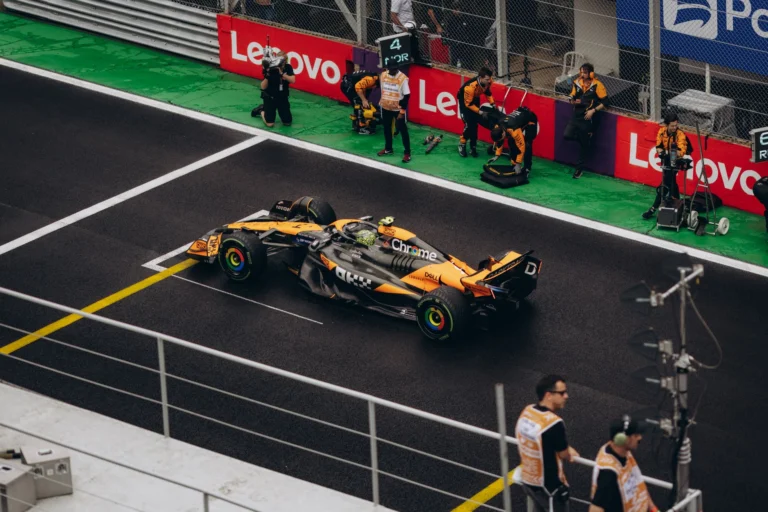
Piastri made an impressive move on Russell and initially ran ahead of him. But a slow pit stop dropped the McLaren behind the Mercedes. From there, Piastri struggled for grip and was eventually passed by both Ferraris, finishing sixth. (formula1.com)
That is not purely a car-performance issue. Execution matters. But a constructors' championship is built from exactly these situations.
Mercedes can have one driver lose pace and still score heavily with the other. McLaren currently has less margin for error because Norris is carrying a much larger share of its points.
Mercedes also has the stronger driver position
Antonelli is not merely leading the championship; he has been consistently outperforming Russell in 2026.
At the mid-season break, Antonelli led their qualifying head-to-head 7-4 and their race head-to-head by the same score. He had six Grand Prix victories compared with Russell's two. (formula1.com)
Norris, meanwhile, has now won two consecutive Grands Prix and is clearly McLaren's primary championship threat. His deficit to Antonelli has fallen to 83 points after Zandvoort. (skysports.com)
That makes the driver battle increasingly interesting, but Mercedes still has the stronger position because Russell is capable of winning races and regularly finishing near the front.
The Dutch weekend demonstrated that too. Russell won the Sprint from pole and then finished third in the Grand Prix. (formula1.com)
Mercedes' Zandvoort strategy was risky, but it protected the bigger objective
The late race decision involving Russell and Antonelli is revealing.
Mercedes pitted Antonelli under the VSC for fresh tyres. He emerged behind Russell, then closed rapidly. The team instructed Russell to allow Antonelli through, preserving the championship leader's second-place finish.
It was not an obvious call in isolation because Russell had been running third and had to defend against Lewis Hamilton's Ferrari behind him. But Mercedes judged that Antonelli's fresher tyres gave him the better chance of holding second, while Russell staying out was effectively his best route to keeping a podium. (skysports.com)
It worked.
Antonelli finished second, Russell third, and Mercedes extended its championship advantage.
McLaren, by contrast, lost Piastri's potential podium partly through its slow stop.
Those are small operational details, but over a championship they accumulate into the kind of points gap visible in the standings.
So which team has the better overall package?
Mercedes.
Not because it is clearly faster at every circuit. The evidence does not support that claim.
Mercedes has the better championship package because it combines front-running pace, two highly competitive drivers, superior points accumulation and a large existing buffer. Its reliability problems are the biggest threat to that advantage, not a lack of raw performance. (formula1.com)
McLaren's case is different.
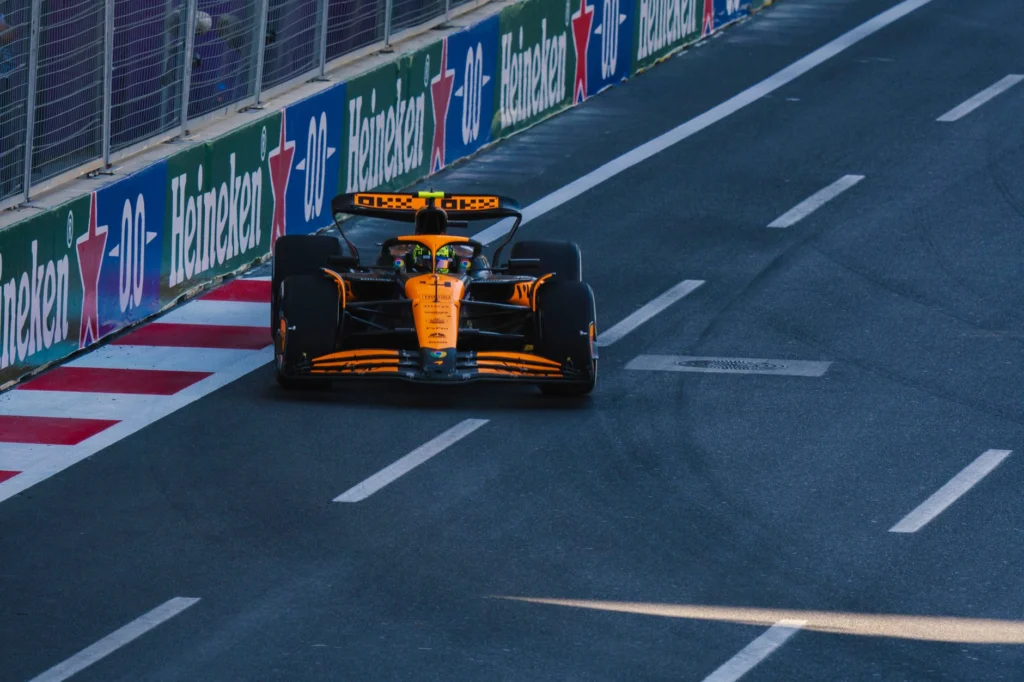
The MCL40 looks increasingly capable of matching or beating the Mercedes over a full race distance when tyre behaviour and track characteristics suit it. Norris's back-to-back victories are not a statistical fluke that can simply be dismissed as opportunistic wins. At Zandvoort, he took the lead back from Antonelli through pace and then controlled the race.
That makes McLaren the more credible immediate challenger than the championship table suggests.
But there is a large difference between being capable of winning the next race and being the strongest team across the season.
For now, Mercedes has the latter.
The more important question heading into Monza is whether McLaren's recent improvement is a Zandvoort-specific peak or the beginning of a sustained convergence. If Norris and Piastri can keep finding the kind of race pace Norris showed in the Netherlands, Mercedes' 162-point constructors' advantage will stop looking quite as comfortable.
And that is the real change after Zandvoort: Mercedes is still the benchmark for the 2026 championship, but McLaren has started making the benchmark look beatable.