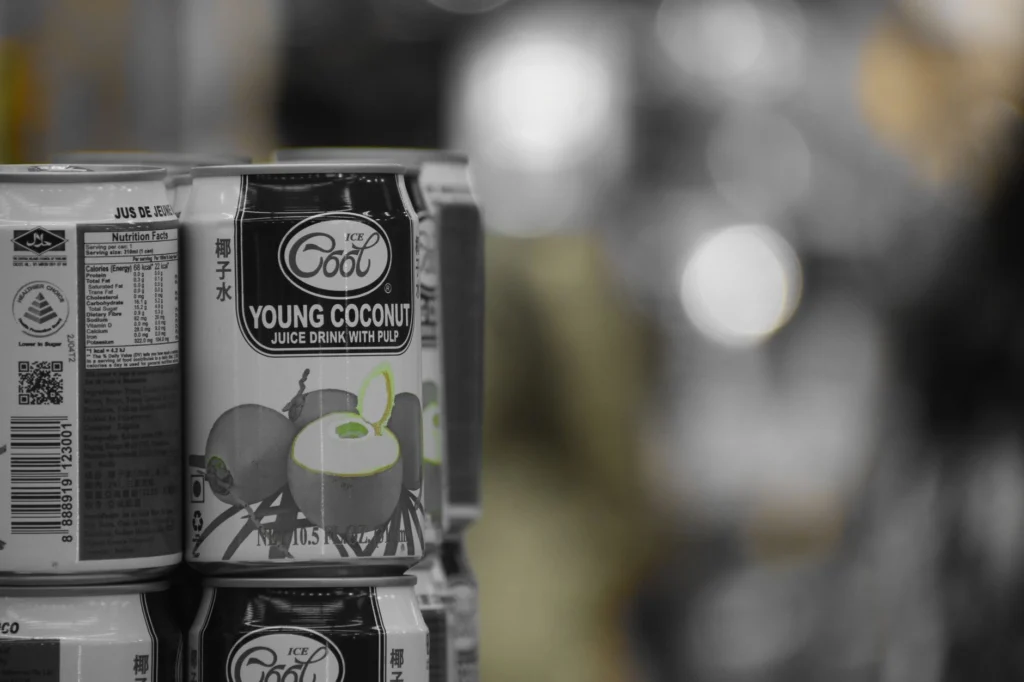
Coconut water gets talked about constantly and understood poorly. Here are the real, sourced facts behind the drink — not the WWII survival story (covered in depth here), but the numbers most people have never actually seen.
1. Indonesia, not the Philippines, produces the most coconuts on earth
Indonesia is the world’s top coconut-producing country, harvesting approximately 17.97 million metric tons in 2023 — well ahead of the Philippines’ roughly 15 million metric tons. India comes in third at just over 13 million metric tons, with Brazil a distant fourth at 2.7 million tons. Together, Indonesia, the Philippines, and India produce around 72% of the world’s total copra.
2. One country’s coconut industry alone supports 6.6 million livelihoods
Coconut production in Indonesia specifically supports the livelihoods of over 6.6 million farmers and contributes more than $1.3 billion in annual export earnings to the country’s economy — a real, direct economic dependency on a single crop across millions of households, not an abstract industry statistic.
3. The global coconut industry is worth tens of billions of dollars
The global coconut industry was valued at $4,512 million in 2023 and is projected to top $31 billion by 2026 — a genuinely explosive growth trajectory for a product that, within living memory, was mostly a regional tropical staple rather than a global commodity.
4. It’s not just electrolytes — coconut water contains real amino acids and antioxidants
Beyond the sugars and minerals most people already associate with it, coconut water’s nutritional composition includes proteins, amino acids, vitamins, and other growth-supporting substances. Ongoing research has specifically examined its cardioprotective, anti-inflammatory, and antioxidant properties, with some studies looking at possible applications around kidney disease, diabetes, and hypertension management — real areas of active research, not settled medical fact yet.
5. Coconut water and coconut oil come from completely different parts of the process
Coconut water is the liquid found inside a young, still-green coconut, while coconut oil is pressed from the mature, dried flesh (copra) of an older coconut — meaning a single coconut generally can’t efficiently supply both products at their peak, which is part of why coconut water production and coconut oil/copra production are tracked as separate global industries with different top exporters and different harvest timing.
6. A “young” coconut isn’t a different species — it’s just early-harvested
The coconuts sold specifically for their water are harvested young, typically 6-7 months into development, before the flesh hardens and the water volume shrinks in favor of solid meat. Wait too long, and you get less water and more of the firm white flesh used for oil, milk, and desiccated coconut instead — the same tree, the same fruit, just a different point in its growth cycle.
7. Not all coconut water on shelves is actually 100% pure
Because fresh coconut water spoils quickly and its flavor varies naturally by harvest, many commercial brands blend in concentrate, added sugar, or flavoring to standardize taste and extend shelf life — a real, disclosed practice on ingredient labels that most casual buyers never actually check. Reading past the front-of-package “100% coconut water” claim to the actual ingredient list is the only reliable way to know whether a given bottle is genuinely unmodified or has been blended for consistency.
8. The coconut palm itself isn’t classified as a tree by botanists
The plant producing all of this water isn’t technically a tree at all — coconut palms are monocots, more closely related botanically to grasses and lilies than to oak or pine, since they lack the woody growth rings that define a true tree. That fact has nothing to do with the water’s nutritional content, but it’s a real, verifiable detail that undercuts the common assumption that a coconut palm is simply a very tall, very tropical tree.
The real takeaway
Coconut water’s reputation runs almost entirely on wellness marketing and a dramatic wartime anecdote, but the actual, sourced facts behind it are just as interesting on their own: a genuinely massive global industry, real livelihoods tied to it at scale, and a nutritional profile that goes well beyond the electrolytes most people already know about.
If your company or product is mentioned in this article, you're welcome to share it.