IFA Berlin opens on September 4, 2026, but the event has already revealed enough about its programme to separate confirmed announcements from the usual pre-show speculation.
The important distinction is that IFA has not yet published a complete catalogue of every product that will debut in Berlin. That means predictions about specific televisions, phones, laptops or appliances would still be guesses unless the manufacturers themselves confirm them. What IFA has confirmed instead is the direction of the show: personal AI, physical AI and robotics, connected homes, smarter appliances, circular technology and a growing emphasis on products that can be experienced rather than simply displayed.
More than 1,900 brands are expected at the five-day event, according to IFA's official site, which places IFA 2026 among the industry's largest annual gatherings. But the announcements already on the calendar suggest that this year's biggest story may be less about one blockbuster gadget than about AI moving into physical products and everyday environments.
AI will be the central theme, but IFA is framing it as something physical
IFA's official 2026 programme is built around five content tracks, with World of AI & Future of Tech taking the most obvious position for major technology announcements.
The programme stretches well beyond chatbots and generative software. IFA has specifically identified robotics, wearables, smart and connected home ecosystems, spatial computing and quantum computing as part of the track. It also plans to address data governance and the broader questions created by increasingly autonomous technology.
One of the clearest confirmed headline moments is AMD's opening keynote. Jack Huynh, AMD's senior vice president and general manager of its Computing & Graphics Group, is scheduled to deliver a presentation titled “The Era of Personal AI: the Future of Imagination” on September 4.
That confirms that personal AI will be part of IFA's opening-day conversation. It does not, however, confirm a particular AMD product launch. Until AMD provides further details, the exact hardware or software announcements associated with the keynote remain unknown.
That distinction matters because IFA is often treated as a launch calendar before the launches actually happen. For 2026, the official material supports a stronger claim about themes than about unreleased model names.
NEURA Robotics will bring Physical AI into the spotlight
The most concrete robotics story announced so far comes from NEURA Robotics.
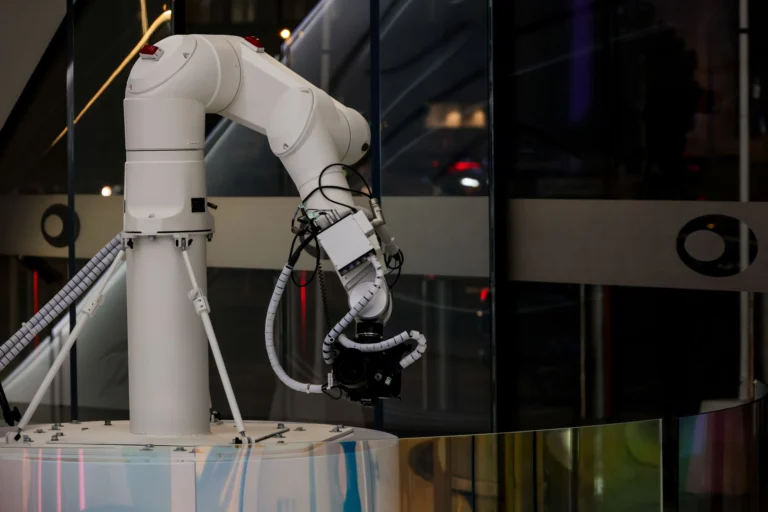
IFA has confirmed that NEURA Robotics will appear at the event with its vision for Physical AI, a term increasingly used to describe artificial intelligence operating through machines that can perceive and act in the real world. The company's founder and CEO, David Reger, is scheduled to give a keynote titled “From Europe, for the World: Building the Ecosystem for Physical AI” on September 5.
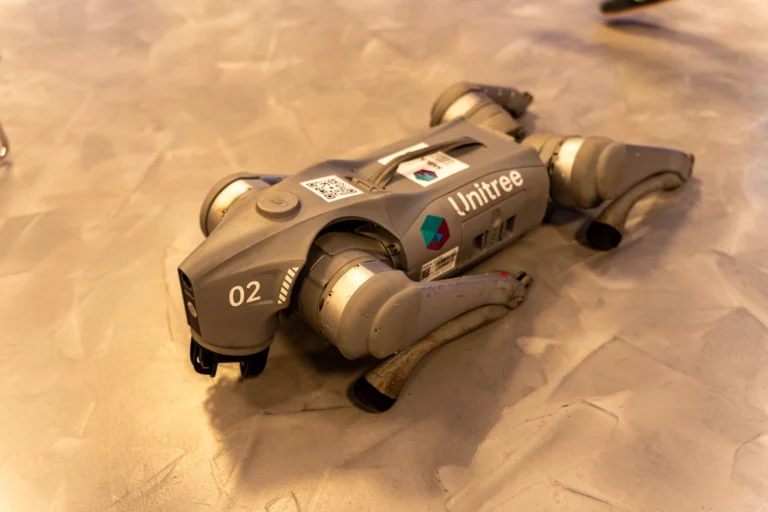
IFA Next, the show's innovation and start-up platform, is also expected to feature more humanoid robots than previous editions. IFA says around 300 exhibitors are expected in the IFA Next area, where robotics will sit alongside smart glasses, AI wearables, PetTech and smart-living technologies.
The officially announced exhibitors in that area include LetPot, Grovero, Ori Future, Aeroband, Plant with Willow, Paw Swing and Tik Paws. XBrew has also been announced as an exhibitor and is expected to present a nitro coffee maker aimed at everyday use.
The bigger point is that IFA is not treating humanoid robots as a side attraction. They are being positioned as part of the event's argument that AI is moving from screens into machines, homes and workplaces.
The smart home story will include energy, security and automation
IFA's Smart Home area already provides a relatively clear picture of what categories will be on display.
The show has officially identified smart cameras, smart energy systems, thermostats, smart lighting and touchless control as major areas for 2026. The stated focus is making homes more efficient, secure and personalised.
The exhibitor list also confirms participation from companies including Nuki, IMILAB and several other smart-home technology manufacturers.
This is likely to make interoperability and connected ecosystems as important as individual devices. IFA's own programme repeatedly connects AI with smart homes rather than treating them as separate industries.
One scheduled IFA Next discussion is titled “The Sensory Intelligent Home: Designing Future Living Experiences,” featuring Shane Lee from TCL Industries and Lisa Yong from WGSN. Another session will examine AI in the kitchen, with participants from Fresco, BSH Home Appliances Group and Miele.
Those sessions do not confirm specific product launches. They do confirm where the conversation is heading: homes that use connected sensors, appliances and AI systems together rather than relying on isolated smart gadgets.
Major appliance brands have already confirmed their presence
IFA's home-appliance area is one of the most heavily populated sections already visible through official announcements.
IFA has named Miele, Bosch, Siemens, Electrolux, Liebherr, Haier, Midea, Jura, Kärcher, Dreame and MOVA among the brands presenting technologies and ideas in the Home Appliances area. The official exhibitor directory also lists companies including BSH, AEG and De'Longhi.
The technologies IFA has specifically previewed include smart kitchens, connected appliances, AI-powered home-care solutions, energy-efficient products and outdoor and garden technology.
The show is also expanding into Outdoor Cooking & Gardening, reflecting how connected-home technology is increasingly extending beyond the kitchen and living room.
Again, the official preview stops short of identifying every product that will appear. That means it would be premature to claim that a particular robot vacuum, washing machine or refrigerator is scheduled for launch unless its manufacturer confirms it separately.
What is confirmed is the direction: AI-assisted cooking and cleaning, connected household devices and energy efficiency are central to the 2026 appliance programme.
Sustainability will be discussed as product design, not just marketing
IFA's Smart & Sustainable Living programme is focused on questions that increasingly affect how consumer technology is made: repairability, circularity, eco-design, raw materials and supply chains.
The official programme explicitly asks whether devices can be repaired, whether materials can be recovered and how electronics businesses can become more circular.
One scheduled panel, “Turning e-waste into value: How new opportunities arise after a sale,” will include representatives from Miele, GFU Home & Consumer Electronics, EURONICS Deutschland, Repartly and the Cradle to Cradle NGO.
Another confirmed session, “Reimagine Electronics. Circular by Design,” will focus on designing electronics with circularity in mind.
This may be one of the more consequential parts of IFA 2026 because sustainability claims are becoming increasingly tied to practical questions about how long products last and what happens when they stop working.
IFA is framing sustainability less as a separate environmental category and more as a business and engineering problem that begins at the design stage.
Connectivity will remain the infrastructure underneath everything else
IFA's Communication & Connectivity area will bring together brands including Belkin, Proove, Ugreen, Blackview, Baseus, Holdit and Ideal of Sweden.
The official preview identifies smartphones, mobile devices, accessories and connectivity as key categories, with 5G, AI and the Internet of Things forming part of the broader theme.
A dedicated area called iZONE will focus on smartphone accessories and smaller mobile technologies, including charging products, cases, apps and wearables.
IFA's exhibitor directory also lists companies such as SanDisk, Hama and beyerdynamic in its Communication & Connectivity area.
These announcements suggest that IFA 2026 will not abandon traditional consumer electronics in favour of AI. Instead, AI is being layered onto the categories that already make up the connected technology market.
What has not been confirmed yet is just as important
The safest answer to what will be announced at IFA Berlin 2026 is not a speculative list of unreleased products.
IFA has confirmed the event dates, major themes, hundreds of exhibitors and a growing number of stage presentations. It has also officially previewed humanoid robotics, personal AI, physical AI, connected homes, AI-powered appliances, smart energy, circular technology and connectivity.
But the full programme is not yet complete, and individual manufacturers have not publicly revealed every product they will bring to Berlin.
That leaves room for surprises, which is precisely what a technology trade show should still have a few days before its doors open.
For now, the clearest prediction supported by the evidence is this: when IFA Berlin begins on September 4, 2026, the biggest announcements will likely be connected by one idea. AI is no longer being presented as a destination on a screen. At IFA, it is being pushed into robots, appliances, homes, energy systems and the physical products people use every day.