Meningitis became a widely searched term this week following actor Samuel Monroe Jr.’s death from the condition — here’s what it actually is, medically, separated clearly from the specific case that brought it into the news.
What meningitis actually is
Meningitis is inflammation of the meninges — the protective membranes surrounding the brain and spinal cord — and it can be caused by several genuinely different pathogens: bacteria, viruses, fungi, or parasites. The specific cause matters enormously for how dangerous a given case actually is, which is why “meningitis” as a single word covers a real range of severity rather than one uniform illness.
The real difference between viral and bacterial meningitis
Viral meningitis is the more common form — a group of viruses called enteroviruses cause the majority of cases, with roughly 75,000 enterovirus-related meningitis cases occurring in the US each year. It’s also, genuinely, the less dangerous version: people with viral meningitis are typically less severely ill than those with bacterial meningitis, and most recover on their own with rest and fluids, though certain specific viral causes like herpes simplex virus have their own targeted treatments. Bacterial meningitis is less common specifically because vaccines have reduced the risk of infection from several of its most common causes — Streptococcus pneumoniae, Haemophilus influenzae type b, and Neisseria meningitidis. It’s also the genuinely dangerous version: bacterial meningitis requires immediate antibiotic treatment, and starting treatment right away is critical to prevent severe complications or death.
The real symptoms to actually know
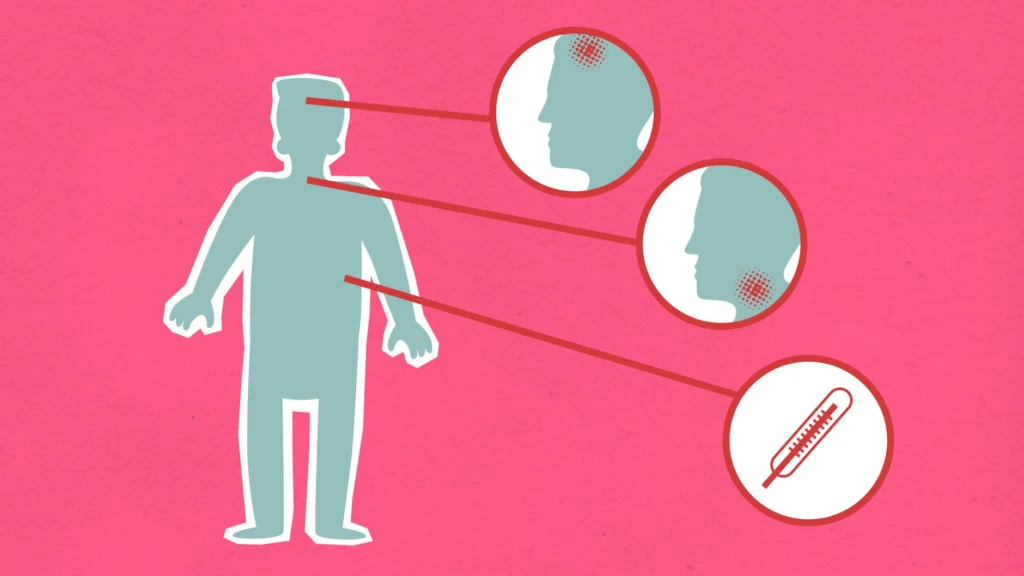
Both bacterial and viral meningitis share a real, recognizable symptom cluster: sudden fever, headache, sensitivity to light, and a stiff neck that develops without any other clear cause. Vomiting and mental confusion are also real, documented symptoms, and changes in behavior — new confusion, unusual sleepiness, or genuine difficulty waking up — are specifically flagged as important warning signs, since they can indicate the infection is affecting brain function directly rather than just causing general illness.
Why the timeline actually matters this much
The real, critical distinction between viral and bacterial meningitis is time-sensitivity: because bacterial meningitis can progress to severe complications or death without prompt treatment, medical guidance is consistent and direct — anyone with meningitis symptoms should see a healthcare provider immediately rather than waiting to see if symptoms improve on their own. A healthcare provider can actually determine which type of meningitis is present and start the correct treatment, and that diagnostic step is exactly why self-diagnosing based on symptoms alone is genuinely risky — viral and bacterial meningitis can look similar in the early stages, even though one requires emergency antibiotic treatment and the other typically resolves with rest.
Why a case like this puts a spotlight on a condition most people know little about
Meningitis moving from a mostly-childhood-vaccine-schedule term into a real, widely searched topic reflects a common, honest pattern: a specific, high-profile case is often what prompts people to actually learn about a medical condition they’d otherwise never research. That’s a genuinely useful outcome even when it starts with tragic news — real awareness of meningitis’s actual symptoms and the importance of seeking immediate care can meaningfully affect outcomes for someone experiencing those same warning signs in the future.
If your company or product is mentioned in this article, you're welcome to share it.