Most art forms measure ambition in scale, the biggest canvas, the tallest sculpture, the most sweeping mural. Miniature art measures ambition in the opposite direction, and the results are stranger and more technically demanding than most people assume. Some working miniaturists carve, paint, or sculpt at a scale where a single human hair becomes a meaningful unit of measurement, and the entire discipline runs on a level of physical precision that has more in common with microsurgery or watchmaking than with painting as most people picture it.
What actually counts as miniature art
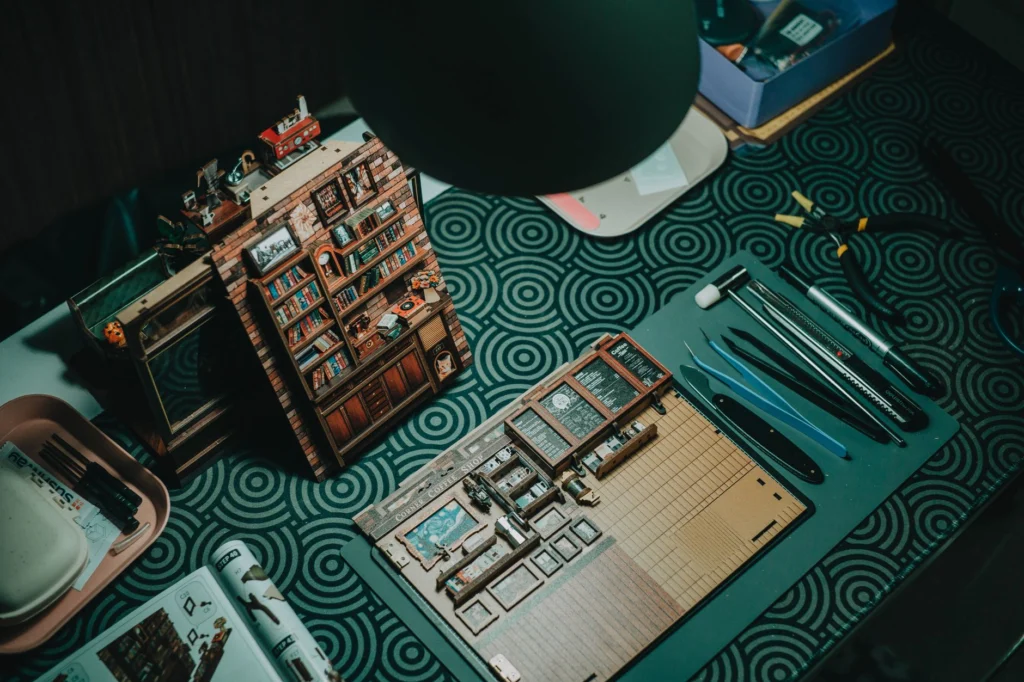
The term covers a wide range of disciplines rather than one single technique. Micro sculpture involves carving or shaping figures small enough to fit on a pinhead, a grain of rice, or the eye of a needle. Miniature painting includes both historical illuminated manuscript traditions and modern work done under magnification at scales where a standard paintbrush is far too large, requiring brushes made from a single hair. Dollhouse and diorama miniaturists build fully functional scaled-down rooms, furniture, and scenes, often at exact ratios like 1:12, where every proportion has to be mathematically correct relative to the full size original. Micro calligraphy and micro engraving push handwriting and etching down to sizes legible only under a microscope. Each of these fields shares one requirement that separates miniature art from almost every other creative discipline: the artist has to work at a scale their own unaided eyesight cannot fully resolve.
The tools that make this physically possible
Standard art tools stop working at these scales, which is why miniature artists build or heavily modify most of their own equipment. Brushes for extreme micro painting are often made from a single strand of hair, sometimes from the artist’s own head, since commercially available fine brushes are still too thick for the smallest work. Sculptors working at pinhead scale frequently carve using sharpened needles, watchmaker’s tools, or custom-ground blades rather than traditional sculpting implements, since standard carving tools remove far more material than the finished piece can tolerate. Magnification is not optional at the extreme end of the discipline, artists typically work under high powered microscopes or loupes, and because the human eye cannot track fine motor movement at that magnification level in real time, many practitioners train themselves to work between heartbeats, timing tiny movements to the brief stillness between pulse beats, since even the artist’s own heartbeat transmitted through their hand can ruin work at this scale.
Why steady hands are not actually the main skill
Outsiders assume the defining skill in miniature art is simply having unusually steady hands, but working miniaturists consistently describe something closer to breath and pulse control combined with extreme patience as the real differentiator. A single piece at the most extreme scales can take weeks or months of work measured in minutes of actual carving or painting time per session, since sustained fine motor control at that magnification is physically exhausting and error at this scale is often unrecoverable, a single slipped movement can destroy days of accumulated work with no way to sand it out or paint over the mistake the way a larger piece would allow. This is part of why the discipline attracts relatively few dedicated practitioners worldwide compared to almost any other visual art form, the barrier to entry is not artistic talent alone but an unusual combination of physical control, patience, and tolerance for near-total, irreversible loss of work from a single mistake.
The historical roots of the discipline
Miniature art is far older than the novelty framing it often gets today. Illuminated manuscripts produced by medieval scribes and monks routinely included incredibly fine detail work completed without any magnification tools at all, relying purely on trained eyesight and extremely fine natural-hair brushes, a tradition stretching back well over a thousand years across European, Persian, and South Asian manuscript traditions. Portrait miniatures, small enough to be worn as lockets or carried privately, were a significant genre of formal portraiture from the Renaissance through the nineteenth century, commissioned by royalty and nobility specifically because their small size allowed them to be carried, exchanged, or hidden in ways a full-size portrait never could. Grain of rice art, carving or painting on an actual grain of rice, has its own separate tradition tracing back centuries in parts of Asia. The modern micro sculpture and micro painting scene most associated with viral social media attention today is a continuation of these much older traditions, now assisted by modern optics and tools the earlier practitioners never had access to.
How this work actually gets verified and appreciated
A practical problem unique to miniature art is that almost nobody can appreciate the finished work with their unaided eyes, which changes how the field documents and shares pieces compared to any other visual art form. Photography through microscope-mounted cameras is essential to how this work reaches an audience at all, since a piece sitting on a pinhead is functionally invisible to gallery visitors without magnified photography or physical microscope viewing stations built into the display. This dependency on photographic and video documentation is also why the discipline found new audiences online over the past decade, short video formats showing the scale comparison, a completed sculpture next to a coin or a human hair, translate the astonishment of the work far more effectively than a written description ever could.
Myths versus facts
Myth: miniature art is mainly about having naturally steady hands. Fact: practitioners consistently emphasize breath and pulse control, extreme patience, and tolerance for irrecoverable mistakes as the defining skills, not raw hand steadiness alone.
Myth: this is a purely modern, social-media-driven novelty. Fact: miniature art traditions, including illuminated manuscripts and portrait miniatures, stretch back well over a thousand years across multiple cultures, long before any digital audience existed.
Myth: all miniature art is made using standard, just very fine, versions of normal art tools. Fact: many practitioners build or radically modify their own tools, including single-hair brushes and needle-based carving implements, since standard fine art tools remain too large for the most extreme scales.
Myth: bigger magnification always means better or more impressive miniature art. Fact: technical scale is one factor among several, historical significance, craftsmanship under period-appropriate constraints, and artistic composition all factor into how the field and collectors actually value a piece, not magnification level alone.
Frequently asked questions
What is the smallest scale miniature artists typically work at?
Extreme practitioners work at scales small enough to fit sculptures inside the eye of a sewing needle or on top of a single grain of rice, sizes at which the finished work is essentially invisible without a microscope or magnified photography.
How long does a single piece of extreme miniature art take to complete?
Timelines vary widely, but weeks to several months of elapsed time are common for the most detailed pieces, even though actual hands-on working time per session is often limited to short bursts due to the physical demands of sustained fine motor control under magnification.
Do miniature artists need any special training beyond standard art education?
Most develop their technique through extensive self-directed practice, since standard art school curricula rarely cover the specific tool-making, breath control, and micro-motor skills the discipline requires, though many practitioners come from backgrounds in traditional sculpture, painting, or even fields like watchmaking and jewelry making that involve related fine motor precision.
Is miniature art considered a fine art or a craft?
It sits across both categories depending on the specific tradition and individual artist. Historical portrait miniatures and illuminated manuscripts are widely recognized within fine art history, while some modern micro sculpture work is categorized closer to craft or novelty art, largely depending on gallery and institutional recognition rather than any difference in the technical skill involved.
The bottom line
Miniature art asks for a completely different set of physical and mental skills than most visual art disciplines, timing movement to a heartbeat, building custom tools from single hairs and sharpened needles, and accepting that a single mistake at these scales usually cannot be fixed. It is also far older than its recent viral internet fame suggests, connecting directly back to centuries of manuscript illumination and portrait miniature traditions. The extreme end of the discipline remains a small, specialized world precisely because the barrier to entry has very little to do with artistic talent alone and almost everything to do with an unusual tolerance for patience, physical control, and irreversible risk that most artists, in any medium, never have to face.
If your company or product is mentioned in this article, you're welcome to share it.