Technical, Sporting, and Commercial Architecture of Formula 1: Evolutionary Trajectory and the Regulatory Paradigm Shift
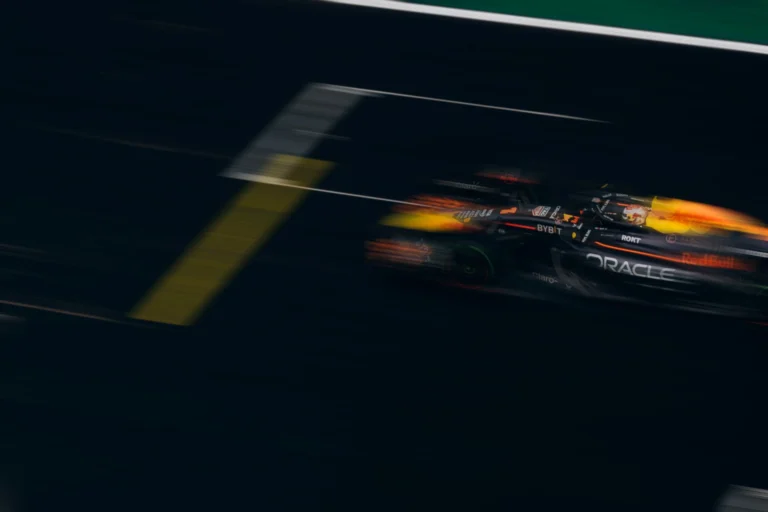
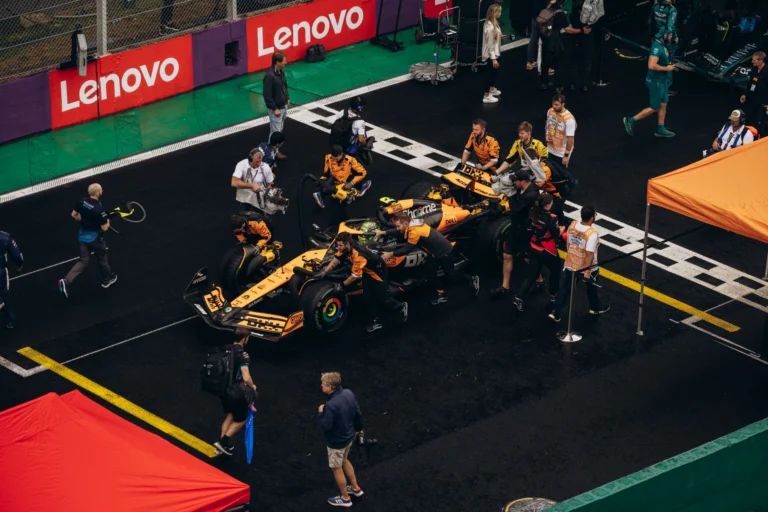
Formula 1 operates as the premier global single-seater motorsport championship, governed by the Fédération Internationale de l’Automobile (FIA) and commercially managed by Liberty Media Corporation. The series functions as a dual-competition world championship that evaluates driver athletic capability alongside advanced automotive engineering. The sport relies on a complex balance of sporting regulations, power unit technical mandates, grid cost governance, and commercial venue economics.
Sporting Framework and Event Formats
The sporting structure of Formula 1 is designed to evaluate raw speed, mechanical reliability, strategic adaptability, and driver endurance across a global championship calendar.
Grand Prix and Sprint Race Formats
An F1 season features two distinct weekend formats: the Standard Grand Prix Weekend and the Sprint Grand Prix Weekend.
In a Standard Grand Prix Weekend, track activity is distributed across three consecutive days to allow progressive setup development. Friday opens with two 60-minute Free Practice sessions (FP1 and FP2), providing teams the opportunity to evaluate aerodynamic balance, tire degradation, and mechanical setup options. Saturday begins with a final 60-minute practice session (FP3) to refine low-fuel qualifying setups, followed by the three-phase formal Qualifying session that sets the starting grid for the main event. Sunday is dedicated exclusively to the Grand Prix race, which runs over a minimum distance of 305 kilometers—with the notable exception of the Monaco Grand Prix at 260 kilometers—and is capped by a strict two-hour operational clock limit under green-flag conditions.
The Sprint Weekend compressed format reduces practice time to increase competitive track sessions. Friday commences with a single 60-minute practice session (FP1), after which teams enter Sprint Qualifying (formerly termed the Sprint Shootout) to set the starting order for the short race. Saturday morning features the Sprint Race—a 100-kilometer sprint with no mandatory pit stops that awards World Championship points to the top eight finishers. On Saturday afternoon, teams transition to full Grand Prix Qualifying to establish Sunday’s starting order. Sunday hosts the traditional full-distance Grand Prix governed by standard tire compound mandates and pit-stop operational rules.
To foster young talent within the sport, FIA regulations require every entry to field a driver with no more than two Grand Prix starts in at least four Free Practice 1 sessions per season, allocated as two practice outings per car entry.
Qualifying Mechanics and Elimination Rules
Qualifying for the main Grand Prix follows a knockout elimination structure divided into three distinct chronological phases: Qualifying 1 (Q1), Qualifying 2 (Q2), and Qualifying 3 (Q3).
| Phase | Duration | Participating Vehicles | Elimination Threshold | Mechanics and Purpose |
| Q1 | 18 Minutes | Full Field (22 Cars) | Bottom 5–7 Cars Eliminated (P16/P18–P22) | Establishes the rear grid positions. All lap times are reset prior to the next phase. |
| Q2 | 15 Minutes | 15–17 Remaining Cars | Bottom 5 Cars Eliminated (P11–P15) | Determines mid-grid order. Lap times reset before Q3. |
| Q3 | 12 Minutes | Top 10 Cars | Top 10 Order Established | Pole position shootout establishing grid positions P1 through P10. |
Drivers who fail to set a lap time within 107% of the fastest Q1 time risk disqualification from the race, though the FIA Stewards retain discretion to permit participation if suitable lap times were recorded during practice. Grid penalties resulting from power unit element quota violations, gearbox changes, or sporting infringements are applied after Q3, yielding the official starting grid.
Victory Conditions and World Championship Point Systems
A Grand Prix or Sprint race victory is awarded to the driver who completes the designated race distance first or leads the field when the maximum two-hour operational limit expires. Winning a full-distance Grand Prix requires managing tire degradation across at least two distinct dry tire compounds during a dry race, optimizing pit-stop timing, and balancing fuel efficiency against lap-time targets.
World Championship points are allocated to drivers and constructors based on official session classification at the conclusion of each event.
| Finishing Position | Grand Prix Points | Sprint Race Points |
| 1st Place | 25 | 8 |
| 2nd Place | 18 | 7 |
| 3rd Place | 15 | 6 |
| 4th Place | 12 | 5 |
| 5th Place | 10 | 4 |
| 6th Place | 8 | 3 |
| 7th Place | 6 | 2 |
| 8th Place | 4 | 1 |
| 9th Place | 2 | 0 |
| 10th Place | 1 | 0 |
Constructors accumulate points by summing the combined totals scored by both assigned team cars in each session. The World Drivers’ Championship (WDC) and World Constructors’ Championship (WCC) are awarded at the end of the season to the driver and team with the highest point totals.
Engineering Architecture and Technical Regulations
Formula 1 regulations undergo periodic overhauls to drive automotive engineering innovation, reduce carbon footprints, and maintain competitive balance. The technical paradigm completely redefines power unit architecture, vehicle aerodynamics, and energy management strategy.
Power Unit Redefinition: The 50/50 Hybrid Split
The power unit retains a 1.6-liter turbocharged V6 internal combustion engine (ICE) architecture while shifting energy output toward an expanded electrical drive system. Under previous regulations, the ICE delivered roughly 800 horsepower alongside a 120 kW kinetic electric system assisted by exhaust heat recovery. The updated framework eliminates the complex Motor Generator Unit – Heat (MGU-H) and expands the kinetic energy recovery system.
| Parameter | Legacy Architecture | Modern Architecture | Engineering Impact |
| ICE Power Output | ~550–600 kW (~750–800 HP) | ~400 kW (~535 HP) | Reduces fuel consumption and thermal load management demands. |
| MGU-K Electrical Output | 120 kW (~160 HP) | 350 kW (~470 PS / 470 HP) | Increases electrical drive capacity by nearly 300%. |
| Power Distribution | ~80% Thermal / 20% Electric | ~50% Thermal / 50% Electric | Establishes an equal power split between ICE and electrical battery output. |
| MGU-H (Heat Unit) | Present (Exhaust energy recovery) | Completely Eliminated | Reduces system complexity and lowers development entry barriers. |
| Energy Recovery Limit | ~4.5 MJ per lap | ~8.5 MJ per lap under braking | Doubles maximum kinetic energy harvested during deceleration. |
| Fuel Type | Fossil Fuel with E10 Ethanol | 100% Advanced Sustainable Fuel | Operates on a net-zero carbon footprint using advanced synthetic e-fuels. |
| Fuel Flow Regulation | Mass Flow Rate Limit (kg/hr) | Energy Content Flow Limit (MJ/hr) | Prioritizes fuel energy density optimization over mass-based limits. |
Eliminating the MGU-H removes a primary technological barrier for incoming auto manufacturers, while expanding the MGU-K increases battery and motor relevance to consumer electric vehicle development.
Active Aerodynamics and Dynamic Drag Control
To compensate for changes in ICE power deployment on long straights, active aerodynamics replace the traditional Drag Reduction System (DRS).
The baseline cornering state, known as Z-Mode or Corner Mode, keeps front and rear wing elements closed to generate maximum downforce for high-speed cornering stability. On designated straightaways, drivers engage X-Mode or Straight Mode, which opens elements on both the front and rear wings simultaneously. This dual wing adjustment sheds aerodynamic drag by approximately 55%, preserving battery charge and boosting top speeds. Overall vehicle downforce is reduced by roughly 30%, shifting vehicle handling characteristics toward mechanical grip.
Driver Energy Management: Recharge, Boost, and Overtake Modes
Because half of total system power depends on battery charge, strategic harvesting and deployment replace simple throttle management.
Energy harvesting occurs automatically via the Electronic Control Unit (ECU) under braking, off-throttle coasting, and “super clipping”—a state where the MGU-K harvests energy at the end of straights while the ICE remains at full throttle. Drivers can manually initiate lift-off recharge during quieter track sectors to top up battery reserves, though doing so temporarily restricts active aero deployment.
For tactical attacks or defense, drivers activate a steering wheel Boost Button that deploys up to 350 kW of stored electrical power according to team-selected mapping profiles. To replace the overtaking advantage of traditional DRS, trailing cars within one second of a rival receive access to an Overtake Mode override. This mode maintains full electrical power up to higher speeds (up to 355 km/h), whereas the leading car’s electrical discharge automatically ramps down past 300 km/h, creating a speed differential that facilitates passing moves.
Grid Dynamics, Manufacturer Ecosystem, and Cost Governance
Formula 1 combines strict operational expenditure limits with technical adjustment allowances to maintain competitive parity across all constructors.
Constructor Expansion and Power Unit Manufacturer Landscape
The field features 11 team entries following the addition of Cadillac, marking the series’ first grid expansion since 2016. Concurrently, engine supply partnerships have realigned across the paddock.
| Team / Entrant | Chassis Constructor | Power Unit Supplier | Operational / Commercial Status |
| Mercedes-AMG | Mercedes | Mercedes | Works Factory Team |
| Scuderia Ferrari | Ferrari | Ferrari | Works Factory Team |
| Red Bull Racing | Red Bull | Red Bull Ford Powertrains | Works Joint Venture with Ford |
| McLaren | McLaren | Mercedes | Customer Supply Agreement |
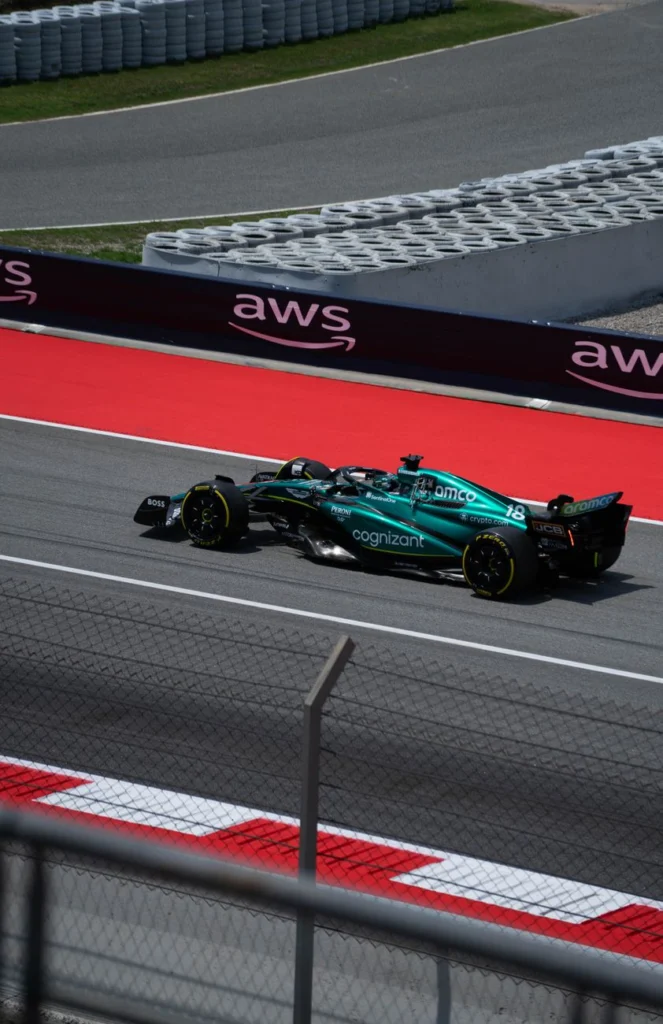
| Aston Martin | Aston Martin | Honda | Exclusive Works Agreement with Honda |
| Audi Sport | Audi | Audi | Acquisition of Sauber; Full Works Entry |
| Alpine | Alpine | Mercedes | Shifted from Renault to Mercedes Customer PUs |
| Racing Bulls (RB) | RB | Red Bull Ford Powertrains | Sister team utilizing Red Bull Ford PUs |
| Williams Racing | Williams | Mercedes | Customer Supply Agreement |
| Haas F1 Team | Haas | Ferrari | Technical and Customer Supply Agreement |
| Cadillac F1 Team | Cadillac | Ferrari (GM from 2029) | 11th Entry; Ferrari customer transitioning to GM Works |
Financial Governance: Cost Caps and ADUO Regulations
To prevent unsustainable spending disparities between teams, the sport operates under cost caps enforced by the FIA Cost Cap Administration.
The operational cost cap sets baseline team spending at $215 million per season, excluding driver salaries, top-three executive compensation, marketing expenditures, and travel logistics. Power unit manufacturers operate under a parallel cost cap governing engine research, development, and bench testing.
To prevent new or struggling engine manufacturers from suffering long-term performance deficits, the FIA utilizes an Additional Development Allowance (ADUO) framework. If an engine manufacturer is certified to be between 2% and 4% below rival benchmark power outputs, the FIA grants additional budget capacity and dyno testing time to help bridge the performance gap.
Commercial Economics, Calendar Dynamics, and Venue Infrastructure
Formula 1 operates a commercial ecosystem driven by circuit hosting fees, broadcast licensing, global corporate sponsorships, and VIP spectator hospitality.
Circuit Typologies and Host Venue Economics
Circuits on the calendar fall into three distinct physical and logistical categories:
- Purpose-Built Permanent Circuits: Facilities such as the Red Bull Ring, Suzuka, and Silverstone offer dedicated racing layouts, expansive runoff areas, and high spectator capacities, alongside ongoing year-round facility overheads.
- Temporary Street Circuits: Venues constructed on closed public thoroughfares—including Monaco, Baku, and Singapore—require temporary installation of concrete barriers, pit structures, and spectator grandstands, resulting in high annual setup costs.
- Hybrid / Destination Circuits: Locations like the Miami International Autodrome and the Las Vegas Strip Circuit integrate semi-permanent track layouts within commercial sports and entertainment hubs.
Hosting fees paid to Formula One Management (FOM) vary significantly based on public funding sources, regional promotion goals, and commercial arrangements. Premium hosting fees paid by sovereign-backed destinations or urban entertainment venues ($45 million to $55 million annually) help subsidize historic European venues ($15 million to $25 million annually) that rely primarily on local ticket sales.
Global Calendar and Host Venue Contracts
The World Championship calendar spans diverse international markets secured under long-term host agreements.
| Grand Prix Venue | Location Type | Contract Expiration | Estimated Annual Hosting Fee | Commercial Model |
| Lusail (Qatar) | Purpose-Built | 2031 | ~$55 Million | State-Funded Tourism Initiative |
| Jeddah (Saudi Arabia) | Street Circuit | 2030 | ~$55 Million | State-Funded Tourism Initiative |
| Baku (Azerbaijan) | Street Circuit | 2030 | ~$55 Million | State-Funded Destination Marketing |
| Shanghai (China) | Purpose-Built | 2030 | ~$50 Million | Municipal / State Investment |
| Sakhir (Bahrain) | Purpose-Built | 2036 | ~$45 Million | Sovereign Hospitality Investment |
| Yas Marina (Abu Dhabi) | Purpose-Built | 2030 | ~$40–$50 Million | Season Finale Rights Premium |
| Melbourne (Australia) | Semi-Permanent | 2037 | ~$35 Million | Regional Government Grant |
| Marina Bay (Singapore) | Street Circuit | 2028 | ~$35 Million | Government-Tourism Partnership |
| Montreal (Canada) | Semi-Permanent | 2035 | ~$30 Million | Mixed Public/Private Funding |
| Silverstone (UK) | Purpose-Built | 2034 | ~$25 Million | Private Promoter / Ticket Revenue |
| Monza (Italy) | Purpose-Built | 2031 | ~$25 Million | Historic Club / Regional Support |
| Austin (USA – COTA) | Purpose-Built | 2034 | ~$25 Million | Private / State Major Events Fund |
| Monaco (Monaco) | Street Circuit | 2035 | ~$15 Million | Heritage Flat Fee / Historic Privilege |
| Miami (USA) | Hybrid | 2041 | Hybrid / Revenue Share | Private Joint Venture Model |
| Las Vegas (USA) | Street Circuit | 2037 | Promoter Self-Funded | Self-Promoted by Liberty Media |
Spectator Economics and Corporate Hospitality Structures
Spectator ticket pricing varies based on host market demographics, viewing comfort, and hospitality amenities. Average admission ranges from lower-cost venues like China ($220 average) and Japan ($300 average) to high-cost destination events in Monaco ($887 average), Miami ($832 average), and Las Vegas ($1,156 average).
| Ticket Category | Typical Price Range | Access Rights and Amenities | Target Audience / Value Proposition |
| General Admission (GA) | $68 – $650+ | Standing room or open-grass viewing hillsides; unreserved seating. | Entry-level spectator access. |
| Reserved Grandstand | $140 – $1,200+ | Assigned seat overlooking key track sectors or pit lanes. | Standard spectator ticketing. |
| VIP / Hospitality Suites | $2,500 – $7,750+ | Air-conditioned lounges, premium catering, open bar, trackside views. | Premium corporate hospitality. |
| F1 Paddock Club | $8,000 – $25,000+ | Prime viewing above pit garages, guided pit walks, driver appearances, Paddock access. | Luxury corporate hospitality. |
Chinese General Admission remains the lowest entry point on the calendar at ~$68 USD, whereas Las Vegas general entry starts at higher baselines, with top-tier packages like the Gordon Ramsay F1 Garage reaching $25,000 USD.
Corporate Sponsorship and Brand Partnerships
Formula 1’s commercial revenues are supported by global partner arrangements across key industrial sectors:
DHL manages global air cargo and road freight transit between back-to-back race meetings. Aramco acts as a major technical partner and title sponsor for pit-lane walks and regional event naming rights. Other primary partners, including Heineken, TAG Heuer, Pirelli, and Qatar Airways, hold exclusive trackside branding rights, digital placement options, and fan zone promotional privileges across the championship calendar.
Historical Evolution and Strategic Outlook
Formula 1 has transitioned through several distinct technological eras since its inaugural World Championship season in 1950.
The early Mechanical Era (1950s–1970s) was characterized by front-to-mid engine configuration shifts, spaceframe-to-monocoque chassis transitions, early wing aerodynamics, and ground-effect ground clearance developments. This was followed by the Electronic and Turbocharging Era (1980s–1990s), which saw forced-induction engines exceeding 1,000 horsepower, carbon-fiber composite safety cells, active suspension, and real-time telemetry systems.
The Atmospheric V10 and V8 Era (2000s–2013) brought ultra-high-revving naturally aspirated engines reaching 20,000 RPM. Escalating development budgets during this period prompted early resource restriction agreements and standardized bodywork regulations. The Initial V6 Turbo-Hybrid Era (2014–2025) introduced 1.6-liter hybrid power units with dual MGU-K and MGU-H energy recovery systems. While achieving record thermal efficiency, this era created significant performance gaps between manufacturer development budgets, leading directly to the implementation of the cost cap.
The current Sustainable Power Era (2026+) combines a 50/50 electrical-thermal power split, driver-controlled active wing aerodynamics, 100% sustainable fuels, and financial caps. By balancing road-relevant hybrid technology with strict spending controls, Formula 1 maintains its standing as an advanced automotive engineering testbed while ensuring competitive racing across its global event calendar.