The first races showed that F1 did not really remove DRS. It split its job in two.
George Russell and Charles Leclerc spent the opening laps of the 2026 Australian Grand Prix trading the lead in a way that would have looked familiar a year earlier. The difference was what made the passes possible.
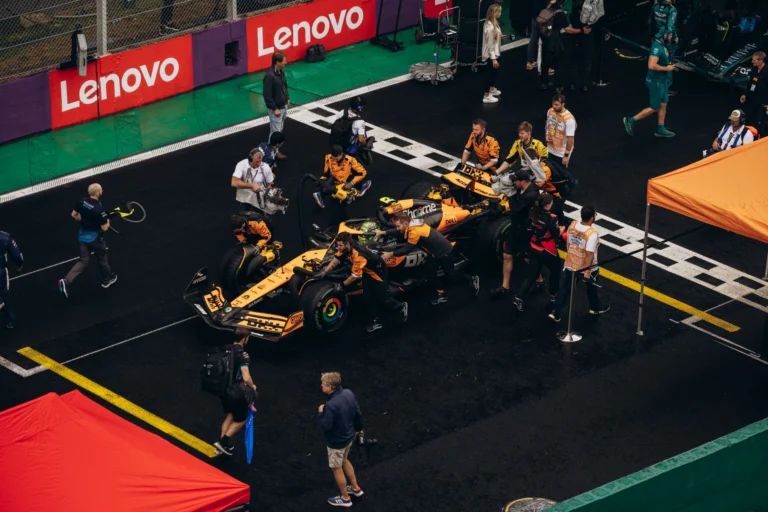
Russell overtook Leclerc on Lap 2. Leclerc used Overtake Mode to take the lead back one lap later. Russell then passed him again, only for Leclerc to recover the position at Turns 9 and 10. The battle continued until Russell eventually established himself at the front. (formula1.com)
That sequence was an early demonstration of the central change in the 2026 regulations: DRS, as F1 knew it from 2011 through 2025, is gone.
Its aerodynamic function has effectively been absorbed into Active Aero, while its proximity-based overtaking function has been replaced by a separate electrical system called Overtake Mode. The distinction sounds technical. On track, it changes how drivers decide when to attack and when to defend.
Active Aero is available on the straight even when nobody is ahead
Under the old DRS rules, a driver generally needed to be within one second of the car ahead at a detection point before being allowed to open the rear wing in a designated DRS zone.
That restriction no longer applies to the aerodynamic system in 2026.
The new cars have movable elements on both the front and rear wings. In corners they run in a higher-downforce configuration. On designated straights, the wings move to a lower-drag configuration known as Straight Mode. Every car can use it when the circuit's rules permit it, regardless of whether another car is nearby. (formula1.com)
This matters tactically because the straight-line advantage is no longer reserved for the chasing car.
A driver leading a race gets the same aerodynamic reduction in drag as the driver behind. So the simple 2025 equation of "get within one second, then use DRS to attack" has disappeared.
Instead, the question becomes whether the following car can create a meaningful advantage through energy deployment, positioning and timing.
The number of Straight Mode sections also varies by circuit. Albert Park, for example, had five designated Straight Mode zones in 2026, while the Circuit Gilles Villeneuve in Canada had four. (formula1.com)
That means the shape of an overtaking opportunity is now heavily dependent on the circuit itself.
Overtake Mode is where the old DRS logic survives
The one-second rule did not disappear completely. It moved from the aerodynamic system into the power unit.
In 2026, each lap has an Overtake Detection point. If a driver is within one second of the car ahead at that point, they can use Overtake Mode on the following lap. The system gives the car access to an additional 0.5MJ of electrical energy and a different electrical deployment profile, allowing higher speed to be sustained for longer. (formula1.com)
This is why calling Overtake Mode "the new DRS" is useful but incomplete.
DRS gave the following car a direct aerodynamic advantage in a designated zone. Overtake Mode gives the chasing driver more electrical energy to spend. The driver and team therefore have considerably more freedom over how that advantage is converted into a pass.
A driver can use the extra performance to close the gap, attack into a braking zone or pressure the leading car into making a defensive move. The benefit is particularly relevant on long straights, where the additional speed can be applied over a greater distance. (formula1.com)
The distinction was visible immediately in Australia.
Russell could get past Leclerc, but Leclerc's ability to use Overtake Mode meant the Ferrari could fight back. Sky Sports reported that Russell repeatedly passed Leclerc only for the Ferrari to regain the position with the benefit of the new system. (skysports.com)
That creates a very different strategic problem from conventional DRS racing.
Getting alongside is no longer necessarily the end of the calculation.
The detection point can matter more than the overtaking corner
The most important piece of track for an Overtake Mode battle may be somewhere the television viewer barely notices.
Suppose the detection point is before the final corner. A driver who is 1.1 seconds behind at that point gets nothing. A driver who closes the gap to 0.9 seconds qualifies for Overtake Mode on the next lap.
The difference can come from a small gain several corners earlier.
That makes the preceding sector part of the overtaking battle. A driver may sacrifice a little speed in one corner to get a stronger exit, close the final gap and qualify for the next lap's energy advantage.
Circuit configuration therefore matters enormously.
At Albert Park, the Overtake Detection point was just after Turn 13, while the activation point came at the entry to the final corner. At the Hungaroring, detection was positioned as drivers approached Turn 14, with activation at the exit of the final corner. (formula1.com)
The geography creates a tactical loop: close the gap before detection, earn the mode, then decide where to spend the advantage.
That is fundamentally different from simply waiting for a DRS activation line.
The 2026 cars also changed the baseline speed of an overtake
The overtaking changes cannot be separated from the aerodynamic philosophy of the new cars.
The 2026 regulations made the cars smaller and lighter while reducing aerodynamic drag and downforce. The maximum wheelbase was reduced to 3.4 metres and the width to 1.9 metres. The FIA's original technical description targeted a substantial reduction in drag and downforce compared with the previous generation. (formula1.com)
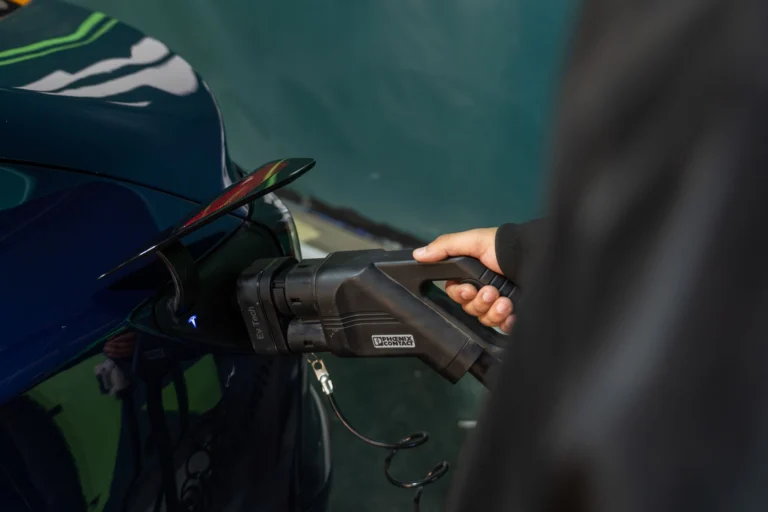
The power unit changed at the same time, with a much larger role for electrical power. Formula 1 says the new system roughly doubles the amount of energy recovered through braking to around 8.5MJ per lap, giving teams a much larger energy-management problem than before. (formula1.com)
So an overtaking zone in 2026 is not simply an aerodynamic feature painted onto the circuit map.
It sits inside a larger energy strategy.
A driver may have enough battery to attack but not enough to defend later. They may choose to spend energy early in the lap to prevent a rival from getting close enough at the detection point. Conversely, a driver can save energy and accept a temporary loss of track position if that creates a stronger attack later.
That is why the 2026 system can make a race look less predictable even when the cars are separated by only a few tenths.
Canada showed how Overtake Mode can keep two cars locked together
The Canadian Grand Prix offered one of the clearest examples of the new system's defensive effect.
Mercedes teammates George Russell and Kimi Antonelli fought for the lead through the opening stages, repeatedly swapping positions. Mercedes later said the advantage provided by Overtake Mode meant the two cars could not separate and remained locked in battle for the first 30 laps. Russell eventually retired with a power-unit issue, ending the fight for reasons unrelated to the overtaking system. (formula1.com)
That is a useful distinction.
Overtake Mode does not automatically create an overtake. It can also prevent one.
If the leading driver remains within the relevant tactical window, the chasing car can have enough performance to attack repeatedly. But if both cars are using their available tools effectively, neither necessarily gets a decisive advantage.
The result can be a race in which the cars are extremely close without the lead changing every lap.
Zandvoort demonstrated the opposite problem: being close is not enough
The Dutch Grand Prix on August 23 provided a more recent counterexample.
After the red flag caused by Max Verstappen's crash, Kimi Antonelli took the lead from Lando Norris at the restart. Norris stayed close, but at one stage Antonelli extended the gap to 1.4 seconds. That was enough to put Norris outside the one-second threshold for Overtake Mode. (formula1.com)
The detail matters because it shows how narrow the tactical window can be.
Norris did not simply need a faster car. He needed to remain close enough to qualify for the additional electrical tool while managing tyres and preparing an actual passing opportunity.
Later in the race, he closed the gap and eventually retook the lead.
The winning move was therefore not a simple consequence of having an overtaking zone. It came from maintaining the conditions needed to make the zone useful.
Overtaking zones now influence strategy before the overtake happens
The biggest change in 2026 is therefore not that overtaking became easier or harder in every race.
It is that the preparation for an overtake became more strategically important.
Teams now have to consider where their car is strongest under Straight Mode, where energy can be recovered, where Overtake Mode can be activated and where spending that energy will produce the greatest track-position gain.
A driver defending from another car also has choices. They can push to break the one-second relationship before the detection point. They can spend battery to defend a vulnerable straight. Or they can accept that an attack is coming and concentrate on positioning the car for the braking zone.
The same piece of asphalt can therefore serve several different strategic purposes depending on what happened one sector earlier.
That was already apparent in Australia, where Leclerc's repeated use of Overtake Mode turned the opening battle into a sequence of attacks and counterattacks rather than a one-way DRS pass. (formula1.com)
And it was visible again in Belgium, where Kimi Antonelli said Charles Leclerc remained difficult to shake even after Antonelli had passed him, because Ferrari could stay within Overtake Mode range. (formula1.com)
The practical lesson for watching an F1 race in 2026 is simple: don't look only at the corner where the pass happens.
Watch the gap at the detection point. Watch the battery deployment. Watch the exit speed. Watch whether the driver ahead is trying to break the one-second window before it matters.
F1 did not merely replace DRS with a new button. It turned the overtaking battle into a contest over when a driver is close enough, where the car is efficient enough, and how much electrical performance the team can afford to spend.
That makes an overtaking zone less of a guaranteed passing opportunity and more of a tactical asset. In 2026, the driver who wins the corner is often the one who started winning the energy battle several seconds earlier.