Fabián Ruiz put Spain ahead in the 30th minute. Charles De Ketelaere equalised for Belgium before half-time. Mikel Merino then scored in the 88th minute, seconds after Belgium goalkeeper Senne Lammens failed to hold Pau Cubarsí’s long-range effort.
That sequence explains the result. It does not quite explain the match.
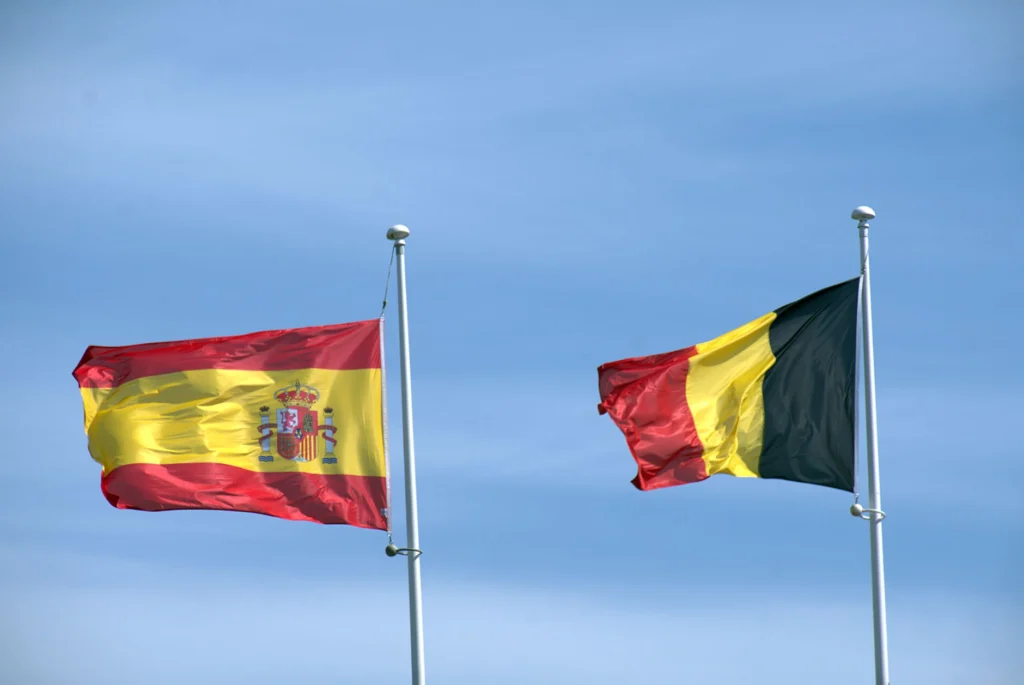
Spain beat Belgium 2-1 in the World Cup quarter-final at Los Angeles Stadium on July 10, but the tactical contest was less balanced than the score suggested. Spain finished with 17 shots to Belgium’s five and 68 percent possession. Opta put their expected-goals total at 2.08 against Belgium’s 0.37.
Belgium still found a way to make Spain uncomfortable. They defended for long periods, attacked the spaces Spain left around the full-backs and became the first team to score against Spain at this World Cup.
The interesting part is how Spain kept creating pressure without turning the match into the kind of open contest Belgium wanted.
Spain’s possession was not passive; it was the mechanism that trapped Belgium
Spain did not need to force the game early. Their advantage came from repeatedly moving Belgium from one side of the pitch to the other.
Luis de la Fuente started Fabián Ruiz instead of Pedri, giving Spain another midfielder capable of arriving late into the penalty area. Rodri remained the central reference point, while Dani Olmo and Lamine Yamal provided the movement and technical quality needed to connect midfield with the front line.
Belgium’s answer was largely defensive rather than an attempt to match Spain possession for possession. Their shape became compact, with the midfield protecting the central spaces and the wider players responsible for helping close the routes toward Spain’s attackers.
That created a familiar problem for a team defending against Spain: protecting the middle meant conceding some room outside, while stepping wider risked opening the passing lanes Spain wanted.
Spain's first goal came from exactly that patient pressure.
Olmo’s effort was saved by Thibaut Courtois, but the rebound fell into an area where Fabián could attack it. The Belgian defence had already been forced into several adjustments, and Fabián reacted before the defensive shape could reset.
The goal was officially credited to Fabián, but the sequence mattered more than the finish. Spain were not simply circulating the ball for possession's sake. They were trying to move Belgium until a midfielder could enter the box at the right moment.
Belgium found the weakness Spain could not completely close
Belgium's equaliser arrived eleven minutes later and exposed the other side of Spain's structure.
Timothy Castagne delivered from the right, and De Ketelaere attacked the space in front of Pau Cubarsí to head beyond Unai Simón.
It was Belgium's best route into the game: move the ball quickly to the flank, get a delivery into the area and attack Spain before their defensive structure could fully settle.
That was particularly useful because Belgium did not have enough possession to build sustained attacks through the middle. Their threat had to come from transitions, direct combinations and the quality of players such as Kevin De Bruyne and Jérémy Doku.
The equaliser was also significant historically. It ended Spain's run of six consecutive clean sheets at the tournament and was the first goal Spain had conceded at the World Cup.
That does not mean Belgium suddenly solved Spain. They had five shots across the match compared with Spain's 17. But they identified a route that could hurt Spain without needing to dominate the ball.
That distinction matters.
Lamine Yamal gave Spain the attacking outlet Belgium could not fully contain
Spain's most obvious attacking reference was Yamal.
Sky Sports recorded six attempts and four successful dribbles for the teenager, and its match analysis noted how much of Spain's patient build-up eventually fed through him.
The tactical value of Yamal was not simply that he could beat a defender. His positioning forced Belgium to make a choice.
If the Belgian defender moved aggressively toward him, space appeared for the next Spanish player. If the defender held position, Yamal could receive and attack one-versus-one.
Spain repeatedly used that tension to move the Belgian block.
Yamal also came close after half-time when Cubarsí released him, only for Courtois to deny him in a one-on-one situation. Later, Courtois saved another Yamal attempt.
That goalkeeper-versus-attacker duel became one of the defining individual battles of the match.
It also explains why the final score should not be read as evidence that Spain struggled to create. They created. Belgium's resistance was partly about defending well and partly about Courtois making important saves.
Belgium's transition game became more dangerous when Spain pushed higher
Belgium were most effective when Spain's possession structure turned into an attacking commitment.
Doku was particularly important because he could carry the ball rather than simply pass it forward. Once he escaped the first Spanish challenge, Belgium could attack the space behind Spain's advancing players.
One second-half sequence illustrated that approach. Doku combined with De Bruyne, allowing Maxim De Cuyper to get forward before shooting into the side netting.
Belgium did not need five or six passes to create danger. Their best attacks often required only a quick combination followed by a direct run.
That was the risk Spain accepted by controlling territory so aggressively.
But Spain were willing to accept it because Belgium could not reproduce those transitions often enough. Five total shots is the clearest evidence. Belgium had a mechanism for hurting Spain, but not enough opportunities to make it the main story of the match.
Courtois' injury changed the final phase more than the scoreline suggests
The most consequential substitution was not Spain's introduction of Merino. It was Belgium losing Courtois.
The Real Madrid goalkeeper had already denied Yamal and Oyarzabal before an apparent thigh injury forced him off in the 72nd minute. Senne Lammens replaced him.
Until that point, Belgium had a goalkeeper who had repeatedly kept Spain from turning pressure into a second goal.
Sixteen minutes later, Lammens made the mistake that decided the quarter-final.
Cubarsí hit a low drive from distance. Lammens could not hold it, and Merino reacted immediately to score from the rebound.
That was not a sophisticated attacking combination. It was a second-ball situation created by continued pressure, followed by an error and a midfielder's anticipation.
There is a temptation to describe Merino's goal as pure luck. That misses part of what happened.
Merino had only just entered the match. He was prepared to attack the box. When the goalkeeper spilled the shot, he was already in position to benefit.
Opta noted that Merino had now scored the winning goal in two consecutive World Cup knockout matches after coming on as a substitute, against Portugal and Belgium. He scored against Belgium with his second touch.
The goal required Lammens' error. Spain still had to be ready to exploit it.
Spain's midfield control was the difference between pressure and panic
Rodri's role is easy to reduce to possession statistics, but his real value was structural.
He gave Spain an outlet behind Belgium's midfield pressure and allowed the more attacking players to move without leaving the team completely exposed.
Sky Sports credited Rodri with 62 line-breaking passes in the tournament entering the match, level with Toni Kroos' record from the 2014 World Cup. That number is a tournament statistic rather than a measure of this single match, but it helps explain why Spain can sustain attacks without relying exclusively on their wingers.
When Belgium closed Yamal, Spain could circulate through midfield.
When Belgium narrowed the midfield, Spain could move the ball toward the full-backs.
When Belgium retreated, Spain could patiently reset rather than forcing a low-percentage pass.
That flexibility is what ultimately made Belgium's defensive plan difficult to sustain for 90 minutes.
The quarter-final showed Spain can win without overwhelming the scoreboard
Spain's biggest strength against Belgium was not one particular formation or attacking combination. It was their ability to keep creating the next attacking phase.
They had 17 shots, 68 percent possession and 2.08 expected goals. Belgium had five shots and 0.37 xG. Those numbers do not guarantee victory, but they describe a match in which Spain generated substantially more attacking value.
Belgium's performance was still tactically credible. They limited Spain's central access for stretches, threatened through transitions and exploited the aerial channel for De Ketelaere's equaliser.
Spain simply had more ways to keep the pressure going.
That is why the 88th-minute winner matters differently from a conventional late goal. Merino's finish was fortunate in its immediate circumstances, because Lammens' spill created the chance. But the broader pattern was not accidental. Spain had spent the match forcing Belgium to defend repeated attacks, and the decisive error arrived inside that pressure.
The quarter-final therefore leaves Spain with both a victory and a warning.
They can control a match against a strong opponent without needing to turn every possession into an immediate chance. They can survive a transition threat. They can recover after conceding.
But Belgium also demonstrated that Spain's high-possession structure can be attacked through the flanks, early crosses and quick transitions.
Against Belgium, those openings produced one goal.
Spain's reward for surviving them was a semi-final against France. That is where the tactical lesson becomes more useful than the 2-1 scoreline: Spain did not win because Belgium had no answer. They won because Spain had more answers, and kept asking the question until the final decisive mistake.