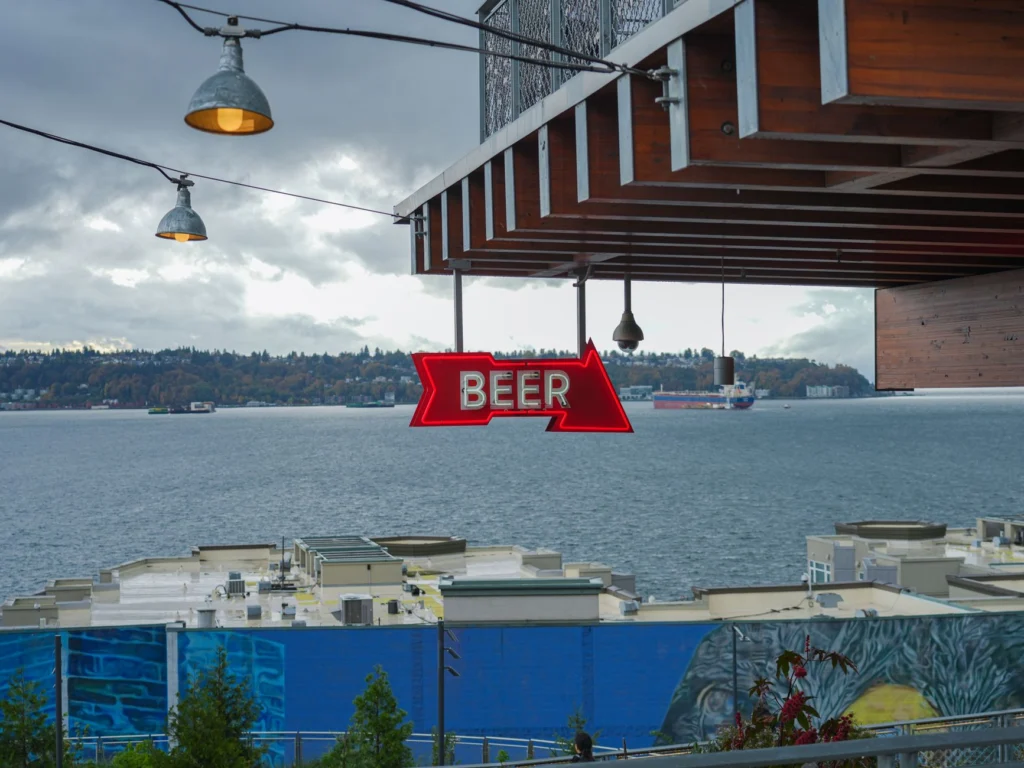
Most breweries make beer worth drinking. A small handful make beer worth planning an actual trip around — because what you’d learn or taste there genuinely can’t be replicated by having the bottle shipped to you. These are the real ones.
Cantillon — Brussels, Belgium
Cantillon is a traditional lambic producer, and lambic is a style that resists relocation almost by definition — it relies on wild, spontaneous fermentation from the specific airborne yeast and bacteria present in the Brussels region itself. Belgium more broadly is synonymous with beer diversity, home to Trappist ales, lambics, and saisons alongside a genuinely rich, centuries-deep brewing heritage that shows in the breweries themselves, not just the bottles.
Trappist breweries — Belgium
Belgium’s Trappist monasteries remain the source of one of the only beer styles in the world still legally tied to where and how it’s made — genuine Trappist ale has to be brewed within monastery walls, under monk supervision, with profits directed toward the monastery and charitable causes. That’s not a marketing story; it’s a real, enforced designation, which is exactly why visiting one is a fundamentally different experience than drinking the beer anywhere else.
Guinness Storehouse — Dublin, Ireland
The Guinness Storehouse lets visitors walk through the real history of Ireland’s most famous stout, ending at the Gravity Bar with panoramic views over Dublin. It’s the rare brewery visit built as a genuine full destination experience rather than just a tour and tasting room, which is part of why it remains one of Ireland’s most-visited attractions of any kind, not just among beer destinations.
Sierra Nevada — California, USA
One of the earliest and most influential American craft breweries of the late 20th century, Sierra Nevada offers a genuinely eco-friendly brewery tour built around its status as one of the largest still-independent craft breweries in the country. Visitors walk the actual brewery, not just a themed visitor center, before ending with a real tasting — a direct, unfiltered look at how modern American craft brewing actually scaled up from its founding era.
What actually happens inside Cantillon’s coolship, in real technical terms
The specific reason Cantillon can’t be replicated elsewhere comes down to one physical detail: the coolship, an open, shallow vessel in the brewery’s attic, sits under a specially designed tiled roof with louvers that let outside air flow directly across the wort overnight. That airflow inoculates the beer with wild yeast and bacteria native specifically to that attic’s air — a real, location-locked microbial environment, not a technique that can be exported to another building even by the same brewers. Research into the fermentation process has documented a genuine, predictable microbial succession inside the barrels afterward: Enterobacteriaceae bacteria dominate the first month, replaced by Pediococcus damnosus and wild Saccharomyces yeast around two months in, which are in turn replaced by Dekkera bruxellensis by roughly six months — a full year-plus fermentation and maturation process before the beer is anywhere close to finished. Cantillon’s classic Gueuze blend even follows a real, specific ratio across vintages: 17% three-year lambic, 33% two-year, and 50% one-year, blended together rather than released as a single-vintage beer.
What actually separates a destination brewery from a good local one
Each of these four breweries earns the trip for a reason that can’t be shipped: Cantillon’s wild yeast is genuinely tied to its physical location, Trappist ale is legally bound to its monastery of origin, Guinness Storehouse is built as a real historical and cultural experience rather than just a tasting room, and Sierra Nevada offers a direct look at the actual scale and process behind modern American craft beer. That’s the real filter for “worth traveling for” — not just good beer, but beer whose story is inseparable from the place it’s made.
If your company or product is mentioned in this article, you're welcome to share it.