Experience the Soul of Italy: A Tuscan Wine Tour Adventure
Tuscany is not a single wine region so much as a patchwork of hills, medieval towns, and estates with distinct grapes and rules. A wine tour here works best when you choose two or three zones rather than trying to cover the whole region in a few days. The reward is concrete: Sangiovese in several styles, historic cellars, and landscapes that change from Chianti’s wooded ridges to the open clay hills of the Val d’Orcia.
This guide covers the main appellations, practical logistics, and a sample day. It is written for travelers who want to taste seriously without turning the trip into a checklist.
Why Tuscany Works for a Wine Tour
Tuscany’s reputation rests on more than scenery. It has defined appellations, a long history of Sangiovese-based wines, and a dense network of estates that range from small family farms to large international producers. The main wine zones are close enough to combine, but far enough apart that each has its own character.
- Distinct appellations: Chianti Classico, Brunello di Montalcino, Vino Nobile di Montepulciano, and the Super Tuscans of Bolgheri and elsewhere.
- Landscape and towns: Vineyards are interspersed with Romanesque churches, castles, and hill towns such as Radda, Montalcino, and Montepulciano.
- Food: Tuscan cooking is built for the wines: ribollita, pappa al pomodoro, pecorino, cured meats, and Bistecca alla Fiorentina.
- Access: Florence and Pisa are the main gateways; Siena makes a good central base for Chianti and the southern zones.
Tuscany’s Main Wine Regions
For a first wine tour, focus on Chianti Classico and either Montalcino or Montepulciano. Add Bolgheri only if you have time for the coast or a specific interest in Bordeaux-style blends.
Chianti Classico
Chianti Classico lies between Florence and Siena. The Classico designation marks the original zone, and the black rooster, Gallo Nero, is the consortium symbol. Sangiovese dominates, giving wines with cherry and violet aromas, bright acidity, and firm tannins. The best examples can age well, while many are approachable young.
- Base towns: Greve in Chianti, Castellina in Chianti, Radda in Chianti, Gaiole in Chianti.
- Estates to look into: Castello di Verrazzano, Badia a Coltibuono, Fontodi, Castello di Ama.
- What to do: Visit a historic castle winery, walk a vineyard, and compare a standard Chianti Classico with a Riserva.
Brunello di Montalcino
Montalcino sits south of Siena. Brunello is made from Sangiovese Grosso and is known for power, structure, and long aging. The wines often show plum, leather, tobacco, and earth, with a full body and firm tannins. Production rules are strict, and the best bottles can evolve for decades.
- Base town: Montalcino.
- Estates to look into: Biondi-Santi, Poggio Antico, Castello Banfi, Col d’Orcia.
- What to do: Visit the Montalcino fortress, taste in a cellar, and drive through the Val d’Orcia for views of the vineyards and cypress lines.
Vino Nobile di Montepulciano
Montepulciano is southeast of Siena. Vino Nobile is primarily Sangiovese, locally called Prugnolo Gentile, and is generally softer and more approachable than Brunello. Expect plum, blackberry, and floral notes with balanced acidity.
- Base town: Montepulciano.
- Estates to look into: Avignonesi, Poliziano, Cantina Contucci.
- What to do: Explore the Renaissance town and visit cellars carved into the tuff rock beneath the streets.
Super Tuscans and Bolgheri
Super Tuscan is a loose term for wines that fall outside traditional DOC or DOCG rules, often using Cabernet Sauvignon, Merlot, or Syrah, sometimes blended with Sangiovese. Many are labeled IGT Toscana. Bolgheri, on the coast, is the best-known area for these wines.
- Key area: Bolgheri and the Tuscan coast.
- Names to know: Sassicaia, Ornellaia, Antinori’s Tignanello and Solaia, Masseto.
- What to do: Book a tasting at a coastal estate if you want a contrast to the inland Sangiovese zones.
Planning Your Wine Tour
Best Time to Visit
Spring, from April to June, and fall, from September to October, are the most comfortable months. Spring brings wildflowers and green vineyards. Fall brings harvest activity, but also more demand for tastings and rooms. July and August are hot, crowded, and less pleasant for midday vineyard visits.
Transportation
A car gives the most flexibility, but you cannot drink and drive. If you plan to taste at several wineries, hire a private driver or join a small-group tour. Rural roads include strade bianche, unpaved tracks that can be rough on low-clearance cars. Distances look short on a map but take longer than expected because of hill roads and slow traffic.
Where to Stay
Florence and Siena are convenient for city time and day trips. Greve or Radda work well for Chianti Classico. Montalcino and Montepulciano are better bases for the southern zones. Agriturismi, working farm stays, can be good value and often include breakfast with local products; confirm whether they offer tastings or just lodging.
Booking Wineries
Reservations are essential at many estates, especially smaller family-run wineries. Popular producers can fill up months ahead in September and October. Check each winery’s current visiting days and book directly by email or through its official booking system. Do not assume a walk-in tasting will be possible.
Tasting Etiquette
Swirl, smell, sip, and spit if you are visiting more than one estate. Spitting is normal and expected. Ask about vineyard sites, aging, and vintage conditions; tasting room staff and owners are usually glad to explain. Eat something before tasting, and keep water with you.
Beyond Wine: Culture and Food
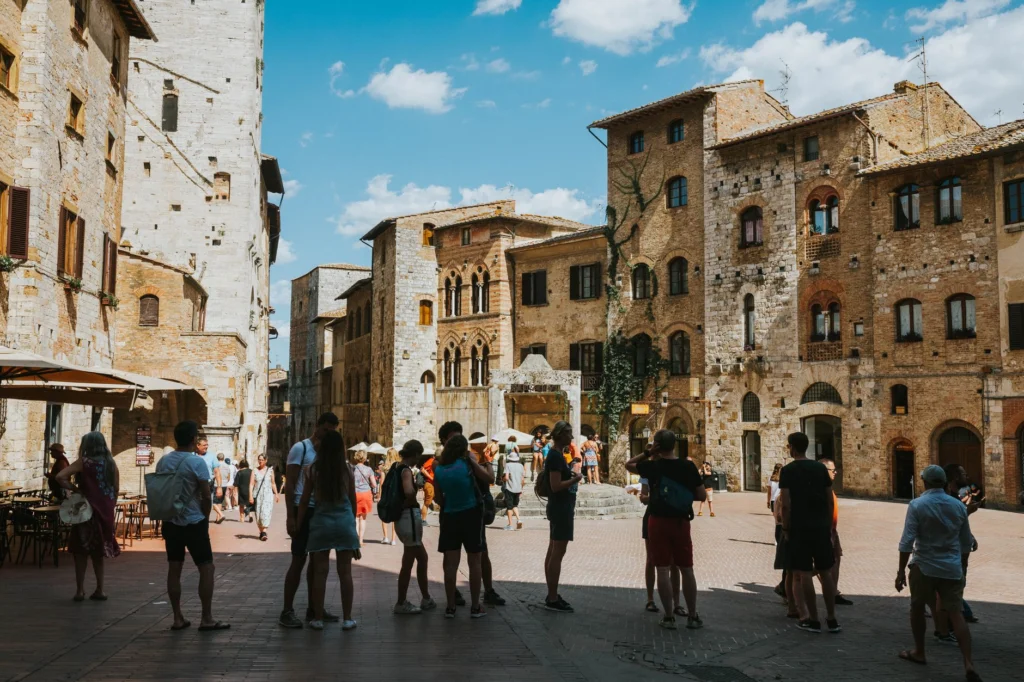
Build in time for the region beyond the cellar door. Florence and Siena hold major art and architecture. San Gimignano is known for its towers, Volterra for Etruscan and medieval history, and Pienza for Renaissance planning and pecorino. A cooking class can be a useful break from tasting and a way to learn dishes that pair with the wines.
A Sample Day in Chianti Classico and Montalcino
9:00 a.m.: Leave your base for a Chianti Classico estate. Take a vineyard and cellar tour, then taste a standard Chianti Classico alongside a Riserva. Ask about the difference between the two and about the estate’s Sangiovese clones.
1:00 p.m.: Stop for lunch in Castellina in Chianti or Radda in Chianti. Keep it simple: pasta, pecorino, and a glass of local wine.
2:30 p.m.: Drive south to Montalcino for a booked Brunello tasting. Compare a younger Brunello with an older vintage if available. The drive takes longer than it looks, so do not overbook the afternoon.
4:30 p.m.: Take a scenic drive through the Val d’Orcia and stop for photos. If time allows, walk through Montalcino and visit the fortress.
6:00 p.m.: Return to your base or stay for dinner in Montalcino. If you have been tasting, confirm your driver for the evening.
Putting the Trip Together
Choose a base, pick two wine zones, and book tastings before you leave. Leave room for unplanned stops at small towns and viewpoints. A Tuscan wine tour is best when it balances structured visits with time to eat, walk, and look at the landscape that produces the wine.
Conclusion: A Toast to Tuscany
A wine tour in Tuscany, Italy, is a practical way to learn about Sangiovese and its many expressions. From Chianti Classico’s cherry-scented wines to Brunello’s structured reds and Bolgheri’s coastal blends, each zone has its own rules and character. Plan for reservations, a designated driver, and enough time to enjoy the food and towns. The wine will make more sense when you have seen the hills it comes from.
If your company or product is mentioned in this article, you're welcome to share it.