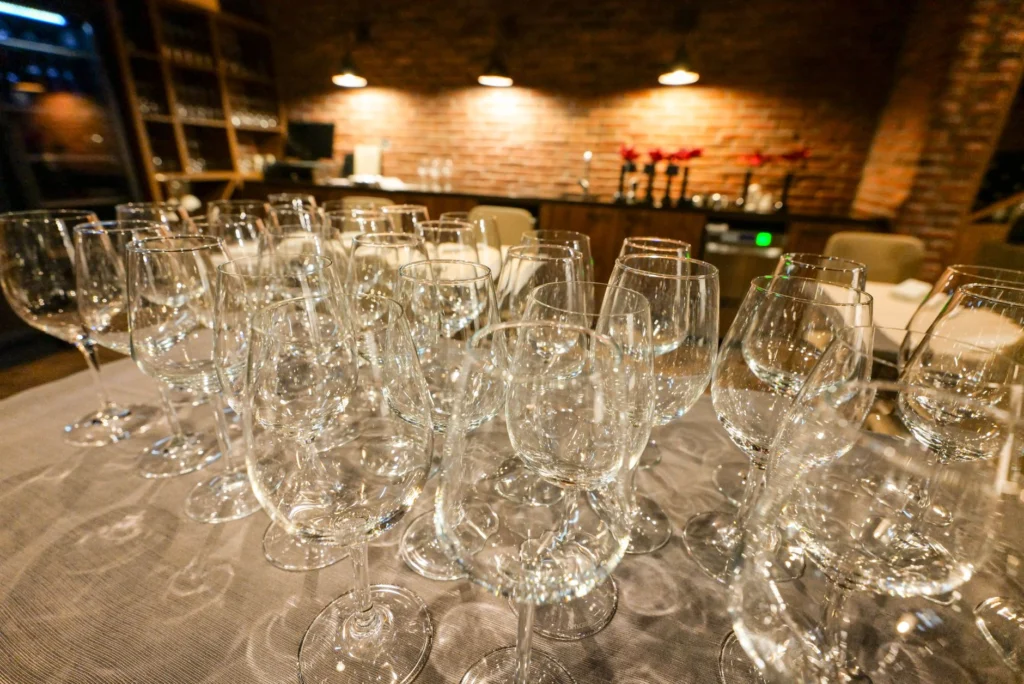
Introduction: Why Wine Glass Size Matters
A wine glass is a tool, not decoration. Bowl volume and shape change how much surface area meets air, how quickly aromas collect, and where the wine first hits your palate. The capacities below are common starting points. Glassmakers vary them, and a single well-shaped glass can work for more than one wine.
1. The Anatomy of a Wine Glass
Each part affects the pour:
- Bowl: Holds the wine. Its shape controls the surface area exposed to air, which affects aroma release and oxidation.
- Stem: Lets you hold the glass without warming the bowl with your hand.
- Base: Keeps the glass stable on the table.
- Rim: Affects how wine flows onto your palate and how the first sip feels.
Bowl shape is the main variable. A wider bowl exposes more wine to air and gives aromas room to gather. A narrower bowl limits air contact and helps keep a white wine cool. Stem and rim matter too, but bowl volume and taper do most of the work.
2. Standard Wine Glass Sizes
There is no universal standard, but common bowl capacities fall into these ranges:
- Red wine: 10-22 ounces. Larger bowls allow swirling and aroma release.
- White wine: 8-12 ounces. Smaller bowls help hold cooler temperatures and focus delicate aromas.
- Sparkling wine: 6-10 ounces for flutes. Tall, narrow shapes preserve carbonation and show bubbles.
- Dessert wine: 3-8 ounces. Small bowls suit small pours of sweet, higher-alcohol wines.
3. Red Wine Glass Sizes
Red wines generally benefit from larger bowls, but the shape should match the wine’s body and tannin.
- Bordeaux glass: Often 20-22 ounces, tall with a large bowl. It suits full-bodied reds such as Cabernet Sauvignon and Merlot. The shape sends wine toward the back of the mouth, which can soften the perception of tannin.
- Burgundy glass: Often 16-20 ounces, wider than a Bordeaux glass. The broad bowl collects delicate aromas from lighter reds such as Pinot Noir and directs wine toward the tip of the tongue, emphasizing fruit.
- Standard red wine glass: Usually 12-14 ounces. A versatile choice for medium-bodied reds such as Chianti and Zinfandel, with enough bowl for aroma without making temperature control difficult.
Larger red glasses are not automatically better. A 22-ounce Bordeaux glass can make a small pour of light red feel lost. Match the bowl to the wine and the pour size.
4. White Wine Glass Sizes
White wines usually do better in smaller bowls that keep the wine cooler and concentrate aromas.
- Standard white wine glass: Usually 8-10 ounces. Works for many whites and balances aroma concentration with temperature control.
- Sauvignon Blanc glass: Often 10-12 ounces, slightly taller and narrower than a standard white glass. The shape directs wine to the center of the palate, which can emphasize herbaceous notes and acidity.
- Chardonnay glass: Often 12-14 ounces with a wider bowl, closer to a small red glass. It gives oaked Chardonnay more room to show texture and complexity.
5. Sparkling Wine Glass Sizes
Sparkling wine glasses are designed around carbonation and aroma. There is a tradeoff: narrow shapes keep bubbles, wider shapes release aroma.
- Flute: Usually 6-10 ounces. The tall, narrow shape limits surface area, preserves carbonation, and makes the bubble stream easy to see.
- Tulip: Usually 8-12 ounces. A slightly wider bowl than a flute, it preserves bubbles while giving aromas more room.
- Coupe: Usually 4-6 ounces. The shallow, wide bowl looks vintage but loses carbonation faster. It is better for a quick pour or a sparkling cocktail than for a long tasting.
6. Dessert Wine Glass Sizes
Dessert wines are served in small glasses because the pours are small and the wines are sweet and often higher in alcohol.
- Standard dessert wine glass: Usually 3-6 ounces. The small bowl concentrates aroma and keeps a rich pour from feeling overwhelming.
- Port glass: Usually 6-8 ounces. The shape directs wine toward the back of the mouth, which can balance sweetness against tannin.
- Sherry glass: Usually 3-6 ounces. A small, tapered bowl helps focus the nutty and oxidative notes of Sherry.
7. Storage, Cleaning, and Budget
- Storage: Use a rack or cabinet with dividers, or hang stems if you have the clearance. Avoid stacking glasses bowl to base.
- Cleaning: Hand-wash in warm water with mild soap. Rinse well and dry with a lint-free cloth. Avoid harsh detergents, which can leave odors in the bowl.
- Budget: Start with two versatile shapes: a standard red glass and a standard white glass. Add a flute or tulip and a small dessert glass if you drink those wines often. Expensive glassware is not required for good results.
| Wine Type | Typical Glass Size (Ounces) | Key Features | Best For |
|---|---|---|---|
| Red Wine (Bordeaux) | 20-22 | Tall, large bowl | Full-bodied reds like Cabernet Sauvignon, Merlot |
| Red Wine (Burgundy) | 16-20 | Wide bowl | Lighter-bodied reds like Pinot Noir |
| White Wine (Standard) | 8-10 | Smaller bowl | Versatile for most white wines |
| Sparkling Wine (Flute) | 6-10 | Tall, narrow | Preserving carbonation |
| Dessert Wine | 3-6 | Smallest bowl | Concentrating sweetness |
Conclusion
Glass size is a practical variable in wine tasting. A larger bowl gives reds room to breathe; a smaller bowl helps whites stay cool and focused; a narrow flute protects bubbles; a small dessert glass keeps sweet wines in proportion. Use the ranges here as a guide, then test the same wine in two different glasses. The difference is usually clear enough to settle the question for your own table.
FAQ
Do I need different glasses for every wine?
No. Different glasses help, but a versatile red glass and a versatile white glass cover most situations. Add specialty shapes only for wines you drink often.
Can I use a red wine glass for white wine?
Yes, in a pinch. A standard red glass can work for white wine, though it may let the wine warm faster and collect more aroma than you want. A white glass is usually too small for a red wine.
How many wine glasses should I own?
A practical starter set is four to eight glasses: enough for a red, a white, a sparkling wine, and a dessert wine, with duplicates for guests. Expand based on what you actually drink.
If your company or product is mentioned in this article, you're welcome to share it.