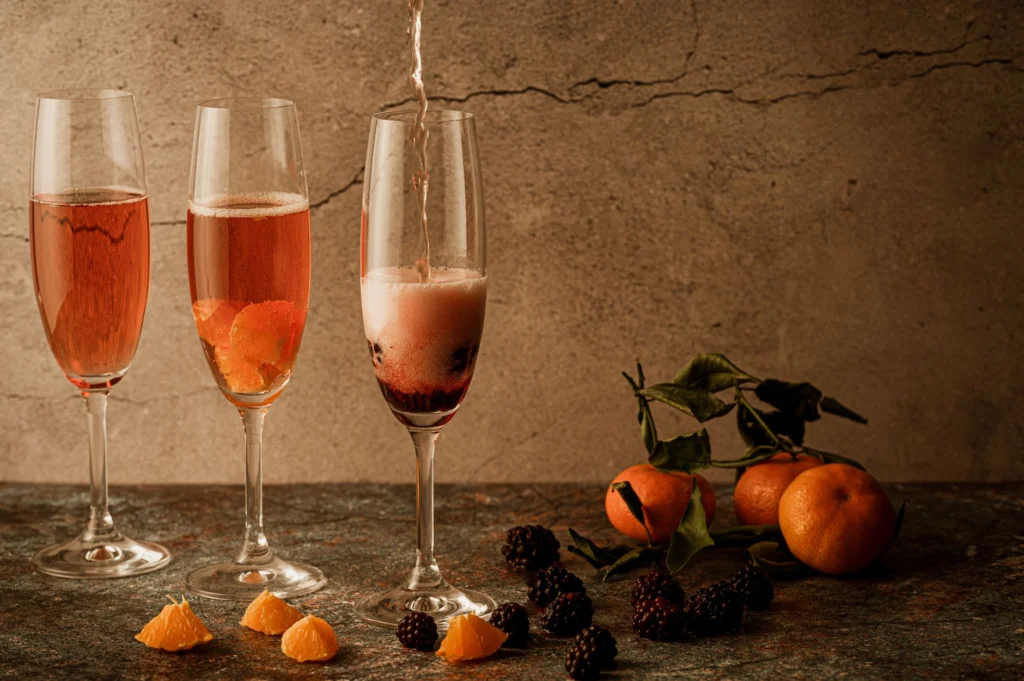
Pairing Sparkling Wine and Strawberries
Sparkling wine and strawberries work for a simple reason: the wine’s acidity and bubbles cut through the berries’ sweetness, while the fruit’s aroma fills in the lighter notes of the wine. The pairing is easy to get right if you pay attention to the wine’s sweetness level, the ripeness of the berries, and serving temperature.
Choose the Sparkling Wine
Sparkling wine covers a wide range of styles. The main categories are:
- Champagne: From the Champagne region of France and made by the traditional method. Expect citrus, brioche, and almond notes. It is often the most expensive option.
- Prosecco: From Italy and usually made by the Charmat method. It tends to be fruitier and lighter, with green apple, pear, and honeysuckle notes.
- Cava: From Spain and often made by the traditional method. It balances fruit and acidity, with lemon, quince, and a subtle earthiness.
- Crémant: French sparkling wine made outside Champagne, also by the traditional method. Crémant d’Alsace and Crémant de Bourgogne are common examples and often offer good value.
- New World sparkling wine: From California, Australia, New Zealand, and other regions. These wines often show riper fruit and can be good value.
Sweetness Levels
Sparkling wine labels indicate sweetness. From driest to sweetest: Brut Nature or Pas Dosé (no added sugar), Extra Brut (minimal added sugar), Brut (dry and the most common style), Extra Sec or Extra Dry (slightly sweet), Sec or Dry (moderately sweet), Demi-Sec (sweet), and Doux (very sweet).
For strawberries, Brut or Extra Brut is the most reliable choice. The dryness offsets the berries’ sweetness and keeps the pairing refreshing. If you prefer a sweeter match, Prosecco or an Extra Sec style will work better.
Choose the Strawberries
Look for deep red color all the way to the stem. Pale patches or green shoulders usually mean underripe fruit. Choose plump, evenly shaped berries and check that the green caps are fresh and firmly attached. Gently squeeze a berry: it should be firm, not mushy. Avoid bruised or damaged fruit, which spoils quickly. Ripe strawberries should smell sweet and fragrant. If they have no aroma or smell musty, they are past their best.
Organic strawberries are grown without synthetic pesticides and herbicides. Conventional strawberries are also safe to eat and usually cost less. Choose based on your preference and budget.
Prepare the Strawberries
Put the berries in a colander and rinse them under cool running water. Do not soak them. Wash before removing the caps, because hulling first lets the berries absorb water. Pat them dry with a clean paper towel. Remove the green caps with a paring knife or strawberry huller. Halve or slice larger berries for dipping and arrange them on a plate or in a bowl.
Serve at the Right Temperature
Chill sparkling wine to about 40-50°F (4-10°C). An ice bucket works, or refrigerate the bottle for a few hours before serving. Serve strawberries at room temperature or only slightly chilled. Berries straight from the refrigerator taste muted.
Use flutes or tulip-shaped glasses. Flutes preserve bubbles; tulips give more aroma. Wide-mouthed glasses let bubbles dissipate quickly.
How to Taste the Pairing
Take a sip of the wine first to cleanse your palate. Then bite into a strawberry and let the flavors mix. Take another sip and notice whether the wine tastes more or less sweet, whether the fruit’s acidity comes forward, and whether the finish is clean. If the wine tastes harsh, try a riper berry. If the berry tastes flat, try a wine with a little more sweetness or acidity.
Creative Twists
Chocolate-dipped strawberries add richness. Dark chocolate’s slight bitterness works well with Brut sparkling wine. Milk chocolate and white chocolate are sweeter, so pair them with a sweeter sparkling wine or use less chocolate. A drizzle of balsamic glaze adds tang and savory depth. Fresh mint adds a clean aromatic note. A small grind of black pepper can sharpen the berries’ sweetness.
For cocktails, make a Strawberry Bellini by blending fresh strawberries with Prosecco. For a Strawberry Mimosa, combine strawberry puree with sparkling wine and a splash of orange juice.
Troubleshooting
If the wine tastes too sweet, use tarter berries or add a squeeze of lemon juice. If the wine tastes too dry, choose sweeter berries or add a little honey or agave nectar. If the strawberries lack flavor, macerate them with a small amount of sugar or balsamic vinegar before serving.
When to Serve It
This pairing suits romantic dates, celebrations, brunch, and a light dessert. For a date, keep it simple: chilled sparkling wine and chocolate-dipped strawberries. For a celebration, set out a platter of fresh strawberries with a bottle of Brut. For brunch, serve a Strawberry Mimosa alongside fresh berries. As dessert, sparkling wine and strawberries make a refreshing end to a meal.
FAQ
Can I use frozen strawberries?
Fresh strawberries are better, but frozen berries work in cocktails or purees. Thaw them completely and drain excess liquid before using.
What if I do not like sparkling wine?
Try a light-bodied rosé or a crisp white such as Sauvignon Blanc. Choose a wine that balances the sweetness and acidity of the strawberries.
How long do chocolate-dipped strawberries keep?
They are best fresh. Store them in the refrigerator for up to 24 hours in a single layer. The chocolate may develop a white bloom over time, but that does not affect flavor.
If your company or product is mentioned in this article, you're welcome to share it.