The Indian Ocean gets far less attention than the Pacific or Atlantic, despite being the third-largest ocean on the planet and, geologically, the youngest and most complex of the three. Here are the real numbers behind it.
It covers roughly 20% of Earth’s water surface
The Indian Ocean spans 70,560,000 square kilometers (27,240,000 square miles) — approximately 20% of the water area of Earth’s surface, making it the third-largest of the world’s five oceans. It stretches 10,000 kilometers between Antarctica and the Bay of Bengal, and 7,600 kilometers between Australia and the southern tip of Africa.
Its deepest point sits off the coast of Indonesia
The Indian Ocean’s average depth is 12,274 feet (3,741 meters), with its deepest known point — the Sunda Deep in the Java Trench, off the southern coast of Java, Indonesia — reaching 24,442 feet (7,450 meters).
It holds a real, staggering volume of water
The Indian Ocean’s total volume is 264 million cubic kilometers, with a coastline stretching roughly 66,526 kilometers — a real, continuous edge touching Africa, the Middle East, South Asia, Southeast Asia, and Australia all at once.
It’s the youngest and most geologically complex of the major oceans
Despite first opening roughly 140 million years ago, almost all of the Indian Ocean basin is less than 80 million years old — genuinely young by geological ocean-basin standards, and a real factor behind why its underlying structure is considered the most physically complex of the world’s three major ocean basins.
It drives one of the most consequential weather systems on the planet
The Indian Ocean’s temperature patterns directly power the monsoon system that determines rainfall across South Asia, East Africa, and Southeast Asia — a real, measurable climate mechanism affecting the agricultural cycles of well over a billion people. Shifts in the ocean’s surface temperature, tracked through a real, monitored pattern called the Indian Ocean Dipole, can meaningfully intensify or suppress monsoon rainfall in a given year, making the ocean’s temperature behavior a genuine, direct input into food security and water availability across multiple countries — a level of real-world consequence most people never connect to an ocean they rarely hear discussed.
Why it deserves more attention than it gets
The Indian Ocean’s real numbers hold up against its more famous counterparts on every major measure — size, depth, volume, and geological significance — yet it consistently gets less cultural and scientific attention than the Pacific or Atlantic. That gap says more about where research funding and cultural focus have historically gone than about the ocean itself.
It’s ringed by more national coastlines than any other ocean, relative to its size
The Indian Ocean’s coastline touches an unusually large and diverse set of nations for its size — East and Southern Africa, the Arabian Peninsula, South Asia, Southeast Asia, and Australia all border it directly, giving it real geopolitical significance disproportionate to its media coverage. A substantial share of the world’s seaborne oil trade physically transits Indian Ocean shipping lanes, particularly through chokepoints like the Strait of Hormuz and the Strait of Malacca at its edges, making it one of the most economically consequential bodies of water on the planet even though it rarely dominates headlines the way Pacific or Atlantic geopolitics does.
Its coral reef systems are genuinely distinct from the Pacific’s
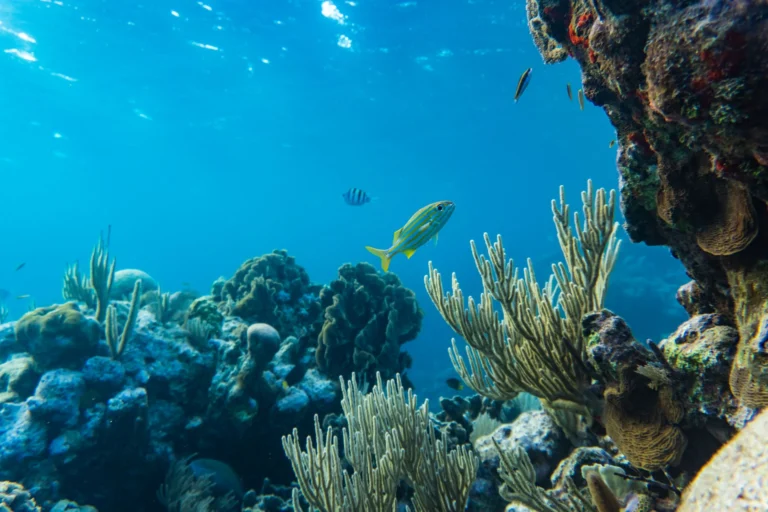
The Indian Ocean hosts real, biologically distinct reef systems — including the Chagos Archipelago and reefs around the Maldives and Seychelles — that evolved somewhat separately from Pacific reef ecosystems due to the ocean’s relative geological youth and different historical connectivity to neighboring waters. That’s a genuine scientific reason the Indian Ocean’s marine biodiversity is studied as its own category rather than simply treated as an extension of Pacific reef ecology.