The Caribbean’s snorkeling reputation isn’t evenly distributed — a handful of specific islands genuinely stand apart from the rest, for real, documented reasons tied to conservation and water clarity, not just marketing.
Bonaire — the conservation standout
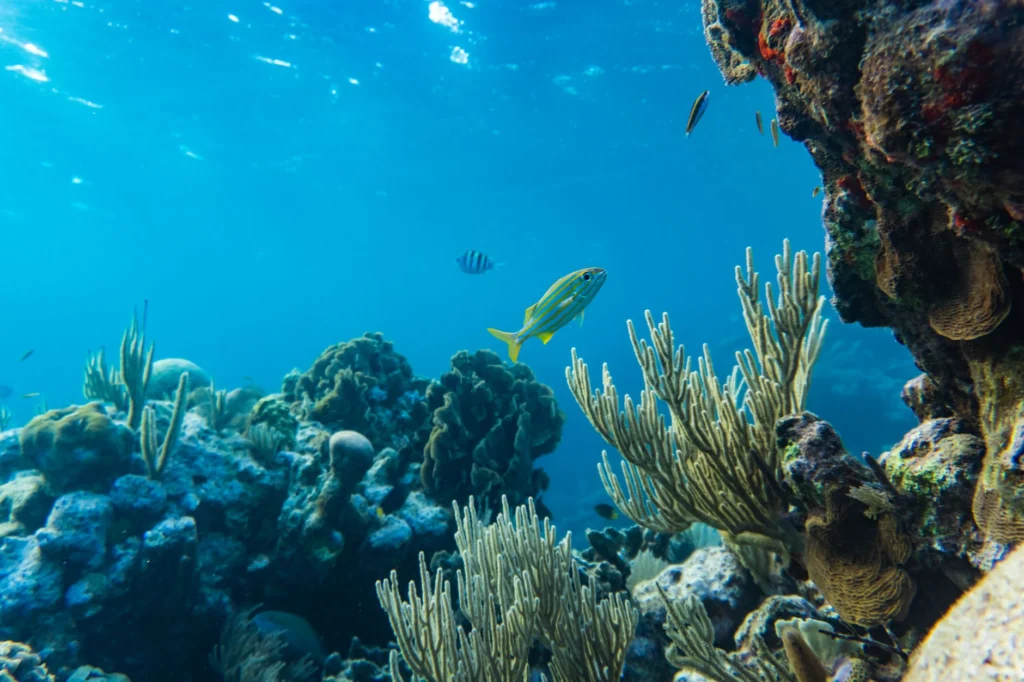
Bonaire consistently ranks as the Caribbean’s top snorkeling destination, and the real reason is structural: the Bonaire National Marine Park surrounds much of the island, actively preserving one of the region’s richest underwater ecosystems. Snorkelers can genuinely wade directly from shore into pristine reef, no boat required — though it’s worth knowing honestly that Bonaire’s beaches are mostly coral rubble and ironstone rather than soft white sand, so water shoes are a real, practical necessity for entry and exit.
Turks and Caicos — the clarity standout
Turks and Caicos is renowned for having some of the clearest water anywhere in the Caribbean, with visibility often exceeding 100-200 feet — a genuinely dramatic range that puts entire reef systems in view at once rather than the more limited visibility typical of most tropical snorkeling. Smith’s Reef is specifically noted as an ideal entry point for beginners, with warm year-round water and numerous shore-accessible sites.
What “marine park” actually means in practice at Bonaire
The Bonaire National Marine Park isn’t a symbolic designation — it comes with real, enforced rules that directly shape what visitors experience: anchoring on coral is prohibited island-wide, all divers and snorkelers entering the park pay a real conservation fee that funds ongoing reef monitoring and enforcement, and touching or standing on coral carries real penalties. That enforcement is the actual, measurable reason Bonaire’s reefs have remained healthier than many comparable Caribbean sites over recent decades — a direct result of policy, not just geographic luck.
Why Turks and Caicos’s water clarity is genuinely unusual
The visibility Turks and Caicos is known for — regularly exceeding 100-200 feet — comes from a real combination of factors: minimal freshwater runoff from rivers (the islands have none of significant size), a relatively low local population reducing coastal pollution, and a shallow, sandy continental shelf that doesn’t stir up the sediment plumes common around larger, river-fed coastlines. That’s a genuinely different set of conditions from Bonaire’s rockier, current-swept shoreline, which is part of why the two islands are usually recommended for slightly different reasons rather than treated as interchangeable Caribbean snorkeling options.
Why these two, specifically
Both islands earn their reputation through a real, verifiable structural advantage rather than general Caribbean appeal: Bonaire through active, enforced marine conservation that’s protected its reef from the degradation affecting much of the region, and Turks and Caicos through genuinely exceptional natural water clarity. Neither reputation is recent marketing — both are long-standing, dive-and-snorkel-community consensus built on real, repeated visibility and reef-health comparisons across the wider Caribbean.
How the wider Caribbean compares, honestly
Much of the broader Caribbean has faced genuine, documented reef decline over recent decades — driven by warming water, coastal development, and in some areas heavier tourism pressure than the reef systems can sustainably absorb. That’s precisely what makes Bonaire and Turks and Caicos real outliers worth naming specifically rather than folding into a generic “Caribbean is great for snorkeling” recommendation: both have measurably avoided the worst of that regional decline through a combination of low coastal development pressure, active conservation policy, and, in Turks and Caicos’s case, simply lacking the freshwater runoff that degrades water clarity elsewhere. Choosing between the two genuinely comes down to what a traveler wants more: Bonaire’s structured, shore-accessible reef diversity, or Turks and Caicos’s exceptional raw visibility.