The Dutch Grand Prix showed why staying out can be the better move
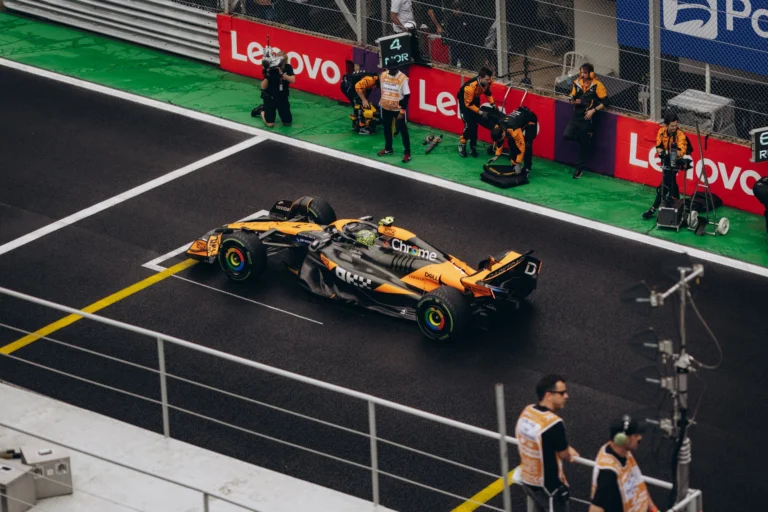
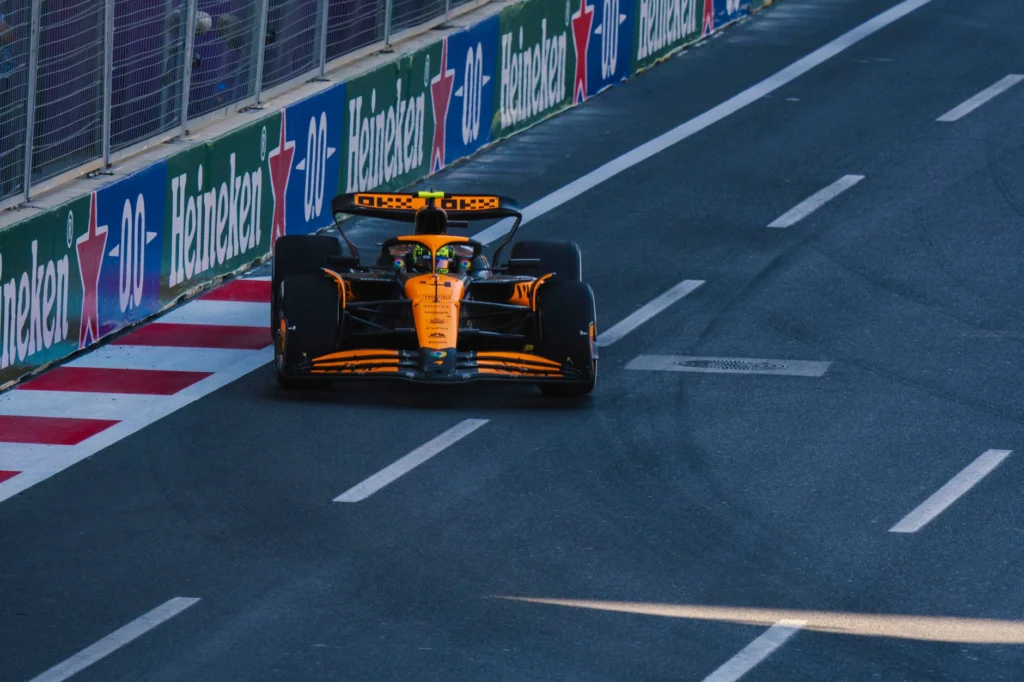
At Zandvoort on August 23, Lando Norris did not win the Dutch Grand Prix by simply following Kimi Antonelli into the pits. He extended his second stint, pressured Mercedes into changing its strategy, then used the resulting track position to take the lead.
That sequence is a useful example of what makes an overcut work in modern Formula 1.
The basic idea is straightforward: a driver who is behind stays out while the car ahead pits. Instead of gaining time on fresh tyres immediately, the chasing driver tries to extract enough pace from the older tyres to create an advantage before making their own stop.
Formula 1 defines the overcut as waiting longer than the rival to pit, with the objective of gaining track position through the extra laps on circuit. (formula1.com)
The difficulty is that old tyres normally lose performance. So an overcut is not simply "pit later." It is a calculation involving tyre degradation, clean air, traffic, pit-lane loss, the performance of the new compound and the possibility that a Safety Car or Virtual Safety Car will change the mathematics.
The 2026 season has already supplied several examples of both sides of that equation.
Norris's Dutch Grand Prix win was built around extending the second stint
The clearest recent example came at Zandvoort.
After the restart, Antonelli led Norris, but McLaren gradually brought the fight back toward Mercedes. Norris struggled on the Soft tyre early in the race, but the picture changed after the Hard tyre went onto his McLaren.
Norris was able to pressure Antonelli strongly enough that Mercedes decided it needed to protect its position rather than simply wait for McLaren to make the first move. Mercedes said it became clear that it needed to pit ahead of Norris to protect track position. (formula1.com)
That is where the overcut becomes more than a tyre strategy.
Norris did not necessarily need to make his own stop first. He needed the car ahead to reach a point where staying out became more dangerous than stopping.
Once Mercedes committed, Norris had an opportunity to use the different timing of the stops to attack.
He eventually passed Antonelli on track at Turn 1. The move itself was an overtaking manoeuvre rather than a pure pit-stop jump, but the strategy had created the conditions for it. McLaren team principal Andrea Stella said the team had extended the second stint specifically to attack Antonelli, and that it worked. (formula1.com)
The later Virtual Safety Car complicated the picture again. Antonelli stopped and took Soft tyres, while Norris stayed out. When the VSC ended, Norris had a substantial advantage and went on to win by more than 11 seconds. (formula1.com)
That is the important distinction: an overcut does not guarantee that the driver who stays out will gain positions immediately. It creates an opportunity. What happens next depends on traffic, tyre performance and neutralisations.
An overcut only works if the old tyres are still fast enough
The fundamental problem is obvious.
A driver on old tyres is normally expected to be slower than a rival who has just taken fresh rubber. If the performance gap is large enough, staying out simply means losing time every lap.
The overcut becomes attractive when the old tyre remains competitive and the new tyre needs time to reach its operating window.
That second factor matters more than the phrase "fresh tyres" sometimes suggests.
Formula 1's own analysis of the overcut has previously highlighted circuits where low degradation and difficulty warming new tyres can make staying out effective. On those tracks, a driver can produce a strong lap on used tyres while the rival struggles on the first lap after a stop. (formula1.com)
The calculation therefore looks something like this:
Time gained by staying out on the old tyre + time lost by delaying the pit stop + expected advantage on the new tyre − traffic and pit-stop effects.
If that total is positive, the overcut has a chance.
If the old tyres fall away quickly, the strategy can collapse before the driver ever reaches the pit lane.
The 2026 regulations add another layer to the calculation
The 2026 cars have changed the strategic environment as well.
DRS has been replaced by the new Overtake Mode system. Formula 1 describes Overtake as an energy-based passing aid that can be deployed when a driver is within the required range at the detection point, rather than simply relying on the old DRS zones. (formula1.com)
That matters to pit strategy because an overcut is ultimately about what happens after the stops.
Suppose Driver A pits first and returns behind Driver B. Driver A may have faster tyres, but that does not automatically translate into a pass. If Driver B can defend effectively, the theoretical tyre advantage can be worth much less than expected.
Zandvoort illustrated this indirectly. Overtaking was already considered difficult enough before the race that Pirelli warned teams to account for the cost of losing track position. Its pre-race modelling identified a one-stop Medium-to-Hard strategy as the quickest theoretical option, while also warning that limited overtaking opportunities made the value of track position significant. (formula1.com)
The race then became far more complicated after the early red flag, changing tyre behaviour and strategy options.
The Austrian Grand Prix showed the other side of the bet
If Zandvoort demonstrated how an extended stint can create an advantage, Austria showed how quickly an overcut can fail.
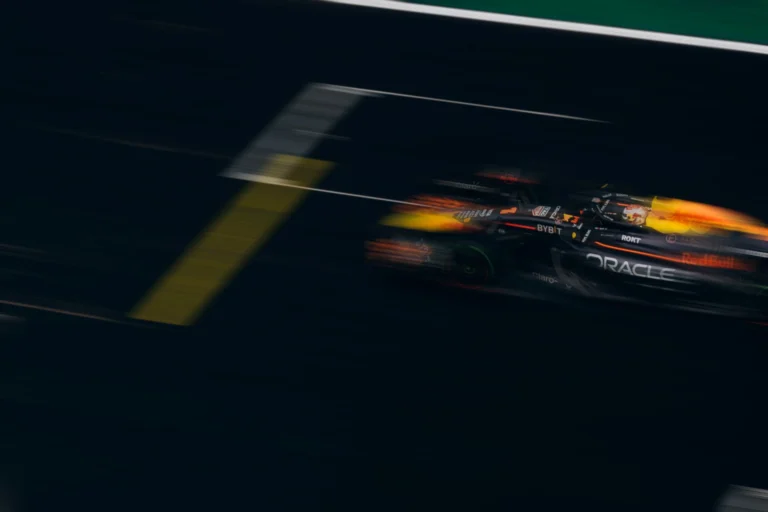
At the 2026 Austrian Grand Prix, Mercedes won with George Russell while Kimi Antonelli finished on the podium. Mercedes said it reacted to the threat of a Verstappen undercut by making the appropriate strategic calls.
Red Bull, meanwhile, left Verstappen out rather than responding to Russell's final stop. Formula 1 described the undercut as potent at Spielberg, and Verstappen later acknowledged that an earlier stop could have put him ahead. (formula1.com)
Pirelli's post-race assessment was blunt: the overcuts attempted by some drivers did not produce the desired results.
The reason was the circuit's tyre behaviour. Pirelli said thermal degradation was high enough that a one-stop strategy was not viable, while the effective two-stop approaches relied heavily on Hard tyres for the later stints. (formula1.com)
In that environment, keeping a driver out simply because an overcut is theoretically possible is not enough. The old tyre has to retain sufficient pace to compensate for the time being surrendered.
Austria showed what happens when it does not.
A Safety Car can turn a bad overcut into a good one
There is another variable no strategy model can control completely: neutralisation.
A Safety Car or Virtual Safety Car can dramatically reduce the effective time cost of a pit stop. That can reward a driver who has stayed out longer, particularly if the timing allows them to stop without surrendering as much track position.
Lewis Hamilton's 2026 victory in Barcelona is a good example of how neutralisation can transform strategy. Ferrari committed to an aggressive three-stop plan, and Hamilton's strategy was helped when he was able to make one of those stops under a Virtual Safety Car. (formula1.com)
That was not an overcut in the pure textbook sense, but it demonstrates why teams cannot evaluate a pit strategy only by comparing tyre age.
The value of waiting depends partly on what happens during the waiting period.
At Zandvoort, the late VSC worked in Antonelli's favour after he had already lost the lead, allowing Mercedes to put him onto fresh Soft tyres and protect second place from Ferrari. Norris, meanwhile, remained on track and had enough pace to build a large gap. (formula1.com)
The same neutralisation can therefore help different drivers in different ways.
The overcut is really a bet on what the race will look like one lap later
That is why the overcut can win or lose a Grand Prix without ever looking spectacular on the timing screen.
An undercut is comparatively direct: pit first, take fresh tyres, use the performance advantage before the rival responds.
An overcut asks the team to believe that the race will still be favourable when the rival has already stopped.
Will the old tyres hold together?
Will the driver have clean air?
Will the rival's new tyres switch on immediately?
Will traffic appear after the stop?
Will the driver ahead lose time defending?
Will a VSC appear?
And, increasingly in 2026, can the driver with fresher tyres actually convert that advantage into a pass under the new overtaking rules?
At Zandvoort, McLaren got enough of those answers right. At Austria, the overcut attempts largely failed.
That is why the overcut is not the "opposite" of the undercut in any simple sense. It is a decision to value future track position over the immediate performance of fresh tyres.
Sometimes the best lap is the one you drive before everyone else decides to pit.
And sometimes that extra lap is exactly where the race gets away from you.