1. Start with the style
Whiskey categories are defined by grain, origin, and production rules. The main types you will see:
- Scotch whisky is made in Scotland. Single malt Scotch is malted barley from one distillery; blends combine malt and grain whisky. Islay Scotches are known for peat smoke, while Speyside bottles tend to be fruitier and less smoky.
- Irish whiskey is made in Ireland. It is often triple-distilled, which tends to produce a smoother spirit with vanilla, honey, and orchard fruit notes.
- Bourbon is American whiskey made from at least 51% corn and aged in new charred oak. Expect caramel, vanilla, and oak.
- Rye whiskey is made from at least 51% rye. It is usually spicier and drier than bourbon, with pepper and herbal notes.
- Japanese whisky is made in Japan and often follows Scotch-style production. It tends to be balanced and precise, though prices have risen sharply for age-stated bottles.
- Canadian whisky is made in Canada and is often rye-forward and lighter in body, with caramel and baking spice.
2. Match flavor to what you already drink
If you like sweet, oak-driven flavors, start with bourbon. If you want smoke, look for Islay Scotch or a peated expression. If you prefer spice, try rye. If you want something soft and approachable, Irish whiskey is a reliable first bottle. For delicate, floral notes, look at lighter Scotch or Japanese whisky. Use tasting notes as a guide, not a guarantee: nose is aroma, palate is taste, finish is the lingering impression after swallowing.
3. Set a budget before you shop
Price does not track quality in a straight line. A $30 to $50 bottle can be excellent, and rare bottles often cost more because of scarcity, not because they taste better. Set a ceiling and leave room for tax and shipping if you buy online. If you are curious about an expensive bottle, buy a 200ml or 375ml format first when available.
4. Research without overthinking it
Read retailer product pages for ABV, age statement, and distillery. Check a few independent reviews for consistency. If three reviews mention the same note, such as heavy peat or strong rye spice, believe them. Forums can help with specific bottle comparisons, but treat enthusiastic recommendations as starting points. Look for the distillery name, the whiskey type, the age statement if any, and the ABV. A 40% ABV bottle is standard; cask strength bottles can be much higher and are usually better with a little water.
5. Choose where to buy
A good liquor store is still the best place to buy your first bottle because staff can point you toward a style you will actually like. Online retailers are useful for selection and price comparison, but check shipping rules for your state or country. Auctions are for rare or collectible bottles and come with buyer premiums, so they are not the place to start.
6. Read the label before paying
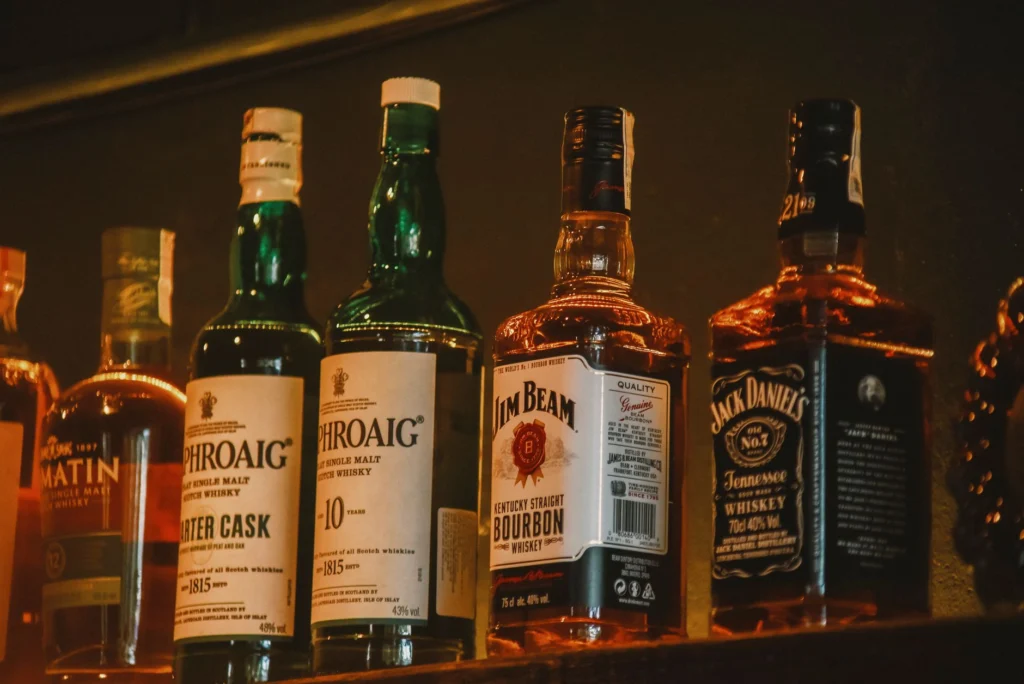
The label should tell you the whiskey type, the distillery, the ABV, and any age statement. Age statements mean the youngest whiskey in the bottle has been aged that long. Older is not automatically better, especially if the barrel was tired or the climate was hot. Bottle design is not a quality signal. A heavy glass bottle and a wax seal can look good and still hold mediocre whiskey.
7. Buy and store it properly
If you are unsure, ask for a recommendation and check for a sale. Once home, store whiskey upright in a cool, dark place away from sunlight and temperature swings. Keep the cork in contact with the whiskey only when the bottle is sealed; for long-term storage, upright is safer because high-proof spirit can degrade a cork over time. You do not need to refrigerate whiskey.
8. Drink it the way you like it
A Glencairn glass concentrates aroma; a rocks glass is fine for everyday drinking. A few drops of water can open up a high-ABV whiskey, and one ice cube will chill and dilute it. Sip slowly and pay attention to the nose, palate, and finish. Drink in moderation and do not drive after drinking.
Comparing key whiskey types
| Whiskey type | Primary grain | Typical flavor profile | Region |
|---|---|---|---|
| Scotch | Malted barley (single malt); malt and grain (blends) | Smoky, peaty, fruity, floral | Scotland |
| Irish whiskey | Malted and unmalted barley | Smooth, vanilla, honey, fruit | Ireland |
| Bourbon | Corn (at least 51%) | Sweet, caramel, vanilla, oak | United States |
| Rye whiskey | Rye (at least 51%) | Spicy, dry, peppery | United States |
| Japanese whisky | Various grains, often Scotch-style | Balanced, elegant, subtle | Japan |
| Canadian whisky | Various grains, often rye-forward | Light, smooth, caramel, spice | Canada |
FAQ
What is the best whiskey for beginners?
Irish whiskey and bourbon are common starting points because they tend to be smoother and sweeter. Look for vanilla, honey, or caramel notes. If you already like smoky flavors, try a peated Scotch instead.
Does age matter?
Age tells you how long the youngest whiskey in the bottle spent in oak. It can add complexity, but it is not a quality score. Barrel type, climate, and the spirit itself matter just as much. Read tasting notes and reviews rather than buying on age alone.
How should I store whiskey after opening?
Keep it upright in a cool, dark place. Avoid sunlight and heat. An opened bottle will slowly change as oxygen interacts with the spirit, so finish ordinary bottles within a few years if you want them close to their original character.
If your company or product is mentioned in this article, you're welcome to share it.