

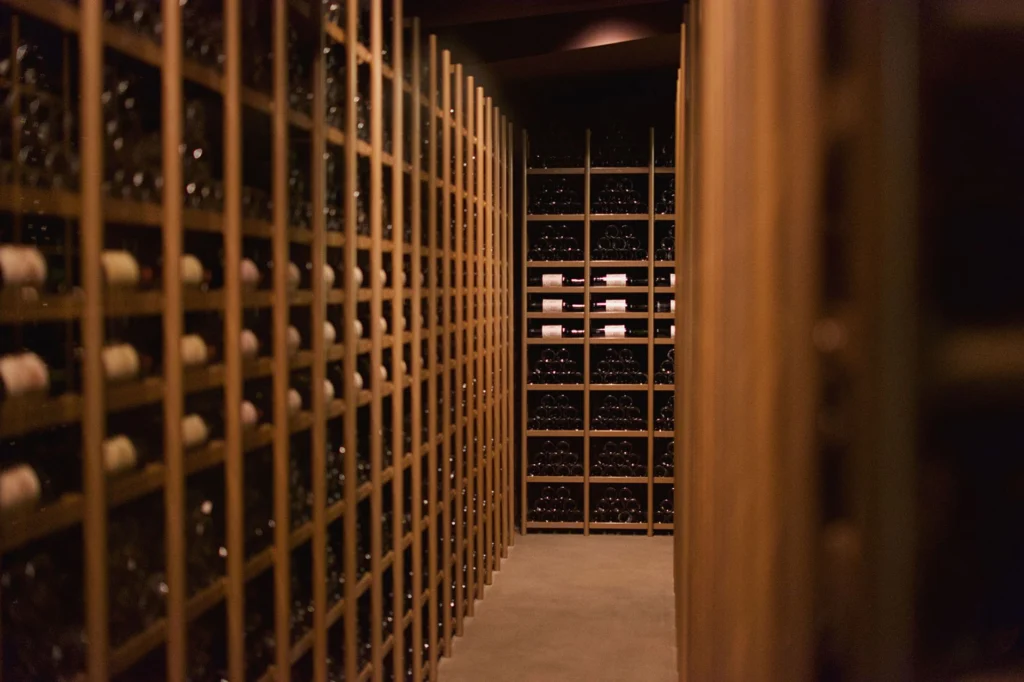
Start with the room, not the racks
A wine cellar is a climate system first and a display space second. Before choosing racking or finishes, identify a room that stays cool, dark, and stable. Basements are common because they buffer outdoor temperature swings, but an interior room away from sun and exterior walls can work if it is insulated and cooled correctly. The target storage range is 55°F to 65°F (13°C to 18°C), with humidity at 50% to 70%. Keep the space away from heavy machinery, traffic, and vibration that can disturb sediment in older bottles. Block direct sunlight because UV exposure damages wine. If the room cannot hold those conditions naturally, plan for insulation, a cooling unit, and humidity control.
1. Insulate as if the room were a refrigerator
Insulation is what lets the cooling system hold a steady temperature without running constantly. Closed-cell spray foam is usually the strongest choice because it has a high R-value and seals gaps in one step. Rigid foam boards cost less but need careful sealing at seams. Fiberglass is a poor fit for most cellars because it can absorb moisture and lose performance. Insulate the ceiling and any walls shared with conditioned rooms, and seal gaps around doors, windows, and pipe penetrations.
2. Choose a cooling system sized for the room
Cooling options fall into three broad categories. Self-contained units are the simplest and least expensive choice for small to medium cellars, but they vent warm air into an adjacent room. Ductless split systems place the evaporator inside and the condenser outside, so they run quieter and more efficiently. Ducted systems cost more and offer precise control, and they can tie into an existing HVAC plan. Size the unit using cellar volume, insulation, and desired temperature, and have an HVAC technician confirm the load before purchase.
3. Plan racking around the collection you actually have
Racking should hold bottles safely and make the cellar easy to use. Wood racking, especially redwood or mahogany, is traditional and resists moisture well. Metal racking in stainless steel or wrought iron gives a cleaner modern look and is easy to wipe down. Custom racking makes sense when the room has odd angles, columns, or a mix of bottle sizes. Decide early whether you need individual slots, bulk storage, or display rows for bottles you want visible at an angle. Leave room for future bottles rather than filling every inch on day one.
4. Use light that does not heat or damage the wine
Lighting should help you find and show bottles without adding heat or UV. LED fixtures are the practical default because they produce little heat and no meaningful UV. Fiber optic lighting can direct light to labels or display areas while keeping the source away from the bottles. Put the main lights on dimmers, and use accent lighting sparingly. Keep bottles out of direct sun and avoid incandescent bulbs.
5. Treat the door as part of the climate envelope
The cellar door has to be insulated and airtight. Solid wood or insulated metal doors work well, provided the frame is sealed with weather stripping. If you want a window, use double-paned glass with UV protection. The door should swing inward so it does not block access, and a lock is worth adding for a valuable collection. Check the seal after installation; a small gap can undo much of the insulation work.
6. Finish the room for moisture and durability
Cellar finishes should handle cool, humid conditions. Stone, brick, and wood paneling add texture and warmth. Tile, stone, or cork flooring are durable and moisture resistant. A small tasting table and chairs make the room usable, but do not crowd the storage. Artwork and display objects are fine as long as they do not block airflow or add a heat source.
7. Commission the room before you fill it
Run the empty cellar for several days and log temperature and humidity. Check that the cooling unit cycles normally, the door seals, and no condensation collects on walls or racks. Adjust the humidifier or dehumidifier before bottles go in. A cellar that holds steady conditions empty will usually hold them once full, but the first week of readings is the best warning you will get.
Common questions
What is the ideal temperature for storing wine?
Store wine at 55°F to 65°F (13°C to 18°C). Consistency matters as much as the exact number; repeated swings stress corks and wine.
How important is humidity control?
Keep humidity at 50% to 70%. Low humidity can dry and shrink corks, letting air into the bottle. High humidity encourages mold.
Can a closet become a wine cellar?
Yes, if you insulate it, control temperature, and control humidity. A closet usually needs added insulation, a cooling unit, and a humidifier or dehumidifier to hold stable conditions.
If your company or product is mentioned in this article, you're welcome to share it.


