

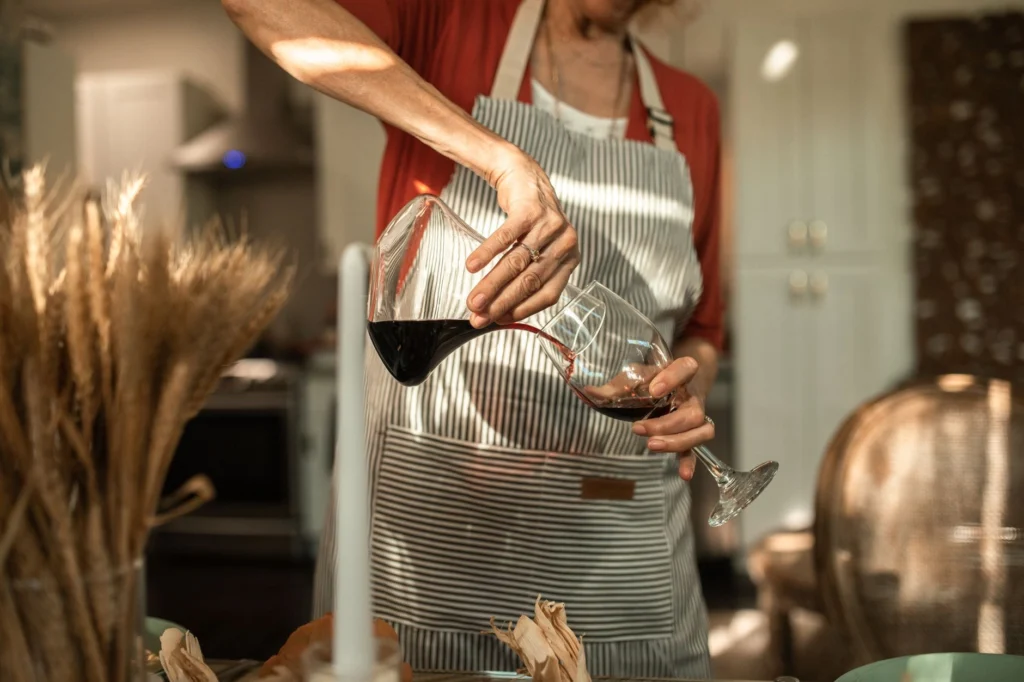
What a Decanter Set Does
Decanting has two practical jobs: aeration and sediment separation. Young, tannic red wines can soften and open up when exposed to oxygen. Older wines often throw sediment, and a careful pour leaves those particles in the bottle. A decanter set usually adds matching glasses, a stopper, and cleaning tools to the decanter itself. It is not required for every wine, and a single well-made decanter can do the same work.
Why Decant Wine
Aeration: Oxygen can soften harsh tannins in young reds and help aromas emerge. It will not fix a flawed wine, and delicate older wines can fade if left too long. Sediment: Aged reds and some whites develop tartrate crystals and tannin sediment. Standing the bottle upright and pouring slowly keeps those gritty bits out of the glass. The visual ritual is pleasant, but the useful benefits are in the glass.
What Comes in a Decanter Set
- Decanter: A wide base gives wine more surface area for aeration. A narrow neck helps control the pour. It should hold a standard 750 ml bottle with room to swirl.
- Glasses: Many sets include matching glasses. Check the shape. Bordeaux glasses suit Cabernet Sauvignon and Merlot. Burgundy bowls suit Pinot Noir. If you already have good glasses, a set with more glasses may be redundant.
- Stopper: Useful for short-term storage after decanting. It does not replace a vacuum pump or inert gas for keeping wine fresh for days.
- Cleaning brush: Decanters are awkward to clean. A curved brush or cleaning beads are more useful than an ornate stopper.
Choosing a Set
Material
Most decanters are glass or lead-free crystal. Crystal is clearer, heavier, and more expensive. Ordinary glass is cheaper and works well. For regular use, a simple glass decanter with a good cleaning brush is often the practical choice.
Shape and Size
Wide-base decanters maximize oxygen contact for young, tannic reds such as Cabernet Sauvignon, Syrah, and young Bordeaux. Narrower or smaller decanters slow aeration for mature wines where sediment separation matters more than opening up the fruit. Very large decanters can over-aerate fragile older bottles.
Wine You Drink
If most of your bottles are young and tannic, choose a wide-base decanter. If you mostly open mature reds, choose a gentler shape and taste as you decant. Some whites benefit from brief aeration, but a full decanter set is usually a red-wine purchase.
Glasses Included
Count the glasses and check their shape. Universal glasses are versatile. Varietal-specific glasses are useful if you entertain often and want a coordinated table. If the set includes no glasses, budget for them separately.
Cleaning and Storage
Look for a smooth interior, a wide enough neck for a brush, and no decorative crevices that trap wine. Rinse immediately after use, use decanter beads for stains, and air dry upside down. Do not put a decanter in the dishwasher unless the maker says it is safe. Check that the set fits your cabinet before buying.
Aesthetics
The set should suit your table and storage, but function comes first. A decanter that is hard to pour or clean will sit unused. A simple shape that pours cleanly is better than an ornate one that drips.
How to Decant Wine
- Stand an older bottle upright for at least several hours, ideally 24 hours, so sediment settles at the bottom.
- Clean the decanter and gather a candle or flashlight. A funnel is optional and helpful for beginners.
- Remove the capsule and cork. Pour slowly with the bottle neck just above the decanter opening. Hold the light behind the bottle neck so you can see sediment approaching.
- Stop pouring when sediment reaches the shoulder or neck. Leave the last ounce in the bottle.
- Let the wine breathe. Young tannic reds may need 1 to 2 hours or more. Delicate older wines may need only 15 to 30 minutes. Taste as you go rather than following a fixed rule.
Gift Considerations
A decanter set can be a good gift for someone who drinks red wine and does not already own a decanter. Check the decanter size, glass shape, and cleaning needs. Avoid a set with a decanter that is too narrow to brush. For a recipient with limited storage, one decanter and a stopper may be more useful than a large matching set.
Bottom Line
A decanter set is useful if you regularly drink young tannic reds or older sediment-heavy wines and want coordinated glasses. It will not improve every bottle. Choose based on shape, size, material, cleaning, and glass count. A simple glass decanter with a good brush is often enough. Crystal and matching glasses are optional upgrades.
If your company or product is mentioned in this article, you're welcome to share it.


