

The Wine Corner Is a Storage System First
A home wine corner works only if it protects the wine. Light, heat, temperature swings, dry air, and vibration are the main enemies. The difference between a professional and an amateur setup is usually not money. It is whether the space was planned around those conditions.
Storage and Environment
Amateurs often put a rack in a dining room or leave bottles near the kitchen. That looks fine, but cooking heat, sunlight, and daily temperature changes age wine faster than expected. Professionals keep bottles in a dark space at a steady 55°F to 65°F (13°C to 18°C), with humidity near 70%. They also avoid vibration, especially for older bottles where sediment can be disturbed.
A dedicated wine fridge or a well-insulated cabinet can do this in a small home. A basement corner can work if it stays cool and dry enough. The key is measuring conditions instead of guessing.
Inventory and Organization
Amateurs tend to organize by whatever space is available. Bottles get stacked by color or region, then forgotten. Professionals keep a simple inventory that records producer, vintage, grape, purchase date, quantity, and a drinking window. That makes it possible to find a bottle quickly and to know which wines should be opened soon.
The system does not need to be complicated. A spreadsheet is enough. The habit matters more than the software: update it when bottles come in and when they go out.
Display and Presentation
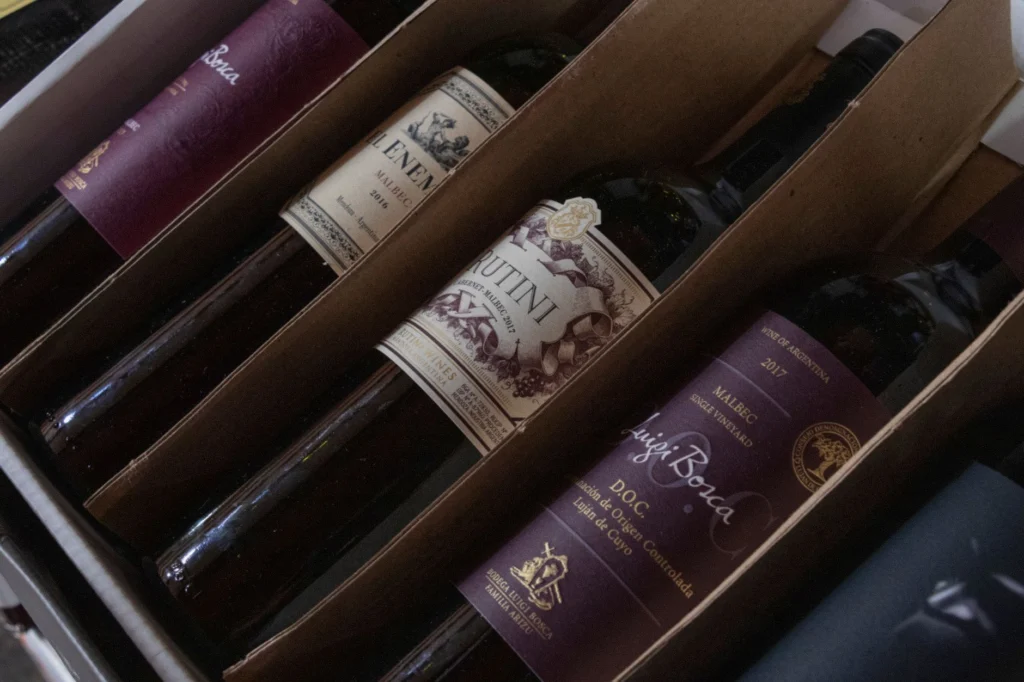
Display should not compromise storage. Amateurs may choose a rack that matches the room but exposes bottles to sunlight or lets corks dry out. Bottles stored long term should lie horizontally so the cork stays moist. If a bottle is on display upright, plan to drink it soon.
Professionals use racks, cabinets, or display cases that block UV light and keep temperature stable. They may use LED lighting, but they keep it away from direct contact with labels and bottles. Good display is functional first: easy to access, easy to read labels, and safe for the wine.
Serving and Enjoyment
Amateurs often open a bottle without checking serving temperature or glass shape. That can flatten aromas or make a wine feel hotter or sharper than it should. Professionals chill whites and rosés to the right temperature, let reds breathe when needed, and choose glassware that gives the wine room to open.
Decanting is useful for older reds with sediment and for young wines that need air. It is not automatic. A delicate older wine can fade quickly in a wide decanter, so taste as you go.
Tools and Accessories
A basic corkscrew and generic glasses will get wine into a glass, but they are not always kind to the bottle. Amateurs may struggle with brittle corks or leave half-empty bottles to oxidize. Professionals keep a reliable waiter’s corkscrew, a few glass shapes, a decanter, a wine thermometer, and a vacuum pump or inert-gas preserver for opened bottles.
Specialty tools are optional. A foil cutter and stain remover are useful, but the core kit is small: open the bottle cleanly, serve it at the right temperature, and protect what is left.
Maintenance
Amateurs often let dust build up and never check humidity. Professionals check temperature and humidity regularly, dust racks, inspect labels and corks, and rotate stock so older bottles are not left past their peak. Maintenance is mostly a monthly routine, not a major project.
Pro vs. Amateur at a Glance
| Feature | Amateur | Professional |
|---|---|---|
| Storage | Rack in a dining room or kitchen; temperature and light often ignored | Dark, stable 55°F to 65°F (13°C to 18°C); humidity near 70%; vibration minimized |
| Inventory | Bottles arranged by space or color; little tracking | Spreadsheet or database with producer, vintage, quantity, and drinking window |
| Display | Decor first; bottles may stand upright or face sunlight | UV-blocking storage, horizontal bottles for long aging, stable conditions |
| Serving | Opened on impulse; temperature and glassware often overlooked | Serving temperature, glass shape, aeration, and decanting considered |
| Tools | Basic corkscrew and generic glasses | Reliable corkscrew, wine-specific glasses, thermometer, preservation system |
| Maintenance | Dust and conditions ignored | Regular checks, cleaning, inspection, and stock rotation |
FAQ
What is the ideal temperature for storing wine?
Most wine stores best at 55°F to 65°F (13°C to 18°C). Consistency matters as much as the exact number. Frequent swings can push wine in and out of the cork and speed up aging.
How important is humidity?
Around 70% humidity helps keep corks from drying out. Too little humidity can let air into the bottle; too much can encourage mold on labels and corks.
What tools does a home wine corner need?
A reliable corkscrew, appropriate glasses, a wine thermometer, and a way to preserve opened bottles. A decanter is useful but not required for every wine.
Conclusion
A better wine corner comes from a few disciplined choices: stable temperature, low light, sensible humidity, a simple inventory, and tools that do not damage the bottle. You do not need a cellar to do this well. You need to treat storage as part of the wine, not as decoration.
If your company or product is mentioned in this article, you're welcome to share it.


