

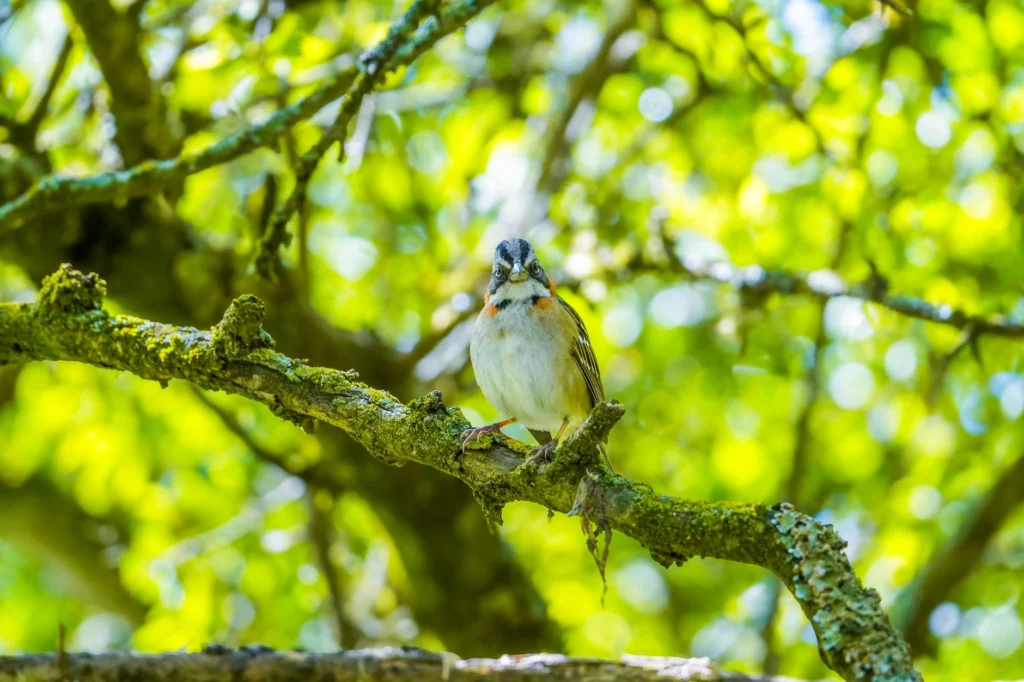
The bird behind the name
The Whiskey Jack is the Canada Jay, also called the grey jay, Perisoreus canadensis. It is a resident of boreal and subalpine forests across Canada and the northern United States. It has pale grey underparts, a darker grey back and nape, a white forehead, and a relatively short bill. Canada Jays are bold around campers and known for caching food in bark crevices and under lichen, then retrieving it in winter.
What professional ornithologists do
Ornithologists studying Canada Jays use banding and color-marking to follow individual birds over years. Because the species is sedentary and lives in family groups, resighting banded birds can reveal survival, territory occupancy, and reproductive success. Researchers also use small GPS tags and radio telemetry, with careful attention to tag weight and fit. Genetic sampling helps assess population structure and diversity, especially in isolated parts of the range. Behavioral work focuses on caching: what birds store, where they store it, and how they find it again months later. Field experiments test memory, social learning, and decision making around food storage. Habitat work maps mature spruce and fir stands, because Canada Jays depend on conifer cover for nesting and for cached food. Climate change is a concern because warm fall weather can spoil cached food and rain-on-snow can limit access in winter.
What backyard birdwatchers see
For a backyard observer, Canada Jays are memorable because they are tame and curious. In northern areas they may visit feeders or campsites, especially in winter. Birdwatchers identify them by the pale grey body, darker back and nape, white forehead, and short bill. They can attract them with suet, unsalted nuts, and seeds, and provide clean water. Avoid processed foods and salty snacks. Photography is common, but keep distance and do not let birds become dependent on handouts. Observations submitted to eBird and other citizen science programs help track distribution and seasonal presence.
Where the two approaches meet
Professional research and amateur observation are not separate worlds. Banding projects often rely on public reports of color-marked birds. eBird records from backyard watchers and visiting birders help fill gaps in remote areas. At the same time, scientists provide the protocols and analysis that make those observations useful. For Canada Jays, the combination matters because the species is widespread but hard to survey in dense boreal forest. A feeder report or a photograph of a banded bird can become a data point in a long-term study.
Conservation
The Canada Jay is listed as Least Concern by the IUCN, but some populations are declining, particularly at the southern edge of the range. Threats include logging of old-growth conifer forest, climate change, and altered food webs. Conservation means protecting large tracts of mature boreal forest and monitoring populations over time. Public education and citizen science support those efforts, but the core need is habitat.
FAQ
What is the Canada Jay’s conservation status?
Least Concern globally, with regional declines in some areas. Monitoring is ongoing.
How can I attract Canada Jays?
Offer suet, unsalted nuts, and seeds; provide clean water. Avoid processed or salty food.
When is the best time to see them?
They are resident year-round. In winter they are often more visible and more willing to approach people, especially where they have learned to find food.
If your company or product is mentioned in this article, you're welcome to share it.


