Start with the right glass
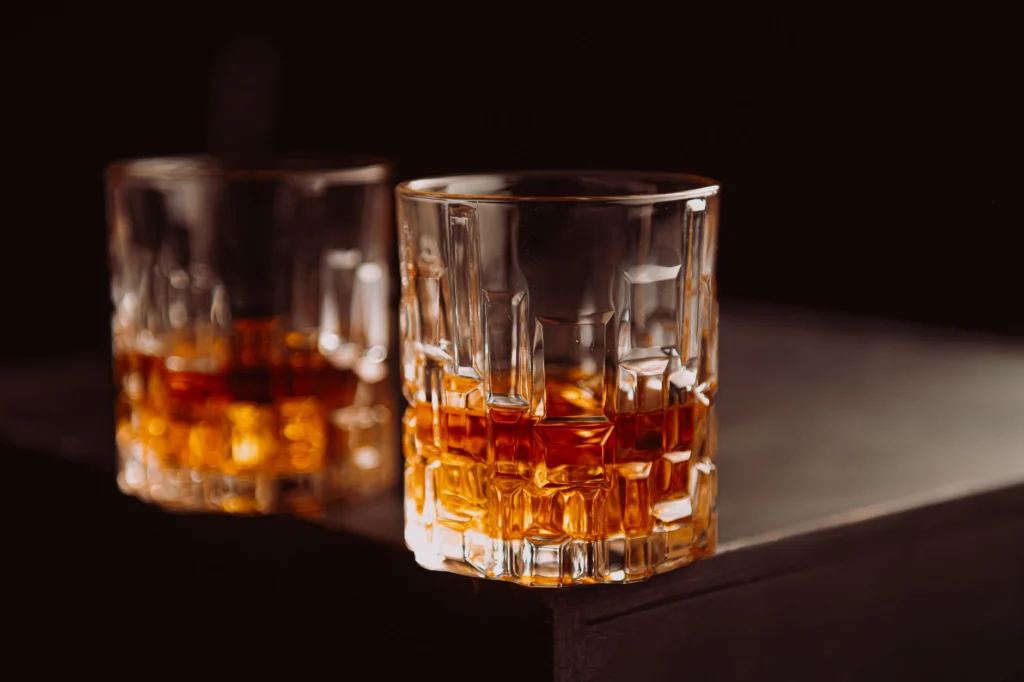
A Glencairn or tulip glass narrows at the rim and concentrates aroma. A wide tumbler lets alcohol fumes dominate, especially at higher proof. You do not need a cabinet full of glassware. One nosing glass per drinker is enough. If you use a tumbler, pour less and nose carefully.
Add water deliberately, not by habit
Water can change how volatile compounds reach your nose. Add it in small increments, ideally with a dropper, and taste after each addition. For a 40% ABV whiskey, a few drops may be enough; for cask-strength whiskey, a small splash can open aromas without flattening the spirit. Stop when the whiskey tastes more open, not thinner.
Use ice with a plan
Ice chills and dilutes. If you want cold whiskey without rapid dilution, use one large cube, whiskey stones, or a chilled glass. Small cubes melt fast and can wash out flavor. If dilution is the point, make an Old Fashioned or Whiskey Sour and treat the recipe as the intended serve.
Learn what region and production actually change
Scotch whisky is often made from malted barley and can carry peat smoke when peat is used in malting. Irish whiskey is frequently triple-distilled, which can produce a smoother texture. Bourbon must use a mash bill of at least 51% corn, be distilled in the United States, and age in new charred oak barrels, which contributes vanilla and caramel notes. These are broad patterns, not guarantees. Read the label for mash bill, age, proof, and production details instead of relying on country alone.
Research before you buy
Limited releases and attractive bottles are easy to overpay for. Check the proof, age statement if any, mash bill, and whether the whiskey is chill-filtered or cask strength. Read reviews from tasters whose preferences match yours, and sample at a bar or tasting before buying a full bottle. A $70 bottle you dislike is more expensive than a $40 bottle you finish.
Store bottles upright and out of heat
Whiskey does not age in the bottle. Light, heat, and oxygen degrade it over time. Keep bottles upright, away from direct sun and radiators, ideally around 60 to 65°F. Seal corks and caps tightly. For long-stored bottles with natural corks, check the cork periodically; do not store whiskey on its side as you would wine.
Do not stay in one lane
If you only drink one brand or one style, you miss useful comparisons. Try a peated Scotch, a high-rye bourbon, a wheated bourbon, and a pot still Irish whiskey. Keep notes on what you liked: sweet, spicy, smoky, fruity, or dry. That record is more useful than chasing scores.
Nose before you sip
Swirl gently, then smell with your mouth slightly open to reduce alcohol burn. Look for specific notes: vanilla, caramel, oak, baking spice, citrus, orchard fruit, smoke. Aroma is not decoration; it prepares you for what you will taste.
Slow down
Take small sips and let the whiskey sit on your tongue. Notice the attack, mid-palate, and finish. A 90-proof bourbon may finish in seconds; a cask-strength whiskey can linger much longer. Rushing turns a tasting into a shot.
Clean your palate between pours
Water and plain crackers work. Avoid strongly flavored snacks between samples because they can mask delicate notes. If you are comparing several whiskeys, start with the lowest proof and lightest style, then move to higher proof and heavier smoke.
FAQ
What is the best glass for whiskey?
A Glencairn or tulip glass is a practical default because it concentrates aroma. A tumbler is fine if you account for the wider opening.
Is it wrong to add ice?
No. Ice chills and dilutes. Use a large cube or chilled glass if you want cold whiskey with slower dilution.
How should I store whiskey?
Store bottles upright, away from sunlight and heat, with the cap or cork sealed. Whiskey does not improve in the bottle.
If your company or product is mentioned in this article, you're welcome to share it.