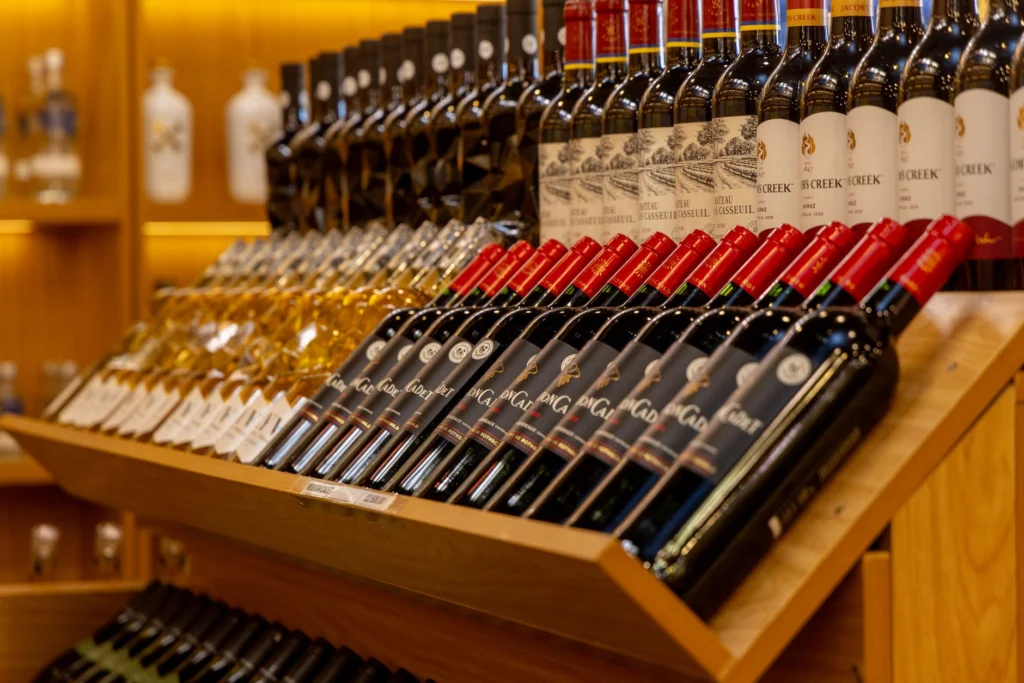
Know the reds before you shop
Red wine sales are easier to judge when you know what you actually like. Cabernet Sauvignon is full-bodied with blackcurrant, cedar, and spice. Merlot is softer, with plum, cherry, and chocolate notes. Pinot Noir is lighter, with cherry, raspberry, and earthy mushroom flavors. Syrah or Shiraz brings blackberry, pepper, and smoked meat. Malbec is rich and fruity, with blackberry, plum, and vanilla. Zinfandel is jammy and high in alcohol, with blackberry, raisin, and spice. Match the bottle to your dinner: steak with Cabernet or Syrah, salmon with Pinot Noir, roast chicken with Merlot. That prevents a discount from becoming an impulse buy you never open.
Where real red wine sales show up
Local liquor stores often run weekly or monthly specials, and their email lists are the fastest way to hear about them. Supermarket wine sections discount selected bottles around holidays and promotional periods. Online wine retailers can be competitive, but compare the final price after shipping. Winery mailing lists sometimes offer library releases or member discounts. Flash sale sites can produce genuine savings, but check the retailer’s reputation and return policy before buying. Wine clubs can be useful if the terms fit your drinking habits; read the cancellation and shipping rules first.
Compare the price, not the sticker
A sale tag means little if the original price was inflated. Check the bottle against its average retail price at more than one retailer. For online orders, add shipping and any cold-chain fees. If you already know you like a wine, ask whether the store offers a case discount or a mixed-six discount. A slightly higher bottle price can still be the better deal when shipping is free or when a volume discount applies.
Use reviews as a filter
Low price does not guarantee good wine. Check reviews from Wine Spectator, Robert Parker Wine Advocate, Wine Enthusiast, or Vivino, but read the tasting notes rather than only the score. A reviewer who mentions green pepper, high acid, or heavy oak may be describing a style you dislike. Look for consistent criticisms across several reviews. Also note the rating scale: 85 points from one publication may not mean the same thing as 85 points from another.
Check the vintage and the bottle’s history
Vintage matters most in regions with variable weather. A vintage chart or harvest report can tell you whether a year was warm, cool, wet, or dry, and whether the wines are likely to be structured or soft. Some reds improve with age; others are best drunk young. Before buying a discounted older bottle, consider whether it is likely to be past its peak. In a store, look at how the bottles are stored. Heat, direct sunlight, and temperature swings damage wine. A cork that protrudes from the bottle can signal heat exposure. If you buy online, check that the retailer ships with temperature protection in hot weather.
Experiment without overspending
A sale is a good time to try a grape or region you have not opened before. Try a Chilean Merlot, an Australian Shiraz, or a Malbec from Argentina at a price where a disappointing bottle is not expensive. Keep notes on what you liked so the next sale is easier to navigate.
Stock up, store well, and stay connected
If you find a genuine deal on a wine you already enjoy, buying a few bottles can make sense, provided you have cool, dark storage with a steady temperature. Do not buy more than you can store or drink responsibly. Wine forums, tasting groups, and retailer newsletters can alert you to upcoming sales and give you a second opinion before you commit. The best sale is the one that puts a wine you will actually drink on your table at a fair price.
Quick reference
| Factor | What to check |
|---|---|
| Wine type | Cabernet Sauvignon, Merlot, Pinot Noir, Syrah, Malbec, Zinfandel |
| Retailer | Liquor store, supermarket, online retailer, winery mailing list, flash sale site |
| Price | Average retail price, shipping, case or mixed-six discount |
| Reviews | Tasting notes and consistent criticisms, not just the score |
| Vintage | Vintage chart, harvest report, likely drinking window |
| Storage | Cool, dark conditions; intact cork; shipping protection |
FAQ
How often do liquor stores discount red wine?
Many run weekly or monthly specials, with larger promotions around holidays. Email newsletters and social media posts are usually the most reliable notice.
Are flash sale wine sites safe?
They can be, but verify the retailer’s reputation, the wine’s reviews, shipping costs, and return policy before buying. A deep discount does not offset an unreliable seller or a bottle that has been badly stored.
How should I store sale bottles?
Keep them in a cool, dark place with a steady temperature, away from direct sun. Store bottles on their sides if you plan to keep them, and use a wine fridge or cellar for longer aging.
If your company or product is mentioned in this article, you're welcome to share it.