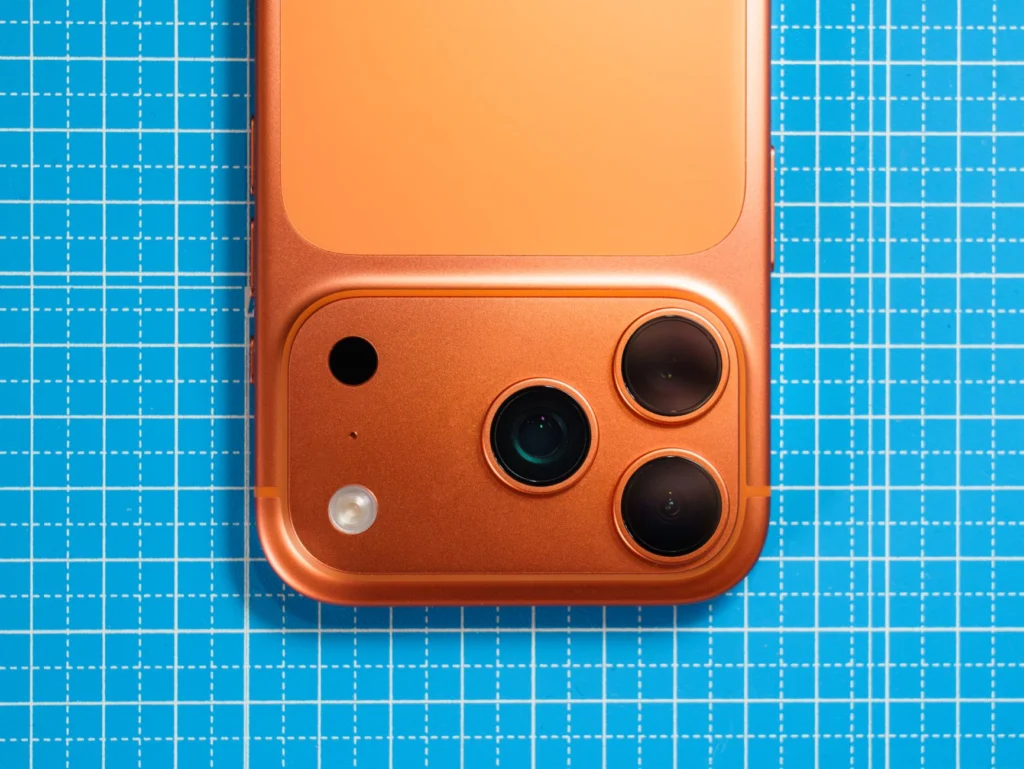
A modern smartphone is, among other things, a small bundle of specialized physics instruments most owners never directly interact with. The camera and GPS get all the attention; the sensors quietly running underneath nearly every other feature almost never do, despite doing genuinely interesting and specific engineering work.
The barometer
Most flagship phones include a barometric pressure sensor, originally added primarily to speed up and improve the accuracy of GPS-based elevation readings — air pressure changes predictably with altitude, so a barometer can detect a floor-level change (walking up a flight of stairs, or riding an elevator) far faster than GPS altitude data alone can resolve it. It’s sensitive enough that a well-built physics app can measure an elevator’s speed and acceleration from the pressure change alone, a genuinely surprising capability from a sensor most owners don’t know exists.
The magnetometer
The same sensor that powers a phone’s compass app is sensitive enough to detect the magnetic field disturbance created by metal objects — which is exactly the working principle behind a dedicated stud finder or metal detector. Pointed at a wall and moved slowly, a magnetometer reading will genuinely spike near a metal pipe, electrical conduit, or structural fastener behind drywall, which is why several legitimate home-improvement apps use it as a rough, free alternative to a dedicated stud-finding tool.
None of these sensors were added to let you find a stud in a wall or time an elevator. They were added to make GPS faster and the compass more accurate — the fun secondary uses are a byproduct of solving a completely different engineering problem.
The proximity sensor
Located near the earpiece speaker, the proximity sensor’s actual job is unglamorous but important: detecting when a phone is held up to a user’s ear during a call, so the touchscreen can be disabled and prevent an ear or cheek from accidentally triggering buttons mid-conversation. It typically works via infrared light reflection, measuring how much light bounces back to estimate whether something is close to the sensor.
The ambient light sensor
A separate sensor from the proximity sensor, this one measures the actual brightness of the surrounding environment specifically to drive automatic screen-brightness adjustment — dimming the display in a dark room to avoid straining the eyes, and boosting it in direct sunlight so the screen stays readable, without requiring the user to adjust it manually every time the lighting changes.
The accelerometer and gyroscope, working together
These two sensors, used together, are what let a phone know both how it’s moving (accelerometer) and how it’s rotating in 3D space (gyroscope) — the combination underlies everything from screen auto-rotation to step counting to the AR frameworks that power camera-based measuring apps, and is precise enough that dedicated sensor apps can turn a phone into a legitimate tool for basic physics experiments, from measuring a car’s acceleration to timing a pendulum’s swing.
Why this is worth knowing
None of these sensors were designed as consumer novelties — each solves a specific, narrow engineering problem for a core phone feature. The fact that a curious user can repurpose them for genuinely useful side tasks is a byproduct of good, general-purpose sensor engineering, not a hidden feature Apple or Google specifically built for that purpose.
Sources
Hackaday: smartphone sensors as a physics lab, MakeUseOf: hidden Android sensors.