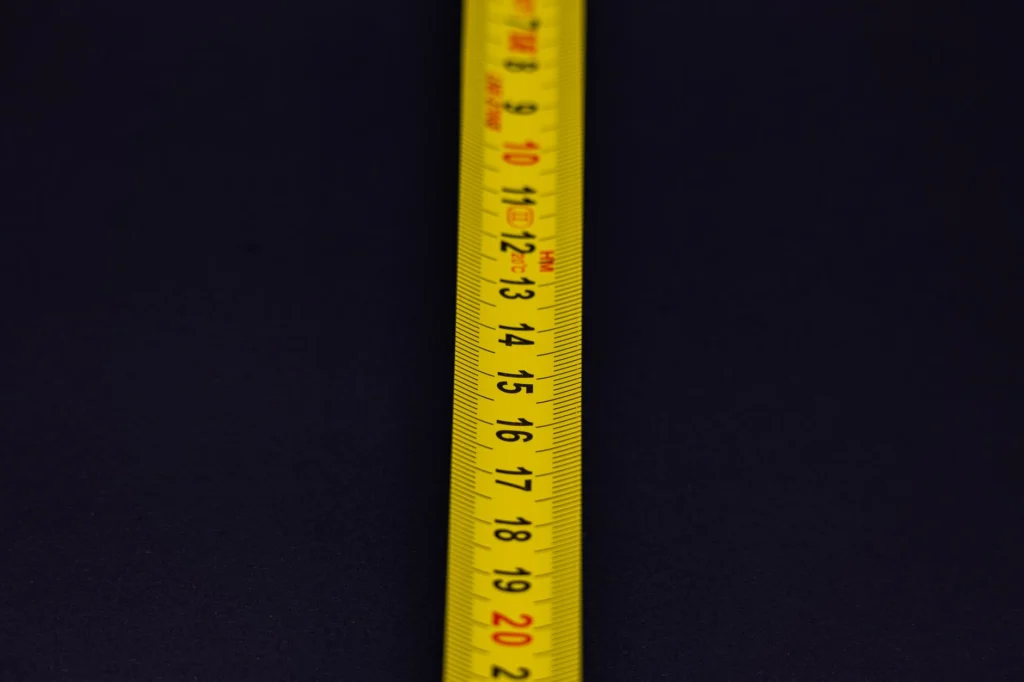
Measurement apps that turn a phone’s camera into a virtual tape measure have become genuinely popular for a specific, narrow reason: for a large share of real-world measuring questions, close enough is actually good enough, and a phone is always in your pocket while an actual tape measure usually isn’t.
How these apps actually work
Modern smartphone measuring apps rely on AR (augmented reality) frameworks built into the phone’s operating system, which combine camera image data with the phone’s motion sensors — accelerometer and gyroscope — to build a real-time 3D map of the space in front of the camera. By tracking how the phone moves through space while the camera identifies visual reference points in the environment, the app can estimate real-world distances between two points a user taps on screen, without any physical contact with the object being measured.
Where the accuracy actually holds up
For low-stakes, forgiving questions — will this couch clear the doorway, will this box fit in the trunk, is this gap roughly wide enough for a bookshelf — AR measuring apps are accurate enough to be genuinely useful, typically landing within a few percent of the true measurement under decent lighting and with a steady hand. That’s precise enough for exactly the kind of quick, low-consequence decision most people actually reach for their phone to answer, rather than walking to find a physical tape measure.
The honest way to think about phone-based measuring isn’t “accurate” versus “inaccurate.” It’s a specific error margin that’s completely fine for a couch and completely wrong for a cabinet you’re about to cut wood for.
Where it genuinely breaks down
Accuracy degrades meaningfully in low light, on featureless surfaces the AR system can’t find visual reference points on (a plain white wall, for instance), and over longer distances, where small angular errors compound into larger absolute measurement errors. For anything involving a hard tolerance — cutting material to size, hanging something that needs to be precisely level, or any task where being off by even a centimeter causes a real problem — a physical tape measure remains meaningfully more reliable, and professional contractors and tradespeople almost universally still carry one for exactly this reason.
The sensors doing the actual work
Beyond pure camera-based AR measuring, phones carry a genuinely useful set of built-in sensors most people never explore directly: a magnetometer capable of detecting the same magnetic field disturbance a stud finder uses to locate metal behind drywall, a barometer sensitive enough to detect the pressure change from riding an elevator up a single floor, and in some models, an infrared sensor capable of estimating an object’s surface temperature from a couple of inches away. Dedicated sensor-access apps exist specifically to expose this raw data directly, letting a curious user turn a phone into an improvised physics instrument for genuinely accurate experiments a AR measuring app isn’t designed for.
The practical takeaway
Treat a phone’s measuring capability the way you’d treat a rough visual estimate from someone with a good eye: trustworthy enough to make a quick, reversible decision, not trustworthy enough to skip getting an actual measurement before an irreversible one. That distinction, more than any specific accuracy percentage, is the useful thing to actually remember.
Sources
Gadget Hacks: phone as a tape measure, MakeUseOf: hidden phone sensors.