DoorDash's first major crisis was not caused by a competitor, a failed product launch or a collapse in demand.
It was caused by too many customers.
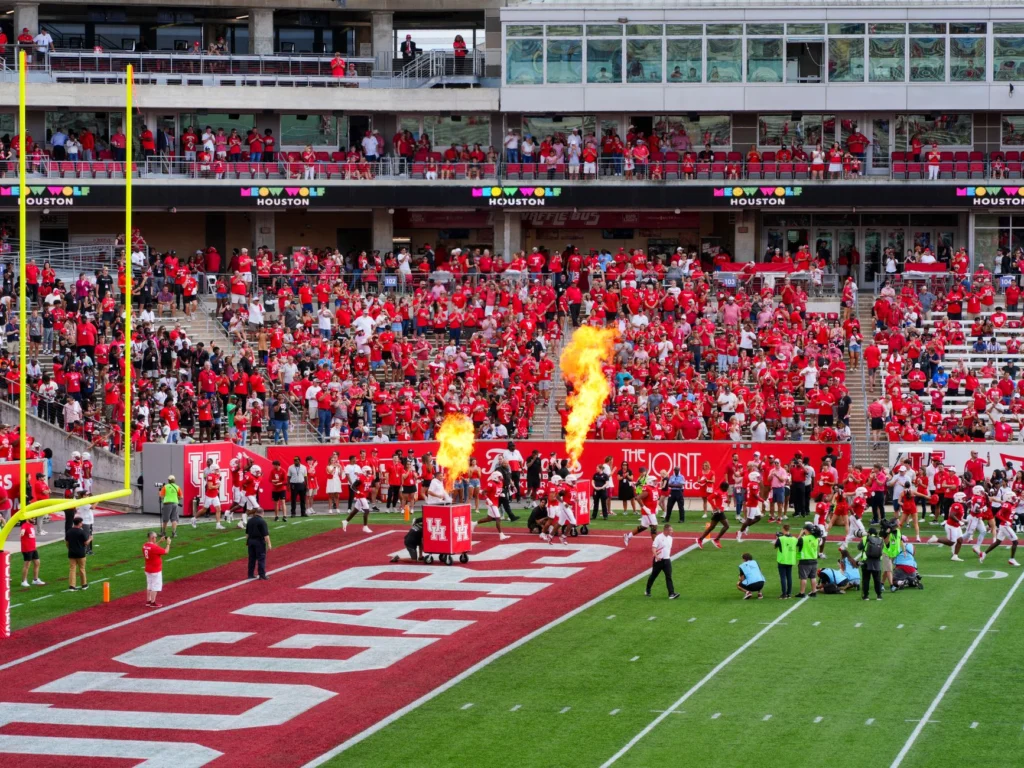
In September 2013, during Stanford's first home football game of the season, DoorDash received roughly a hundred orders in a short period, according to Tony Xu's later account. For a company that was still tiny, largely unfunded and operating with almost no delivery infrastructure, the surge was catastrophic. The founders themselves were among the people making deliveries. Orders arrived faster than they could fulfill them. Xu has said every order was late, with some customers waiting more than an hour. (sequoiacap.com)
Then came the decision that could have made the situation even worse financially.
DoorDash refunded the customers.
According to Xu, those refunds represented more than 40% of the company's remaining bank balance. The company was already struggling to secure seed financing. In one version of the story published by DoorDash, the founders and team spent the night baking cookies and writing apology notes, then personally delivered the care packages before morning. (about.doordash.com)
DoorDash survived. But the episode matters because it reveals how close the company's early version was to breaking under the very thing startups are supposed to want: demand.
DoorDash started as a much smaller experiment called Palo Alto Delivery
The company that would become DoorDash began as Palo Alto Delivery.
According to DoorDash's 2020 S-1 filing with the U.S. Securities and Exchange Commission, its founders launched a website displaying menus from local Palo Alto restaurants on January 12, 2013. Within hours, the company's first customer ordered prawn pad thai and spring rolls from a nearby Thai restaurant. The food was then delivered to the customer's door. (sec.gov)
That official account gives the date and the first order. The broader origin story, however, has accumulated several versions over the years.
Stanley Tang, one of DoorDash's co-founders, wrote in 2013 that the founders had been speaking with small-business owners about technology when a macaroon shop manager showed them a thick collection of delivery requests she could not fulfill because the business lacked drivers. Tang wrote that the founders then interviewed more than 200 small-business owners across the Bay Area and repeatedly encountered delivery as a problem. (stanleytang.com)
That account should be understood as a founder's retrospective description rather than an independently audited origin story. What is well documented is the practical result: the founders built PaloAltoDelivery.com and began taking delivery orders themselves.
Tony Xu later wrote that the early operation had almost no conventional logistics infrastructure. The founders used Google Voice, the Find My Friends app and their own cars to coordinate deliveries. Their office was Stanford student housing, and their early marketing included flyers on dormitory bulletin boards. (about.doordash.com)
DoorDash was not yet the technology-heavy logistics company people recognize today.
It was, at least initially, four people trying to make restaurant delivery work.
By April 2013, the company had completed only 217 deliveries
The scale of the early business is easy to forget because of what DoorDash later became.
Y Combinator president Garry Tan wrote that when he interviewed the DoorDash founders in April 2013, the company had completed just 217 deliveries. It was not yet incorporated or funded, had no app and operated through a website. The founders were still doing much of the delivery work themselves. (ycombinator.com)
The company therefore had evidence that people wanted the service. But evidence of demand was not the same thing as proof that the business could scale.
Food delivery is operationally unforgiving. A software bug can sometimes be fixed after customers encounter it. A late meal cannot be turned back into a hot one after it has spent an extra hour in a car.
The founders were learning that problem by physically doing the work.
In a 2013 report by The Stanford Daily, DoorDash's founders said they had personally completed hundreds of deliveries before joining Y Combinator. The publication also reported that the company had expanded its driver base as orders increased. (stanforddaily.com)
That hands-on period became part of the company's later mythology, but it was also a necessity. DoorDash did not yet have the systems required to abstract the physical work away from its founders.
And then came the Stanford football game.
The company discovered that demand could destroy a business before it saved it
Xu has described September 2013 as DoorDash's first major crisis.
The first Stanford home football game created an unusual concentration of demand after the game ended. Customers began placing delivery orders at a rate DoorDash could not handle. Xu later said the company did not have enough drivers and, crucially, lacked an effective mechanism for stopping the website from continuing to accept orders. (podscripts.co)
That combination created a familiar marketplace failure.
Demand continued entering the system while fulfillment capacity had already collapsed.
DoorDash's own 10th-anniversary account says the team's entire staff went out to make deliveries. Even then, orders were, on average, more than an hour late. (about.doordash.com)
Xu has offered slightly different estimates of the delays in different retellings. In his conversation with Sequoia, he said the average delay was at least 45 minutes and that some deliveries were more than an hour late. In another account, he described deliveries as at least an hour late and possibly closer to an hour and a half. The precise average therefore should not be treated as settled. What is consistent across the accounts is that the service failed badly that night. (podscripts.co)
The company was still in its first year.
And it was running low on money.
Refunding customers meant giving up roughly 40% of the company's remaining cash
The operational disaster could have ended as a painful early lesson.
Instead, DoorDash made the financial situation worse deliberately.
Xu has said that he had not yet secured seed financing and that the company's remaining cash runway was measured in days or perhaps a couple of weeks. When the founders calculated the cost of refunding every affected customer, they concluded that it would consume approximately 40% of the company's remaining money. (about.doordash.com)
The exact phrasing varies between Xu's accounts. DoorDash's anniversary post described the refunds as spending about 40% of the company's remaining runway, while Xu told Sequoia that the refunds would cost more than 40% of the bank account. The broad financial picture is consistent even if the precise accounting terminology differs: the company was extremely short of cash, and refunding customers was expensive. (about.doordash.com)
They did it anyway.
According to DoorDash and Xu's later accounts, the founders then stayed up through the night baking cookies and preparing personal apology notes. The care packages were delivered before 5 a.m. (about.doordash.com)
It is an unusually polished survival story today, especially because DoorDash eventually became one of America's largest delivery platforms. But the underlying facts are less glamorous than the legend.
The company had failed to match demand with delivery capacity.
Its founders had personally handled the consequences.
And then they spent money they could barely afford to spend trying to repair the relationship with customers.
Investors were not immediately convinced that food delivery was worth building
The financial pressure behind the football-game crisis was not accidental.
DoorDash had difficulty raising money in its early days.
Stanley Tang later recalled that the seed fundraising process was difficult because, in 2013, many Silicon Valley investors were more comfortable with software businesses that did not require extensive real-world operations. Tang recalled one prominent investor questioning why capable Stanford students would choose to build a food-delivery company instead of "the next Google." Tang said that investor eventually invested in DoorDash, but the remark reflected the skepticism the company encountered. (stvp.stanford.edu)
The skepticism was understandable.
DoorDash was not simply building an app. It needed customers, restaurants and drivers to participate at the same time. It had to solve dispatch, pickup timing, delivery routes, customer expectations and restaurant coordination. Software could help manage those systems, but software alone did not put food in someone's hands.
That was precisely why the founders kept doing deliveries themselves.
By the time Y Combinator met the company in April 2013, Garry Tan said the founders were still personally handling much of the delivery work while talking constantly with customers, restaurants and potential drivers. He described the business as anything but proven. (ycombinator.com)
That assessment was probably closer to the reality of early DoorDash than the polished startup mythology that came later.
The company had traction.
It did not yet have a durable machine.
The football-game disaster exposed the problem DoorDash eventually had to solve
DoorDash's early struggle was not that people refused to order food.
People ordered enough food to overwhelm the company.
The real challenge was turning unpredictable local demand into a system that could reliably coordinate restaurants, customers and drivers. In 2013, DoorDash's solution was still painfully manual. Its founders were effectively part of the logistics network themselves.
That makes the Stanford football game more than a dramatic founder anecdote.
It was an early demonstration of the company's central problem.
A delivery marketplace cannot simply grow by accepting more orders. Every additional order creates a physical obligation somewhere else: someone must prepare the food, someone must pick it up and someone must deliver it before the customer decides the experience has failed.
DoorDash learned that lesson when it was still small enough for the founders to personally answer the angry calls.
Its S-1 would later describe a company that had grown from a simple restaurant-menu website into a major logistics platform. But the first version of that business had almost no cushion. When demand suddenly spiked, the system broke, the customers waited and the founders faced a decision that consumed a large share of their remaining cash. (sec.gov)
DoorDash did not nearly fail because nobody wanted what it was selling.
For one night in 2013, it nearly failed because far too many people did.