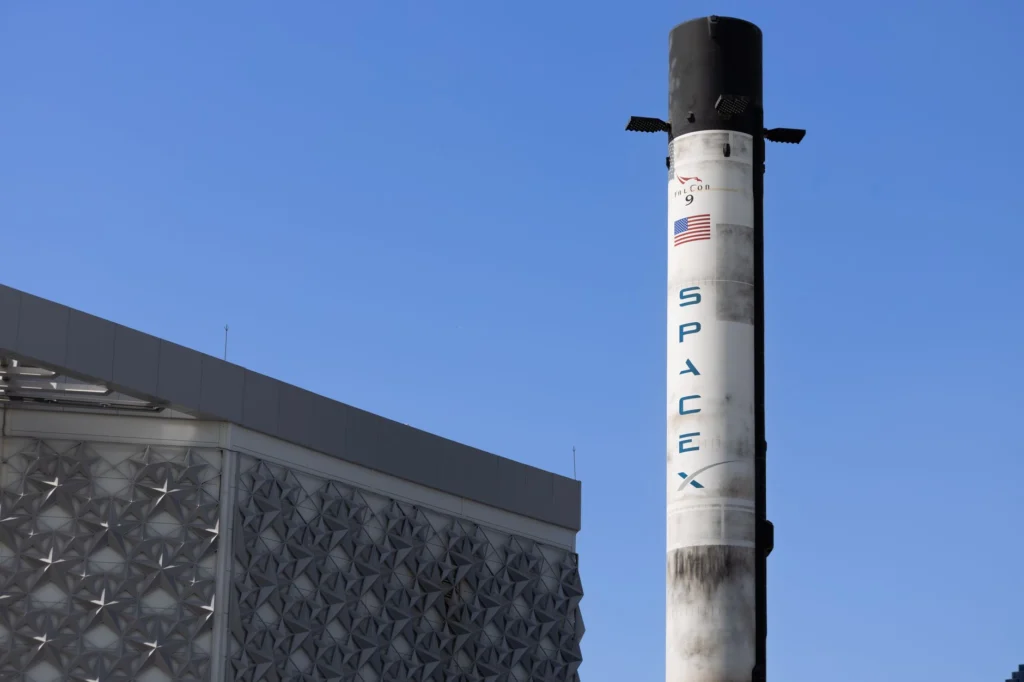
In September 2008, SpaceX was preparing to launch the fourth Falcon 1 rocket after three previous attempts had failed. Tesla, meanwhile, was running out of money during the financial crisis. Musk had already put much of the fortune generated by his earlier companies into both businesses.
The next few months would determine whether he remained a wealthy Internet entrepreneur with ambitious industrial hobbies or became the person now associated with rockets, electric vehicles and some of the most valuable technology companies in the world.
That distinction matters because the familiar version of the Elon Musk story often starts too late. It begins with Mars, Tesla cars or a billionaire buying companies. It skips the more useful sequence of decisions: starting in software rather than manufacturing, using the proceeds of one exit to fund increasingly capital-intensive bets, losing control of companies, surviving failures that could have ended the next company, and repeatedly concentrating resources on problems that established businesses considered too expensive or uncertain.
Musk did not become Elon Musk in one dramatic leap. The career was cumulative.
And some of the stories surrounding that career are much less settled than the mythology suggests.
Zip2 made Musk rich, but it also taught him what losing control felt like
Musk co-founded Zip2 in 1995 with his brother Kimbal. The company developed software and services for newspaper publishers and local information businesses during the early commercial expansion of the Internet.
The underlying business is sometimes simplified into a story about an early online map or city-guide company. Zip2 was broader than that. Contemporary reporting described it as software for publishers building classified listings and online city guides, while Compaq's acquisition announcement described Zip2 as providing Internet platform solutions for media companies and local e-commerce merchants. (edgar.secdatabase.com)
That distinction matters because Musk's first major success was not based on inventing a new scientific technology. Zip2 was a response to a specific commercial transition: newspapers and local businesses needed a way to move information and advertising online.
The company succeeded in part because the Internet itself was rapidly becoming commercially useful. Timing did substantial work.
Zip2 was eventually acquired by Compaq in 1999. Compaq's SEC filings put the aggregate purchase price at approximately $341 million, including $307 million in cash, employee stock options and acquisition-related costs. (sec.gov)
Musk's personal proceeds are commonly reported at roughly $22 million. That figure appears in major retrospective reporting, including the Washington Post's account, but the more important point is simpler: the Zip2 sale gave Musk enough capital to stop being merely a startup founder and start financing his own bets. (washingtonpost.com)
The Zip2 years also exposed a recurring feature of Musk's career: a strong desire for operational control.
Later accounts describe disagreements between Musk and Zip2's investors and board over management and strategy. Some of the most detailed versions come from biographies and interviews rather than contemporary corporate filings, so the precise motives and private arguments should not be treated as settled fact. What is well established is that Musk did not simply remain in charge of every company he started.
That would happen again, more dramatically, at X.com.
The practical lesson was consequential. Capital was useful. Ownership and control were not the same thing.
Musk would spend much of his subsequent career trying to have both.
X.com showed that Musk could lose the CEO job and still win the company outcome
In March 1999, shortly after the Zip2 sale, Musk founded X.com, an online financial-services company. The name would eventually become famous again decades later, but the original X.com was an attempt to build financial services on the Internet.
The timing was aggressive. Online banking and digital payments were still developing, and the eventual winner was far from obvious.
In March 2000, X.com merged with Confinity, the company behind PayPal. SEC filings from the resulting company confirm that X.com was the surviving legal entity in the merger and that the former Confinity shareholders owned approximately 46.5% of the voting interest immediately afterward. The company formally changed its name to PayPal in February 2001. (sec.gov)
The merger did not produce a smooth founder hierarchy.
PayPal's own SEC filings record Musk's changing executive roles with unusual clarity. He served as CEO of X.com from March to December 1999, then as CEO of PayPal from May to September 2000. (sec.gov)
In other words, Musk was removed from the CEO position before PayPal reached its eventual exit.
That is a crucial fact because the popular founder mythology often presents successful entrepreneurs as people who personally control a company from founding to victory. Musk's own record does not fit that model.
He lost the CEO job.
The company still became enormously successful.
eBay acquired PayPal in 2002 for $1.5 billion. Tesla's current SEC disclosures summarize Musk's pre-SpaceX history by describing him as a co-founder of PayPal and noting the acquisition by eBay in October 2002. (ir.tesla.com)
The PayPal experience contributed more than money.
It gave Musk exposure to an intense Silicon Valley network of engineers, investors and founders. It also gave him a large enough personal capital base to pursue businesses that could not be built cheaply.
That was the transition.
Zip2 and PayPal were Internet companies. SpaceX and Tesla would require factories, physical engineering, manufacturing systems, specialized supply chains and enormous amounts of capital.
Musk was about to move from software into industries where a bad launch or a production bottleneck could consume years of work.
SpaceX began as a bet that rockets should be built differently, not merely operated differently
Musk founded Space Exploration Technologies Corp., or SpaceX, in 2002. Tesla's corporate filings describe him as having served as SpaceX's CEO, chief technology officer and chairman since May of that year. (ir.tesla.com)
The basic problem SpaceX set out to attack was the cost and structure of access to space.
That ambition should not be confused with the claim that Musk personally invented modern rocketry. SpaceX was built by teams of engineers, many of whom brought experience from aerospace and related industries. NASA's later descriptions of its work with SpaceX explicitly emphasize the public-private nature of the relationship and the role of NASA's accumulated technical experience. Musk himself acknowledged in 2019 that SpaceX would not exist without NASA and the support the agency provided after the company's founding. (nasa.gov)
The company's early survival was not guaranteed.
SpaceX's first orbital vehicle, Falcon 1, suffered repeated failures. The fourth flight, in September 2008, became the first successful Falcon 1 launch to reach orbit.
That success came after three failures.
This sequence is important because the modern image of SpaceX is dominated by Falcon 9 landings, Dragon missions, Starlink and increasingly ambitious spacecraft programs. The company's origin story looks much less inevitable when viewed from 2008.
The first three Falcon 1 failures were not minor public-relations problems. SpaceX was trying to prove that its engineering approach could produce an operational orbital launch vehicle. Failure consumed money, hardware and credibility.
Then the fourth flight worked.
The timing was exceptionally important. Reuters' later reconstruction of SpaceX's development identifies the successful Falcon 1 launch and a major NASA cargo contract in 2008 as key turning points in the company's path from high-risk startup to major aerospace company. (reuters.com)
The broader lesson is not that founders should simply keep trying forever.
SpaceX survived because persistence was connected to iteration and because the company eventually had access to customers and contracts capable of financing the next stage. A rocket startup cannot survive indefinitely on motivational speeches.
It needs launches, technical progress and money.
NASA became central to that transition.
By 2019, NASA described the Demo-1 flight of Crew Dragon as a critical step toward demonstrating a system capable of safely carrying NASA astronauts. The agency also described years of joint work between NASA and SpaceX. (nasa.gov)
This complicates the simplistic story of Musk as a lone industrial disruptor fighting government bureaucracy.
SpaceX disrupted major parts of the aerospace industry. It also grew through substantial commercial and government relationships.
Both things are true.
Musk's most extreme habit was concentrating capital on businesses that could destroy it
The unusual feature of Musk's post-PayPal career was not merely ambition.
Many wealthy founders diversify after a large exit.
Musk repeatedly concentrated capital.
That created enormous upside if the companies succeeded and severe personal risk if they failed.
By the late 2000s, Tesla and SpaceX were both consuming capital at extraordinary rates. Musk had also invested heavily in Tesla, a company he did not originally found.
That distinction is frequently lost in shorthand biographies.
Tesla was founded in 2003 by Martin Eberhard and Marc Tarpenning. Musk joined in 2004 as an early investor and became chairman of the board. Tesla's SEC filings state that he has served as a board member since April 2004 and as CEO since October 2008. (ir.tesla.com)
Musk later became the company's dominant public figure, largest shareholder for much of its history and central product and engineering leader. But calling him the sole original founder is historically inaccurate.
His role became what mattered operationally.
Tesla's early business was an attempt to establish an electric-car manufacturer in an industry dominated by companies with vast manufacturing infrastructure, established suppliers and decades of production experience.
The Roadster demonstrated that an electric vehicle could be fast and commercially desirable. Demonstrating that was different from proving Tesla could build cars at large scale.
The next decade would test exactly that.
Tesla's "production hell" was the moment the founder story became an industrial-management story
Tesla began deliveries of the Model 3 in 2017.
The company's goal was larger than producing another premium electric vehicle. The Model 3 was intended to move Tesla toward substantially higher-volume production.
The company struggled.
Musk famously described the period as "production hell," a phrase that became part of Tesla's public vocabulary because the problem was real: designing a car and manufacturing large numbers of cars consistently are different disciplines.
Tesla had to solve production constraints involving equipment, suppliers, assembly and factory throughput while maintaining enough cash to continue operating.
The consequences were visible in the company's finances and governance.
By 2018, Musk's behavior and communications also created additional pressure. In August of that year, he tweeted that he was considering taking Tesla private at $420 per share and that funding had been secured.
The U.S. Securities and Exchange Commission charged Musk with securities fraud and Tesla with disclosure-control failures related to the tweets. Musk and Tesla settled the charges. Under the settlement, Musk stepped down as Tesla's chairman and both Musk and Tesla agreed to financial penalties totaling $40 million. (sec.gov)
That episode matters to understanding Musk because it demonstrates the downside of the same trait that has often helped him.
A founder willing to make rapid, highly public decisions can move faster than a conventional executive structure.
The same founder can also create risks that a conventional executive structure is designed to prevent.
Musk's career is full of that duality.
The Model 3 production crisis eventually eased, and Tesla became a far larger manufacturer. But the transformation should not be reduced to a story about one man sleeping on a factory floor and personally rescuing production.
Factories do not scale because a CEO works long hours.
They scale when thousands of technical and operational decisions begin working together: manufacturing processes improve, suppliers deliver, equipment functions, quality stabilizes and the company obtains enough capital to survive the period before efficiency improves.
Musk's contribution was partly to keep the company focused on an outcome that many executives would have considered recklessly difficult.
His weakness was that the same intensity could create unnecessary chaos.
The public record supports both conclusions.
Musk's career was built on moving into industries after the easy part had disappeared
Zip2 was built during the Internet boom, but even there Musk was not simply selling a fashionable website. The company worked with publishers that needed specific commercial infrastructure.
X.com and PayPal attacked the problem of moving money online.
SpaceX attacked launch costs and aerospace development.
Tesla attacked electric vehicles at a time when major automakers had largely failed to turn them into large-scale consumer products.
The pattern was not "find an exciting industry."
It was to enter sectors with expensive, stubborn bottlenecks.
That is one reason Musk's companies became so difficult to evaluate using conventional startup logic.
Software startups can fail cheaply compared with rocket companies.
A social network can launch before it has solved every problem.
A rocket cannot launch successfully because the marketing is excellent.
A car factory cannot manufacture hundreds of thousands of vehicles because the founder has a large social-media following.
Physical systems impose discipline.
This is perhaps the most useful practical explanation for Musk's development as an entrepreneur. His career moved toward businesses where engineering execution was inseparable from the business model.
That forced a different kind of leadership.
Musk became known for demanding first-principles explanations and aggressive technical targets. The phrase "first principles" is now used so casually in business culture that it can become meaningless, but the practical version is straightforward: challenge inherited assumptions about cost, components and manufacturing rather than automatically accepting the existing industry's answer.
That approach can be powerful.
It can also fail spectacularly when constraints are real rather than merely conventional.
SpaceX's early failures demonstrated the second possibility. Tesla's production problems did too.
The mythology around Musk often hides the importance of other people and institutions
A serious account of Musk's career has to resist two opposite mistakes.
The first is treating him as a lone genius who personally created everything associated with his companies.
The second is pretending his role was insignificant because thousands of employees, investors, suppliers and government institutions contributed to those outcomes.
Neither description is credible.
Zip2 was co-founded with Kimbal Musk.
PayPal emerged from the merger of X.com and Confinity and involved a large group of founders and executives.
Tesla existed before Musk joined.
SpaceX's achievements required large engineering organizations and major relationships with NASA and other customers.
NASA itself has repeatedly documented the importance of its partnerships with SpaceX. (nasa.gov)
At the same time, Musk's personal role in the strategic direction of SpaceX and Tesla is unusually substantial for a modern executive.
Tesla describes him as leading product design, engineering and global manufacturing. Its corporate disclosures establish his long tenure as CEO and board member. (ir.tesla.com)
The point is not that one description cancels the other.
Large industrial achievements are collective.
Leadership decisions can still matter enormously.
Musk's career became historically unusual because he combined the role of capital allocator, public promoter, product executive and engineering decision-maker across multiple technically difficult companies.
That combination increased his influence.
It also concentrated risk around his judgment.
The disputed stories are part of the story too
Musk's biography contains a large amount of repeated anecdotal material that should be treated carefully.
Claims about his childhood, early funding, immigration history, personal relationships and the precise origins of his companies are frequently repeated across books, social media and biographies with different versions of the same events.
For that reason, the most useful distinction is between documented corporate facts and retrospective narratives.
SEC filings can establish that X.com merged with Confinity on March 30, 2000 and later became PayPal. (sec.gov)
Compaq's filings can establish the terms and timing of its acquisition of Zip2. (sec.gov)
Tesla's filings can establish when Musk joined its board and became CEO. (ir.tesla.com)
The SEC can establish the terms of Musk's 2018 settlement. (sec.gov)
NASA can document its partnership with SpaceX and specific mission milestones. (nasa.gov)
Personal motives are different.
Walter Isaacson spent years reporting his biography of Musk and obtained extensive access to Musk and people around him. That makes the book an important source, but not an infallible record. Isaacson's reporting itself generated corrections and disputes, including controversy over aspects of his account of Starlink and Ukraine. The Associated Press noted that Isaacson publicly revised an important characterization after publication. (apnews.com)
That episode is useful beyond the specific controversy.
Even heavily reported biographies can contain contested accounts.
The safest way to write about Musk is therefore to separate what happened from why someone says it happened.
The sale happened.
The merger happened.
The launch failed.
The factory struggled.
The SEC settlement happened.
Musk's private psychological motivation for each decision is often interpretation.
Those interpretations may be insightful. They should still be attributed.
What actually made the difference was the sequence of escalating bets
Musk did not start with rockets and electric-car factories.
He started with Internet software.
That first company produced capital.
The second company produced more capital, even though he lost the CEO job before the final exit.
He then used that capital to enter industries where conventional startup economics did not apply.
SpaceX survived repeated launch failures and eventually developed a major relationship with NASA and other customers.
Tesla survived one of the most difficult transitions in its history when it attempted to become a high-volume manufacturer.
Each stage changed what Musk could attempt next.
That sequence is more revealing than the usual labels attached to him.
"Visionary" is not enough to explain why Zip2 sold.
"Genius" does not explain why X.com merged with Confinity or why Musk lost the CEO position.
"Disruptor" does not explain why SpaceX needed customers, engineers and institutional partnerships.
"Work ethic" does not explain how Tesla eventually moved beyond the Model 3 production crisis.
The practical answer is less cinematic.
Musk repeatedly found ways to turn one improbable success into the financial and organizational capacity for a larger risk. He accepted levels of concentration that many wealthy entrepreneurs would avoid. He pursued industries with expensive physical constraints rather than remaining in software. He was willing to keep pushing after major failures. And he repeatedly tried to impose his own speed and technical judgment on organizations large enough to resist both.
Sometimes that produced extraordinary results.
Sometimes it produced public failure, governance problems, operational chaos or decisions that other executives and regulators had to contain.
That contradiction is not a flaw in the story.
It is the story.
Elon Musk became Elon Musk through a sequence of increasingly expensive bets in which success gave him more freedom to take the next risk, while failure repeatedly came close enough to making the entire trajectory look very different.