

Why Temperature Matters
Red wine changes after bottling. The pace of that change depends heavily on storage temperature. Warm storage speeds oxidation and other chemical reactions, which can flatten fruit and produce cooked or stewed notes. Cold storage slows those reactions, but if it is too cold for too long, the wine can remain tight and acidic. The practical target for long-term storage is 55°F to 60°F (13°C to 16°C). Within that range, tannins soften gradually and aroma compounds develop without the wine aging too quickly.
Consistency matters as much as the number on the thermometer. A bottle that swings from warm to cool repeatedly is under more stress than one held at a steady 58°F. Temperature changes cause the wine and its headspace to expand and contract, which can work the cork loose over time. Once the seal is compromised, oxygen enters and oxidation accelerates. A stable closet at 62°F is usually safer than a spot that reaches 75°F in the afternoon and drops to 55°F at night.
The Ideal Range for Red Wine
Most red wines for aging should be stored between 55°F and 60°F (13°C and 16°C). This is the traditional cellar range. It is cool enough to slow aging and warm enough to let the wine evolve. Above 60°F, oxidation and other reactions speed up; above 70°F, the risk of cooked flavors and premature decline rises sharply. Below 50°F, aging can stall, and the wine may taste more acidic and less expressive when opened.
The range applies broadly across red varieties. A delicate Pinot Noir and a structured Cabernet Sauvignon both benefit from stable, cool conditions. Fuller-bodied wines are not immune to heat, and lighter wines are not better served by wide temperature swings. The goal is steady, moderate coolness, not a different storage regime for every bottle.
Short-Term and Long-Term Storage
Short-term storage is more forgiving. If a bottle will be opened within a few weeks or months, a dark interior closet or basement that stays below 70°F (21°C) and does not fluctuate much can be acceptable. Keep it away from radiators, ovens, sunny windows, and exterior walls that heat up during the day.
Long-term storage demands tighter control. Wines held for years should stay in the 55°F to 60°F range with minimal variation. This is especially important for bottles meant to develop tertiary aromas and softened tannins. A wine refrigerator or a properly insulated cellar is built for this job. A standard kitchen refrigerator is not a good long-term substitute: it is too cold, often too dry, and subject to vibration and odors from food.
Storage Temperature vs. Serving Temperature
Storage and serving temperatures are different. Red wine is usually stored at 55°F to 60°F but served warmer, often between 60°F and 68°F (16°C and 20°C). Light reds such as Beaujolais may show best near 60°F. Fuller reds such as Bordeaux or Syrah are often better closer to 65°F to 68°F. If a bottle comes from a 55°F cellar, let it stand open or decant it briefly before serving. Do not put it on a hot stove or in direct sun to warm it.
How Temperature Affects Aroma
Aroma compounds in wine are volatile. At cellar temperature they remain stable and are released gradually. If wine is stored too warm, those compounds can oxidize or seem cooked, and the nose becomes dull or muddled. If it is stored too cold, the compounds are less volatile and the wine can seem closed. Proper storage protects the wine’s aromatic potential; proper serving temperature helps it show in the glass.
Choosing a Storage Solution
Wine refrigerators are the most practical option for most collectors. They hold a steady temperature, reduce vibration, and often include UV-resistant glass. Sizes range from countertop units for a dozen bottles to freestanding cabinets for hundreds. Look for a model with a reliable thermostat and enough insulation to recover quickly after the door is opened.
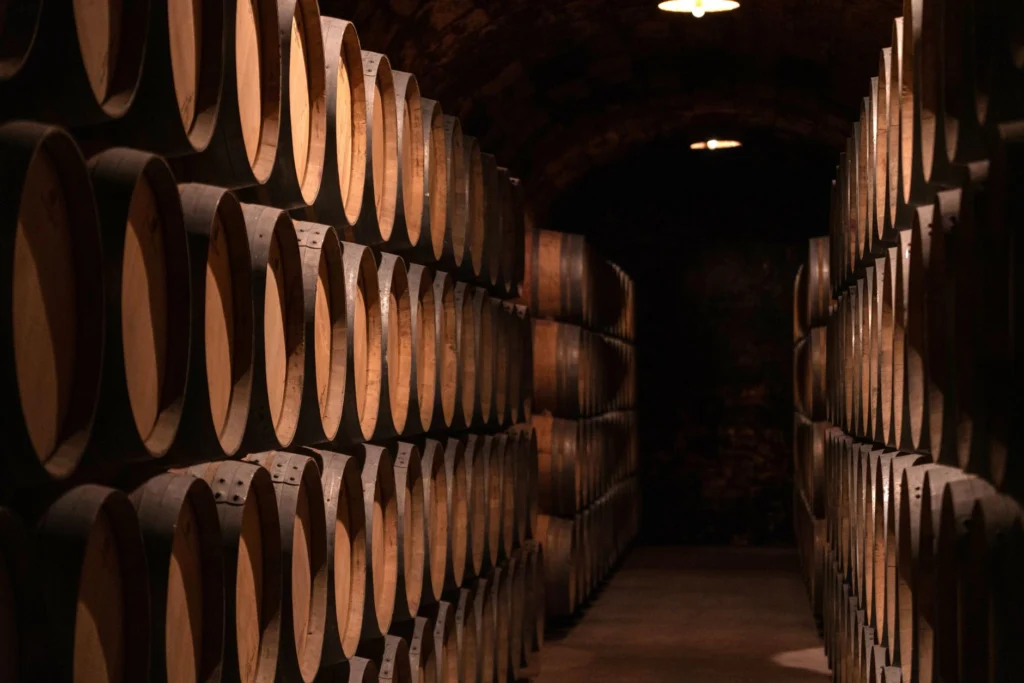
A dedicated cellar is the best option for a large collection. The essentials are insulation, a cooling system sized for the space, and humidity control. A cellar does not need to be underground, but it does need to be sealed from heat and sunlight. For smaller collections, a cool basement corner can work if you monitor it with a thermometer and keep the area dark and dry.
Other Storage Factors
- Humidity: Around 70% is a common target. Too dry and corks can shrink; too damp and labels and corks can grow mold.
- Light: Keep bottles away from sunlight and fluorescent light. UV exposure can cause light strike and unpleasant flavors.
- Vibration: Avoid washing machines, dryers, speakers, and busy walkways. Constant vibration can disturb sediment and unsettle the wine.
- Bottle position: Store bottles horizontally so the wine keeps the cork moist and the seal tight.
Getting the Most from Your Red Wine
Temperature control is the foundation of red wine storage. Keep long-term bottles at 55°F to 60°F, avoid swings, and protect them from light, vibration, and dry air. For short-term storage, a stable cool spot below 70°F is workable, but it is not a substitute for a cellar or wine refrigerator. These practices do not make wine immortal. They simply give it the best chance to mature evenly and arrive at the glass with its fruit, structure, and aroma intact.
If your company or product is mentioned in this article, you're welcome to share it.


