Two women needed emergency brain surgery within six days of each other in July 2026 after riding the same roller coaster at Six Flags Magic Mountain. That coincidence triggered a real investigation that’s now surfaced a two-decade pattern most riders never knew existed.
What actually happened in July
Pamela Gillen, 40, and Naomi Greer-Wilkinson, 25, both rode the X2 — an extreme, fifth-dimension roller coaster at Six Flags Magic Mountain in Valencia, California — within days of one another. Gillen lost consciousness after the ride and required emergency surgery to remove part of her skull to relieve pressure building on her brain. Greer-Wilkinson fell into a coma and was placed on life support. Both cases involved real, documented brain trauma serious enough to require immediate neurosurgical intervention, not minor post-ride dizziness or a routine medical complaint.
The ride’s closure and the investigation that followed
X2 has been closed since July 12, 2026. Six Flags has not publicly stated what specifically prompted the closure, and California ride-safety regulators confirmed an inspection was ongoing as of the most recent reporting. That silence from the park itself is a real, notable gap in the story — the closure’s timing lines up directly with the two hospitalizations, but the company hasn’t confirmed a causal link publicly even as the ride remains shut down.
What a real, independent investigation actually found
A CNN investigation published August 27, 2026 identified more than a dozen documented cases of serious injury or hospitalization tied to X2 across nearly two decades of operation, including two deaths: Hilda Farias in 2010 and Christopher Hawley in 2022. That’s a real, sourced pattern extending far beyond the two most recent cases — meaning the July incidents weren’t an isolated anomaly but the latest entries in a documented injury history stretching back to the ride’s 2002 opening. Riders left with permanent disabilities are also part of that same documented record, according to the investigation’s findings.
What actually makes X2 different from a typical coaster
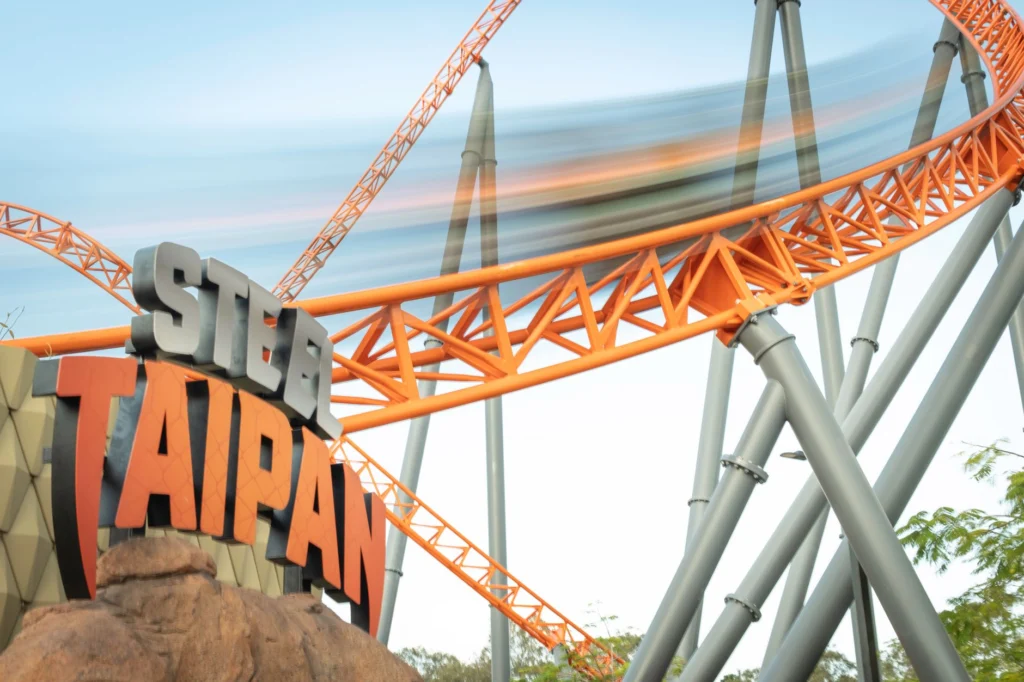
X2 is built as a “fourth dimension” style coaster — seats rotate independently of the track itself, spinning riders forward and backward through inversions in a way conventional coasters, where the seat stays fixed to the car, don’t replicate. That independent seat rotation is a real, specific engineering feature that produces forces and head movement patterns genuinely different from standard coaster designs, and it’s the real mechanical detail investigators are examining as a possible contributing factor to the pattern of head and brain injuries documented across the ride’s operating history.
What this means for the wider amusement park safety picture
Amusement ride safety in the US is genuinely fragmented — regulation happens primarily at the state level rather than through a single federal safety body with authority over all rides nationally, meaning California’s ongoing inspection is the actual, real mechanism determining whether and how X2 reopens, rather than any national regulator. That real regulatory structure is part of why a ride can operate for two decades with a documented pattern of serious injuries before triggering the kind of independent investigative scrutiny this case has now received — there’s no single national database automatically flagging a specific ride’s injury pattern across years the way there might be for, say, a defective vehicle part tracked by a federal safety agency.