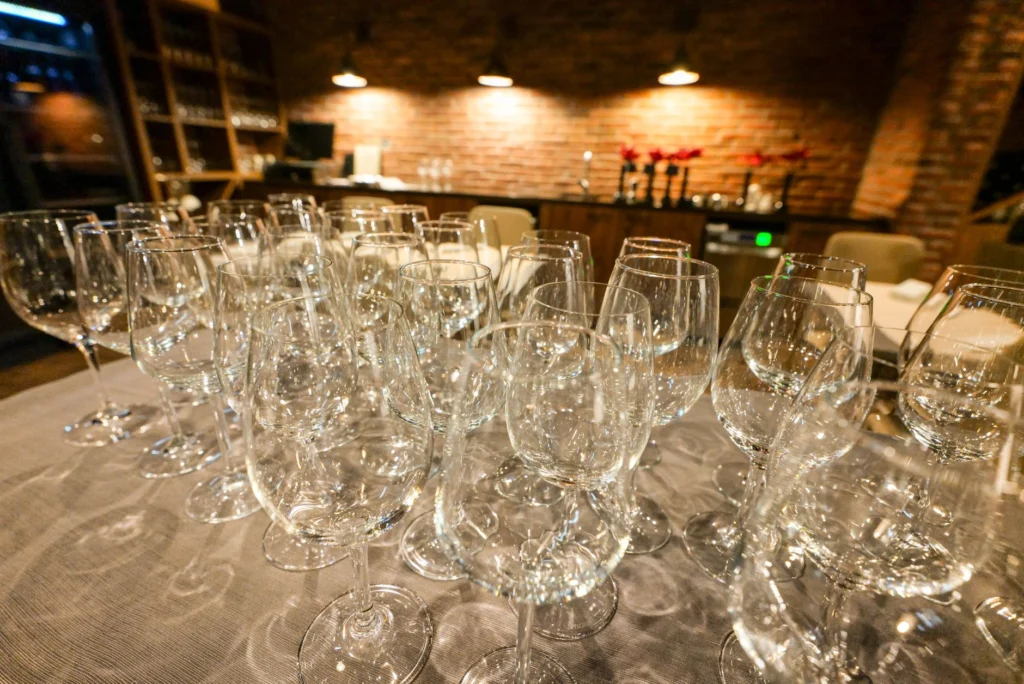
What an AU Wine Glass Means
AU wine glass is not a technical category. In this article it refers to wine glasses sold and used in Australia, where retailers stock stems for local and imported wines. The useful question is not whether a glass carries an Australian label, but whether its shape, material, and build suit the wine you actually drink.
Myth 1: Expensive wine needs expensive glassware
Price is a weak proxy for performance. A moderate glass with a thin rim, clear bowl, and a shape matched to the wine can show a wine better than a costly glass with a thick rim or an awkward bowl. Spend on shape and execution before brand name.
Myth 2: One glass works for every wine
A single all-purpose glass is convenient, but it cannot flatter every style equally. A wide Burgundy bowl helps Pinot Noir open up. A smaller white wine glass preserves the aromas and temperature of Riesling or Sauvignon Blanc. A tulip or flute helps sparkling wine hold bubbles and focus aroma. The wrong shape can mute a wine rather than spoil it, which is a quieter problem but still worth avoiding.
Myth 3: Lead crystal is always superior
Lead crystal can feel delicate and look brilliant, but lead can leach into wine during long storage, particularly in decanters. Lead crystal is also often more fragile and usually needs hand washing. Lead-free crystal now offers comparable clarity and a fine rim without that concern, and many high-end producers use it across their ranges.
Myth 4: A bigger bowl is always better
Bowl size should match the wine. An oversized bowl can let delicate aromas dissipate before you smell them. A bowl that is too small can crowd bold wines and make them feel tight. Look for a bowl that gives the wine room to breathe without turning every pour into a broad, diffuse aroma.
Myth 5: Dishwashers always ruin wine glasses
Older or harsh dishwashers can cloud glass and chip rims, but many modern machines have delicate cycles with lower temperatures and gentler water pressure. Use a mild detergent, load glasses so they do not touch, and avoid overcrowding. If the glass is lead crystal, hand painted, or not marked dishwasher safe, hand washing is the safer choice.
What to Look For in an AU Wine Glass
- Shape first: Match the bowl to the wines you drink most. Medium to large red glasses for Shiraz and Cabernet, smaller white glasses for crisp whites, and tulip shapes for sparkling.
- Rim: A thin, smooth rim interferes less with the flow of wine. Check for a sharp or rolled edge before buying.
- Material: Lead-free crystal gives clarity and a fine feel. Good-quality glass is more durable and often cheaper. Both can work well.
- Build: If glasses are used outdoors or around guests, a reinforced stem and slightly thicker bowl may matter more than extreme thinness.
- Balance: A glass should feel stable when held by the stem and not top heavy when filled.
A Practical Buying Guide
- Start with your habits: If most of your drinking is red wine, buy a good red glass first. If you drink sparkling wine often, add a tulip before buying a full set of flutes.
- Buy two shapes before six: A red glass and a white glass cover more ground than six identical all-purpose stems.
- Check the bowl and rim in person if possible: Clarity, rim smoothness, and stem balance are easier to judge by hand than from a product photo.
- Do not overpay for branding: A well-made mid-priced glass can outperform a luxury glass with a poor shape.
- Plan storage: Measure shelf height and cabinet space before buying tall stems or wide bowls.
Maintaining AU Wine Glasses
- Hand wash: Use warm water and a mild, fragrance-free detergent. Avoid abrasive sponges.
- Dishwasher use: Only use a delicate cycle if the glass is marked dishwasher safe. Do not let glasses touch during the cycle.
- Dry immediately: Use a lint-free cloth or microfiber polishing cloth to prevent water spots.
- Store upright: Give bowls enough space so rims do not knock together. Avoid stacking glasses unless they are designed for it.
- Polish before serving: A quick polish removes fingerprints and dust that can dull aromas.
Table: Key Differences in Wine Glass Types
| Feature | Red Wine Glass | White Wine Glass | Sparkling Wine Glass |
|---|---|---|---|
| Bowl shape | Larger, rounder bowl | Smaller, narrower bowl | Tall tulip or flute |
| Rim | Slightly wider opening | Narrower opening | Narrow opening |
| Purpose | Aeration and aroma development | Preserves aroma and temperature | Maintains bubbles and focuses aroma |
| Typical wines | Cabernet Sauvignon, Merlot, Shiraz | Sauvignon Blanc, Chardonnay, Riesling | Champagne, Prosecco, sparkling wine |
FAQ
Is it necessary to have different glasses for red and white wine?
It makes a real difference, but it is not mandatory. Red glasses usually have larger bowls for aeration and aroma. White glasses are smaller to keep wine cooler and preserve delicate aromas. If space is limited, one well-shaped all-purpose glass is better than a badly shaped specialist glass.
What is the best way to clean delicate crystal wine glasses?
Hand wash with warm water and mild detergent. Avoid abrasive sponges. Dry immediately with a lint-free cloth to prevent water spots.
Can I use wine glasses for other beverages?
Yes, but residual aromas can affect the next drink. If you use a wine glass for water or beer, wash and dry it well before returning it to wine service.
If your company or product is mentioned in this article, you're welcome to share it.