

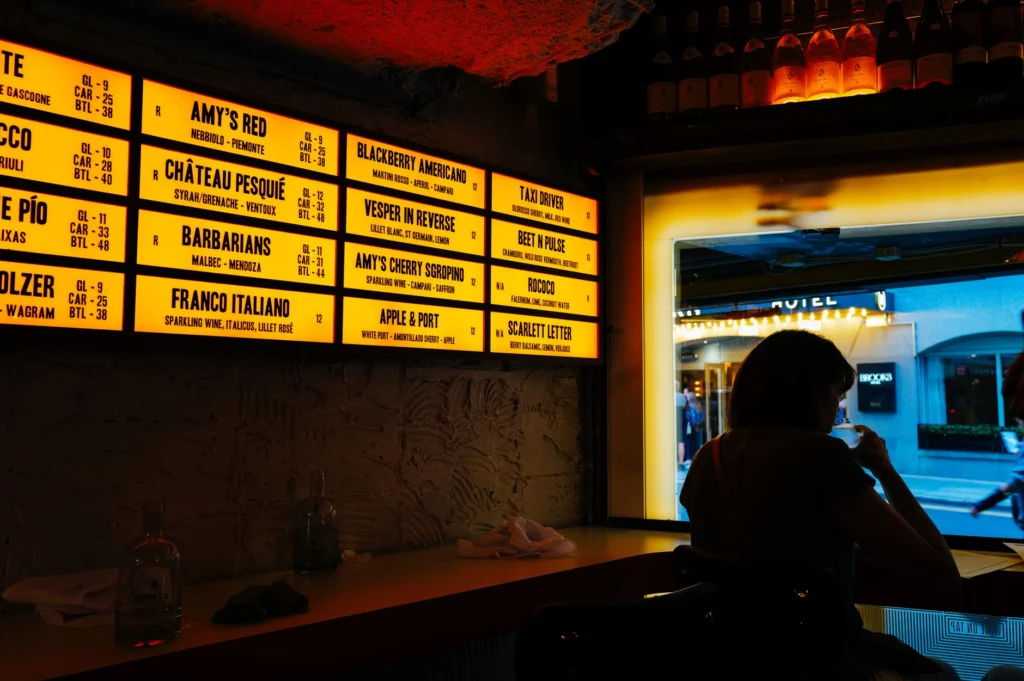
Seven Secrets to a Better East End Wine Bar Menu
The East End has no shortage of places to drink wine. The menus that work are not the longest or the most theatrical. They are the ones a guest can read in two minutes, ask one good question about, and order from with confidence. After more than a decade working in wine and hospitality here, I look for seven things before I trust a wine bar menu.
1. Build a wine list with a point of view
A 70-bottle list with 18 wines by the glass will usually outsell a 200-label list that nobody can navigate. Choose a thesis: high-acid whites, Loire Valley Cabernet Franc, Australian Shiraz, or whatever fits the room. Then write tasting notes that say something specific. ‘Bright, saline, lemon peel’ is useful. ‘A journey for the senses’ is not. Group wines by weight and texture, not just grape: crisp and lean, aromatic and floral, light red, rich red, sweet. That structure helps a guest move from a wine they know to one they do not.
2. Pair food by texture, not by rulebook
Wine bars get into trouble when the food menu is an afterthought. Keep the food list short: eight to twelve plates, three or four cheeses, one or two cured meats, and a couple of dishes that can absorb a high-acid wine. A Marlborough Sauvignon Blanc with fresh oysters is a cliche because it works. A Coonawarra Cabernet Sauvignon with grilled steak or dark chocolate is another reliable match. The point is to give guests a reason to order a second glass, not to prove how clever the kitchen is.
3. Put local beer on the menu without treating it as a compromise
Craft beer belongs on a wine bar menu, especially in the East End. Choose four to six local beers that cover a pilsner, a pale ale, a sour, and a dark beer. Train staff to offer a beer and wine flight for guests who want to compare fermentation styles. This is not about distracting from wine. It is about giving a table with mixed preferences a reason to stay for another round.
4. Make cocktails short, seasonal, and easy to explain
A wine bar does not need a 30-drink cocktail bible. It needs six to eight drinks that a bartender can make well at 9pm on a Saturday. Keep two classics, such as a Manhattan and a spritz, and build four signatures around what is in season. Use fresh citrus, a house syrup, and one spirit per drink. Presentation matters, but speed and consistency matter more. If a cocktail takes four minutes to build, it will slow the whole bar down.
5. Train staff to sell the list, not just pour from it
A menu is only as good as the person explaining it. Staff should taste every wine by the glass weekly and know the vintage, region, grape, and one food match for each. Give them a simple three-question script: What do you usually drink? Do you want something crisp or richer? Are you eating? That is enough to guide most guests. Invest in regular tastings and producer visits. Confidence behind the bar is more persuasive than any menu copy.
6. Design the menu for reading, not for decoration
Use an 11-point font, two columns, and enough white space. Put the producer and region first, then the grape and vintage, then the price aligned right. Keep by-the-glass wines on one page and bottles on another. Avoid tiny type, low-contrast printing, and long paragraphs about the winemaker’s philosophy. A QR code menu can work for updates, but keep printed copies at the table. Guests should not have to squint or ask for Wi-Fi before they can order.
7. Make sustainability visible and practical
Sustainability is not a badge on the menu. It is a set of choices: wines from producers using organic or biodynamic farming, local deliveries, keg wine where quality holds up, and a short list of non-alcoholic options that includes a decent beer. Be specific about what you do. ‘We pour six wines from producers working organically’ is better than ‘We care about the planet.’ Guests notice when the claim matches the list.
FAQ
How often should a wine bar menu change?
Change seasonally, but keep a core of 15 to 20 by-the-glass wines that regulars rely on. Rotate four to six wines each season and add one or two bottles that give staff something new to talk about.
How should I price a wine list?
Watch pour cost on by-the-glass wines and bottle markup separately. Many bars aim for a by-the-glass pour cost around 25 to 35 percent and a bottle markup of roughly 2.5 to 3 times wholesale, then adjust for rarity, vintage, and what the local market will bear.
How do I promote the menu without discounting it?
Use wine flights, producer dinners, and staff recommendations on social media. Post the three wines you are pouring by the glass this week and one food match for each. That gives people a specific reason to come in without turning the list into a bargain bin.
If your company or product is mentioned in this article, you're welcome to share it.


