

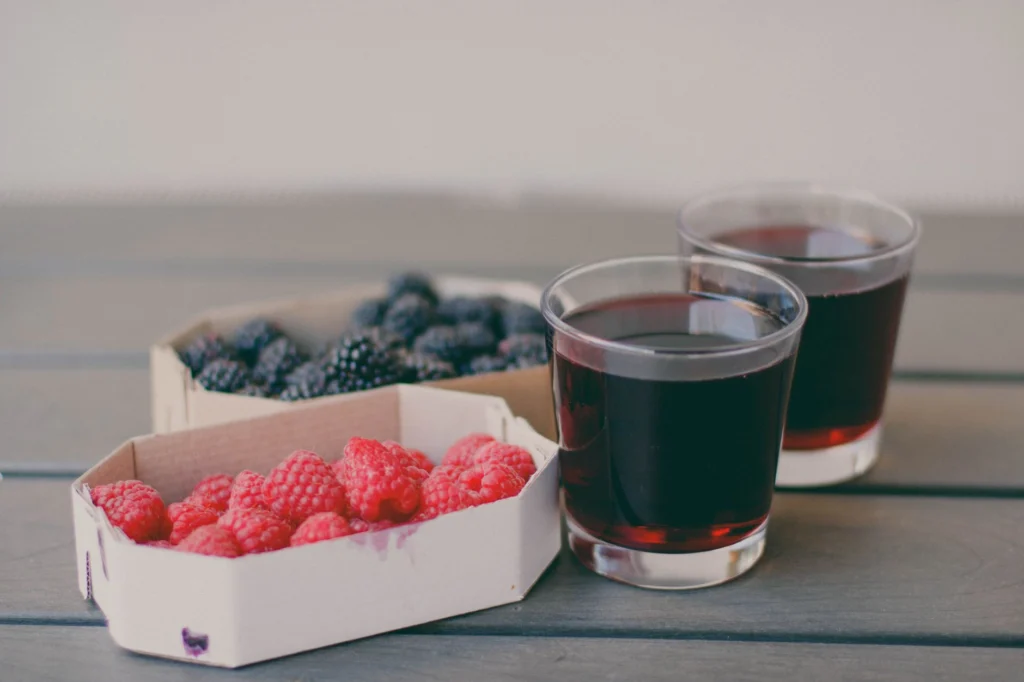
What Bokbunja Ju Is
Bokbunja ju is Korean black raspberry wine. The fruit is Rubus coreanus, a different species from the red raspberries sold in most supermarkets. It is darker, tarter, and has an earthy edge that survives fermentation. That difference matters: a wine made from ordinary raspberries can be pleasant, but it will not taste like bokbunja ju. Commercial producers pay close attention to berry ripeness, because underripe fruit gives sharp acidity and ripe fruit gives more color and sugar. Many source from contracted orchards in regions such as Gochang, where bokbunja is a recognized local crop.
Professional vs. Amateur Production
The gap between a commercial bottle and a home batch usually comes down to control. A professional producer sorts and washes fruit, crushes it without cracking seeds, and uses a selected wine yeast. Fermentation temperature is held in a narrow range, sugar and acidity are checked, and the wine is racked off its sediment. The aim is a dry or off-dry wine with enough fruit to balance the berry’s natural tartness. An amateur batch often starts with frozen or garden fruit of mixed ripeness, bread yeast, and an open bucket in a warm room. That can still ferment, but it is also a good way to make vinegar, nail-polish aromas, or a wine that is cloying and harsh at the same time.
Aging and Bottling
Commercial bokbunja ju is usually aged in stainless steel or neutral oak for several months, then filtered and bottled under sanitary conditions. The point is not to make the wine taste like oak. It is to let the fruit settle, soften, and stay stable. Home winemakers often bottle early, skip sulfite, and store the bottles upright in a warm kitchen. Oxidation follows. A well-made commercial bottle can hold for years if stored cool and dark. A rough home batch is better drunk young, and even then it may be inconsistent from bottle to bottle.
What the Wine Tastes Like
Good bokbunja ju has a dark berry core, a tart finish, and a faint earthy note. It should not be a sugar syrup. Some commercial products are sweet liqueur-style drinks rather than fully fermented wine, so check the label and alcohol content. A dry fermented version is closer to a fruit wine and works better with food. Amateur versions often miss the middle: they can be sweet up front, thin in the middle, and rough on the finish. That is usually a fermentation and aging problem, not a fruit problem.
Health Claims
Bokbunja contains anthocyanins and other antioxidants, like many dark berries. Traditional claims about stamina, libido, and anti-aging are common in Korea, but they are not well established by strong human trials. A glass of fruit wine is not a medicine. Professional producers generally avoid making hard health claims because the evidence does not support them. Amateur sellers are more likely to repeat them, especially online. Treat those claims with skepticism and judge the wine on flavor and production standards.
Serving and Pairing
Serve bokbunja ju chilled, around 45 to 50°F (7 to 10°C). Too cold mutes the fruit; too warm makes the alcohol and sweetness stand out. It works with Korean barbecue, grilled pork, and spicy stews because the tartness cuts through fat and heat. It is less successful with delicate fish or very sweet desserts. If you are buying a sweet liqueur-style bottle, serve it colder and in smaller pours.
Buying and Value
Professional bokbunja ju costs more because the fruit, labor, fermentation control, aging, filtration, and bottling all cost more. That does not mean every expensive bottle is good. Read the label for ingredients, alcohol content, and whether the product is fermented wine or a sweetened liqueur. Look for a producer that names the fruit and the region, and if possible taste before buying. Amateur bottles can be cheaper, but they are a gamble. The lower price reflects lower consistency, not a secret shortcut.
The Future of Bokbunja Ju
Korean producers continue to test different yeast strains, lower-sugar styles, and alternative aging vessels. Some are trying to make bokbunja ju that appeals to drinkers who usually choose dry wine. At the same time, the traditional sweet and liqueur-style products remain popular. For home winemakers, the useful lesson is not to chase a secret recipe. Sanitation, selected yeast, temperature control, and patience will improve a batch more than any folklore ingredient.
FAQ
What is the ideal serving temperature for bokbunja ju?
Chilled, around 45 to 50°F (7 to 10°C). This keeps the fruit fresh without numbing it.
Can I use regular raspberries instead of bokbunja?
Yes, but the wine will be different. Regular raspberries lack the dark color, tartness, and earthy note of Rubus coreanus. It can still be drinkable, just not authentic bokbunja ju.
How long can I store a bottle?
Professionally made wine stored cool and dark can last several years. Home batches with less sulfite and less controlled bottling are usually best within one to two years, and some will fade sooner.
If your company or product is mentioned in this article, you're welcome to share it.


