Valar Atomics has raised $1 billion in a Series B led by Sequoia Capital, giving a three-year-old nuclear startup an extraordinary amount of capital for a business that has not yet reached commercial-scale reactor deployment.
The company also announced a separate $200 million credit facility. Bloomberg reported that the financing valued Valar at $6 billion including the new investment, although Valar itself did not disclose a valuation in its funding announcement. (valaratomics.com)
The reason investors are willing to make such a large bet is increasingly obvious: artificial intelligence needs electricity, and the companies building AI infrastructure are running into the physical limits of how quickly conventional power generation and transmission can expand.
Valar's pitch is not simply that nuclear power should make more electricity. It is that reactors themselves should become manufactured products.
That distinction is the entire $1 billion bet.
Valar is trying to turn reactor construction into manufacturing
Traditional nuclear power plants are enormous, expensive construction projects that can take years to complete. Valar wants to move in the opposite direction: standardize a reactor design, manufacture large numbers of units and deploy them repeatedly.
The company's latest financing is explicitly intended to fund that transition.
In announcing the round, founder and CEO Isaiah Taylor said Valar would move from demonstrating an integrated reactor system toward producing fleets of reactors. The company says its strategy will extend beyond reactor deployment into long-term operations and even fuel production. (valaratomics.com)
That is a much bigger ambition than building a successful prototype.
A prototype proves that something can work. Manufacturing proves that the company can repeatedly build it, control costs, maintain quality and deliver the product at a pace customers can actually use.
Taylor described that production problem directly in comments reported by Bloomberg: Valar wants to reduce the time required to build a reactor from roughly a year to six months, then potentially to monthly production and beyond. (latimes.com)
The numbers matter because Valar's future business model depends less on selling one remarkable machine than on building a system capable of producing many machines.
That is where the startup begins to resemble an advanced manufacturing company as much as a traditional energy developer.
The AI industry has become nuclear energy's newest customer
The timing of Valar's fundraising is closely tied to the power demands surrounding artificial intelligence.
Data centers have always consumed large amounts of electricity, but the rapid construction of AI infrastructure has made access to reliable power a strategic constraint. Building a data center is one problem. Finding enough electricity for it, especially in locations where transmission infrastructure is already constrained, is another.
Valar has positioned its reactors as a potential answer.
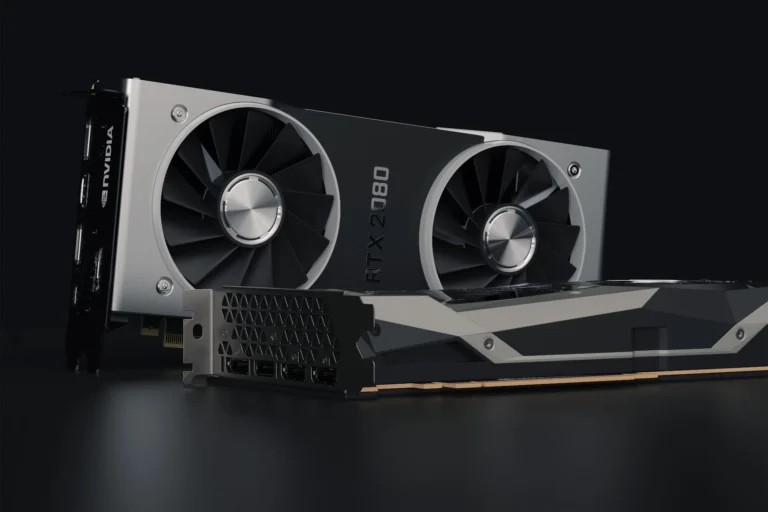
According to reporting by Bloomberg and the Los Angeles Times, the company is developing factory-produced nuclear systems intended to supply facilities including data centers and industrial sites. Valar and Nvidia have also announced plans for a 30-megawatt AI facility in Utah powered by Valar systems. (techcrunch.com)
The planned facility is important because it connects Valar's nuclear technology to one of the largest infrastructure buildouts of the decade.
But a planned AI facility should not be confused with an operating commercial fleet. The project is evidence of demand and partnership interest, not proof that Valar has already solved commercial nuclear deployment at scale.
That distinction is particularly important in nuclear technology, where technical demonstrations, regulatory approval, financing and commercial operations are separate milestones that can each take years.
Ward 250 gave Valar something most startups cannot show investors
Valar's fundraising story is not based entirely on slides and future projections.
The company says its Ward 250 reactor achieved self-sustaining criticality on June 18, 2026. Bloomberg reported that Valar was among four companies to reach a key reactor milestone that year and that the company subsequently used power generated from its fission system to operate an Nvidia AI chip and host a website. (valaratomics.com)
Criticality is a significant milestone in nuclear engineering. It means a nuclear chain reaction has reached the condition where it can sustain itself.
But criticality is not the same thing as commercial operation.
That gap between technical achievement and commercial deployment is one of the central realities facing Valar. Demonstrating that a reactor can operate is a necessary achievement. Building, licensing, financing and operating large fleets of reactors economically is a much broader challenge.
Valar's own announcement makes clear that the company sees manufacturing as the next problem to solve.
Every hour of Ward 250's operation, the company says, produces engineering, manufacturing and operational data that can inform subsequent reactors. (valaratomics.com)
The logic is familiar from other hardware industries: build one unit, learn from it, improve the next version and accelerate the production cycle.
The question is whether nuclear reactors can eventually benefit from that learning curve at the same speed that investors expect from startups.
The $6 billion valuation is large. The commercial risk is larger.
The reported $6 billion valuation gives Valar the kind of financial profile normally associated with mature technology companies rather than early-stage industrial hardware startups.
Bloomberg reported that the Series B transaction valued the company at $6 billion including the new investment. Earlier reporting had suggested Valar was seeking financing at roughly that level, while TechCrunch noted that the company had previously been valued at approximately $2 billion earlier in 2026. (techcrunch.com)
Valar did not publicly disclose the valuation in its own Series B announcement, so the $6 billion figure should properly be attributed to outside reporting rather than presented as a company-confirmed number. (valaratomics.com)
Still, the direction of the valuation is unmistakable.
Investors are placing a multi-billion-dollar value on a company whose commercial future depends on solving several difficult problems at once: reactor engineering, manufacturing, fuel supply, deployment, financing and regulation.
That does not make the valuation irrational. It explains what investors are actually buying.
They are not valuing Valar based solely on current reactor revenue. They are placing a bet on a future in which electricity becomes one of the biggest bottlenecks in AI infrastructure and companies capable of rapidly adding reliable generation capacity become strategically important.
If that future arrives, the economic opportunity could be enormous.
If reactor manufacturing or deployment moves more slowly than expected, the economics become much harder.
Nuclear startups are attracting money because the problem is bigger than Valar
Valar is not alone in benefiting from renewed investor interest in nuclear technology.
TechCrunch noted that other nuclear companies have also raised significant amounts of capital, including Antares, while X-energy raised $1 billion through its public-market debut. (techcrunch.com)
The common argument behind much of this investment is straightforward: the world wants more electricity, but traditional energy infrastructure can be slow to build.
Nuclear power offers something that wind and solar power do not provide on their own: continuous generation independent of weather conditions. But nuclear projects have historically faced the opposite problem of speed. Large plants can take years to construct and have repeatedly suffered from delays and cost overruns.
The startup industry's answer is modularity.
Build smaller systems. Standardize them. Manufacture components repeatedly. Reduce the amount of one-off engineering required for every new project.
That theory is compelling.
The industry still has to prove it.
As Bloomberg noted, the idea of small modular reactors is gaining traction, but commercial deployment remains limited and the technology has yet to demonstrate the kind of widespread fleet manufacturing that companies like Valar are promising. (latimes.com)
The real product Valar is trying to build is not just a reactor
The easiest way to misunderstand Valar Atomics is to think its biggest achievement would be designing a successful reactor.
That would only be the beginning.
The real product is a production system capable of repeatedly delivering nuclear power.
Valar's $1 billion Series B is therefore less a vote of confidence in a single machine than a wager on the entire industrial structure around it. The company says it intends to vertically integrate reactor deployment, operations and fuel production rather than relying entirely on outside suppliers. (valaratomics.com)
That approach could give Valar more control over its supply chain if it works. It also means the company is taking responsibility for far more than reactor design.
Sequoia's investment reflects how dramatically the perception of nuclear startups has changed. Nuclear technology was once largely associated with governments, utilities and companies measured in decades. Now venture capital is writing billion-dollar checks to companies promising to build reactors with the speed and iteration cycles of modern manufacturing.
Valar has already demonstrated that it can get a reactor critical.
The much harder test begins now: whether it can build the second reactor faster than the first, then the tenth faster than the second, and eventually turn nuclear power from a construction project into something that can actually be manufactured in volume.