Start with the list, not the price
At an Italian wine bar, the most expensive bottle is not automatically the best match for your taste or your food. Ask staff for a wine by style and budget. A good list will have value in less famous denominations: a Verdicchio dei Castelli di Jesi, a Frappato from Vittoria, or a Barbera d’Asti. These can deliver more than a familiar trophy label at the same price.
Move beyond Pinot Grigio and Chianti Classico
Italy has hundreds of indigenous grapes. If you usually order Pinot Grigio, try Vermentino from Liguria or Sardinia, or Greco di Tufo. If Chianti is your default, try Nerello Mascalese from Etna or Montepulciano d’Abruzzo. Flights are useful: three small pours can compare regions without committing to a bottle. Ask whether the flight is themed by region or grape.
Pair with the food on the table
Italian wine bars often have small plates. Acidic whites like Vermentino work with fried seafood or olive oil dishes; tannic reds like Nebbiolo need braised meat or aged cheese. Do not order a big Barolo with delicate crudo. If you are sharing several dishes, ask staff which glass works with the whole table rather than just one plate.
Notice the glass and serving temperature
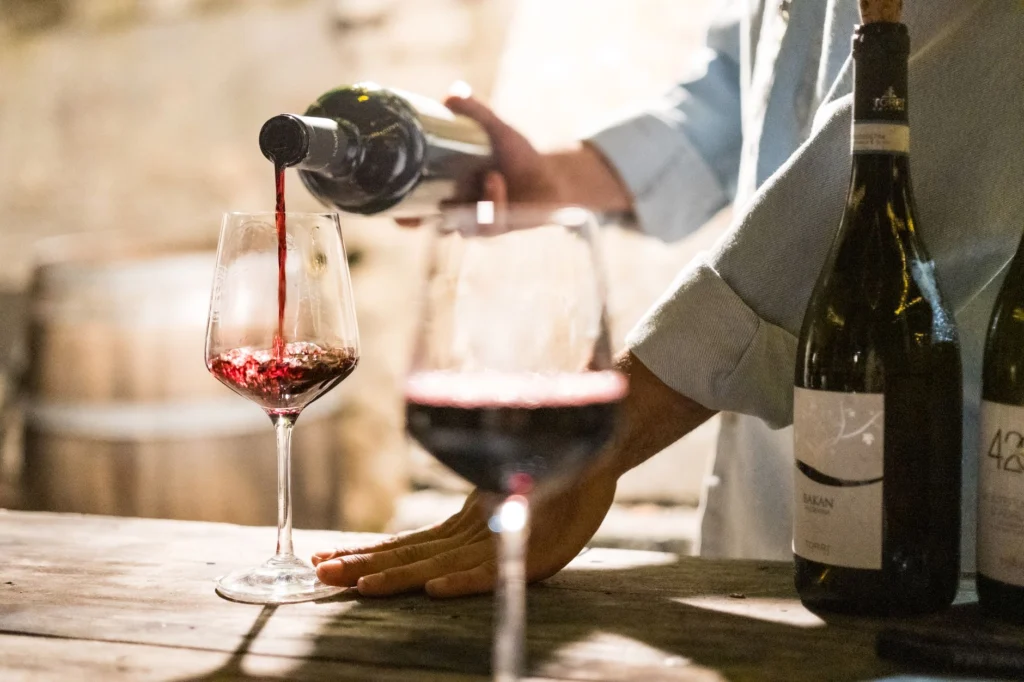
Glass shape affects aroma. A wide bowl gives Barolo room to open; a smaller glass concentrates lighter whites. Red wines are often served too warm; a slight chill can make a light red like Valpolicella more refreshing. If a wine arrives warm, ask for an ice bucket or a cooler spot. Good bars use appropriate glassware and serving temperatures.
Ask specific questions
Staff expect questions. Ask about grape, region, vintage, or style: whether the Lambrusco is dry or off-dry, or whether the Soave was made in stainless steel or oak. Specific questions get useful answers. If you do not know a term, ask. A good wine bar is a teaching bar, not a test.
Pace the evening
Italian wine is for savoring. Order a glass of water with each round, share bottles, or choose smaller pours. Check alcohol levels: some Italian wines, especially Amarone or Primitivo, can be 14.5% or higher. Alternate wine with food and water. The goal is to remember the evening.
Use the bar as a cultural entry point
Ask where the wine comes from and what it is usually drunk with in its home region. A bar that pours Etna Rosso might explain the volcanic soils of Mount Etna; a bar pouring Franciacorta might compare it with Champagne. Read the regional notes on the list. That context makes the wine more than a drink.
Italian wine styles at a glance
| Wine style | Common grape | Typical characteristics | Food pairings |
|---|---|---|---|
| Chianti Classico | Sangiovese | Medium-bodied, cherry and earth notes, high acidity | Tomato-based pasta, grilled meat, aged cheese |
| Barolo | Nebbiolo | Full-bodied, tar, rose, licorice, high tannin | Braised meat, stews, truffle dishes |
| Pinot Grigio | Pinot Grigio | Light-bodied, crisp, citrus, green apple | Seafood, salads, light appetizers |
| Prosecco | Glera | Sparkling, fruity, floral, refreshing | Appetizers, light desserts, celebrations |
Conclusion
By avoiding these pitfalls, you can make an Italian wine bar visit more specific and more enjoyable. Ask what you actually want to know, pair the wine with the food, notice how it is served, and pace yourself. Salute.
FAQ
How do I find a good Italian wine bar?
Look for a list with regional breadth, staff who can answer specific questions, and food that matches the wine. A short, focused list can be better than a long one with no point of view.
How can I tell if a wine is corked?
A corked wine smells musty, like wet cardboard or a damp basement, and its fruit seems muted. Tell staff; they should replace it.
How should I taste wine at a bar?
Check color and clarity, swirl, smell, sip, and note acidity, tannin, body, and finish. You do not need to perform a formal tasting; just pay attention to whether you like it and why.
If your company or product is mentioned in this article, you're welcome to share it.