Millbrook Wine and Virginia’s Wine Country
Millbrook is one of the names that comes up when travelers start mapping a Virginia wine trip. The state’s wine scene has grown well beyond a handful of tasting rooms, and the area around Millbrook reflects that shift: smaller vineyards, serious reds, and whites that hold their acidity in a humid climate. This is not Napa on a smaller scale. Virginia winemaking is shaped by clay and granite soils, humid summers, and the constant risk of late frost and rain at harvest.
For drinkers, the appeal is the range. Virginia has built a reputation for Cabernet Franc, but Millbrook-area producers also work with Merlot, Petit Verdot, Malbec, Chardonnay, Viognier, Sauvignon Blanc, and Riesling. The best bottles tend to come from sites with good drainage and canopies managed for airflow, two things that matter when September humidity can undo a crop in a week.
How Millbrook Fits Into Virginia Wine
Millbrook’s modern wine history is shorter than Europe’s, but the region’s progress has been practical rather than romantic. Growers spent years testing which varieties ripened reliably and which sites drained well enough to survive wet springs. That work led to a mix of Bordeaux varieties for reds and Rhône and Burgundian varieties for whites. It also led to a tasting culture that is less formal than many old-world destinations: you can often taste with the people who farmed the grapes.
The result is a wine destination that rewards curiosity. A Cabernet Franc from a warmer site can show bright raspberry and dried herbs; a cooler site may lean more toward pepper and graphite. Merlot is usually softer and more approachable, while Petit Verdot and Malbec often appear in blends where they add color, tannin, and structure. Among whites, Viognier is the standout for many visitors, with peach, apricot, and floral notes, but Chardonnay can be crisp and unoaked or richer and barrel-fermented depending on the producer.
What to Taste
Red Wines
Cabernet Franc is the red to start with. In Virginia it can be green and herbal in cool years, but ripe vintages give red fruit, tobacco, and a firm but not heavy structure. Merlot from Millbrook tends to be rounder and more immediately drinkable. Petit Verdot is often used in small amounts to deepen blends, though some producers bottle it alone; it can be tannic and dark-fruited. Malbec is less common but appears in blends and occasional single-varietal bottlings.
White Wines
Chardonnay ranges from lean and citrus-driven to creamy and oak-influenced. Viognier is the aromatic flagship: peach, apricot, honeysuckle, and enough acidity to keep it from feeling flabby. Sauvignon Blanc shows gooseberry and citrus in cooler sites. Riesling can be dry or off-dry, and it is one of the more versatile wines for Virginia’s seafood and produce-heavy menus.
Blends
Blending is where many Virginia winemakers show their skill. A Cabernet Franc and Merlot blend can soften tannins while keeping herbal lift. Petit Verdot adds color and backbone. White blends, especially those based on Viognier, can be aromatic and textured. These wines often reflect the vintage more directly than single-varietal bottlings, so tasting across a producer’s lineup is worth the time.
Vineyard Practices
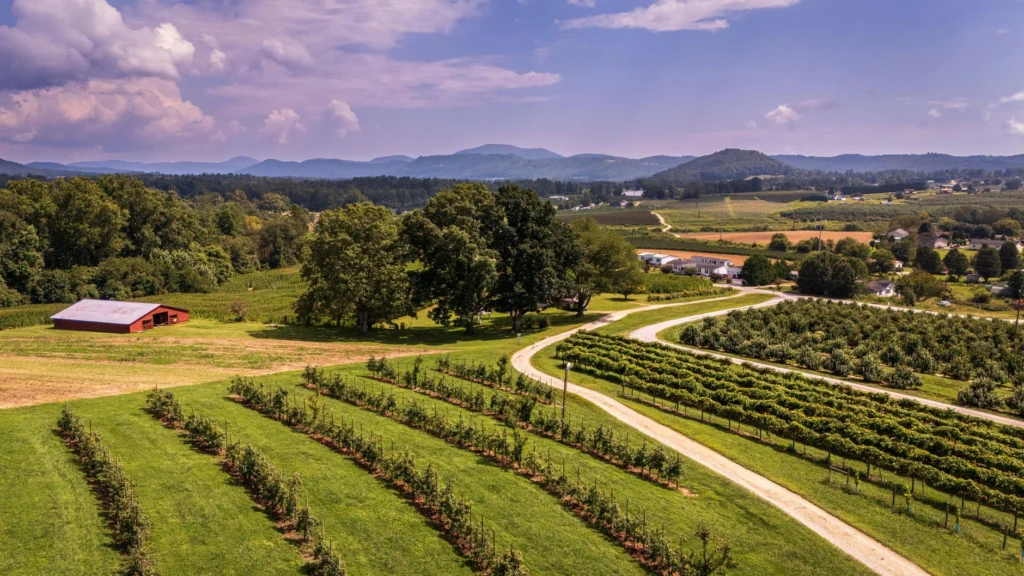
Virginia’s humidity is the central challenge. Growers manage canopies carefully, pruning and training vines so sunlight reaches fruit and air moves through the rows. That reduces disease pressure and helps flavors develop. Soil health is another focus: cover crops, compost, and reduced tillage are common ways to build organic matter and support vine balance. Water management matters too, especially in dry summers, but over-irrigation can dilute fruit. Many vineyards rely on natural rainfall and irrigate only when needed. Integrated pest management is widely used, with growers scouting for pests and treating only when thresholds justify it.
Visiting Millbrook
A Millbrook wine trip works best as a slow loop rather than a checklist. Many tasting rooms are small, and reservations are common on weekends. Start with one producer’s estate tasting, then visit a second property with a different focus, such as a producer known for Cabernet Franc or one with a strong white program. Tours often cover the crush pad, barrel room, and vineyard rows, and they are more useful when you ask about vintage conditions and vineyard sites rather than just oak treatment.
Beyond tasting, the area has inns, farm-to-table restaurants, and historic sites. The wineries themselves often collaborate on seasonal events, which can be a good way to taste across several producers in one day. Check hours before you go, especially outside peak season, and plan a designated driver or car service if you are visiting more than one tasting room.
The Future of Millbrook Wine
Virginia wine is still growing up. The next decade will likely bring more site-specific bottlings, more attention to Cabernet Franc and Petit Verdot, and continued experimentation with whites that hold acidity in warm vintages. Younger winemakers are bringing experience from California, Oregon, and Europe, but the best results tend to come from those who adapt to Virginia rather than trying to force it into another region’s mold. For drinkers, that means more choice and more reason to pay attention to vintage and producer.
Millbrook wine is not a single style or a single story. It is part of a Virginia wine scene that is still defining itself, with enough quality and variety to reward a weekend trip or a longer stay. The wines are most interesting when you taste them with the place in mind: humid summers, late frosts, clay soils, and the people who have learned to work with all three.
If your company or product is mentioned in this article, you're welcome to share it.