Melbourne Wine Cellar Basics
Melbourne’s temperate climate still swings in temperature and humidity, and those swings are hard on wine. A dedicated cellar or wine cabinet gives bottles a stable environment so corks stay sound and aging happens predictably. The main variables are temperature, humidity, light, vibration, and racking.
Temperature
Long-term storage works best at 12°C to 15°C (55°F to 59°F). Stability matters as much as the exact number. A cellar with precise cooling avoids the daily and seasonal shifts that can push wine toward premature aging.
Humidity
Keep humidity between 50% and 70%. Dry air can shrink corks and let oxygen in. Damp air can encourage mould on labels and corks. Modern cellars use humidification or dehumidification to hold the range.
Light and vibration
UV light can cause light strike, so cellars should stay dark or use UV-filtered glass. Vibration can disturb sediment and unsettle wine, so place cooling equipment and racks away from heavy foot traffic, appliances, and street vibration where possible.
Cellar Options
Custom-built cellars
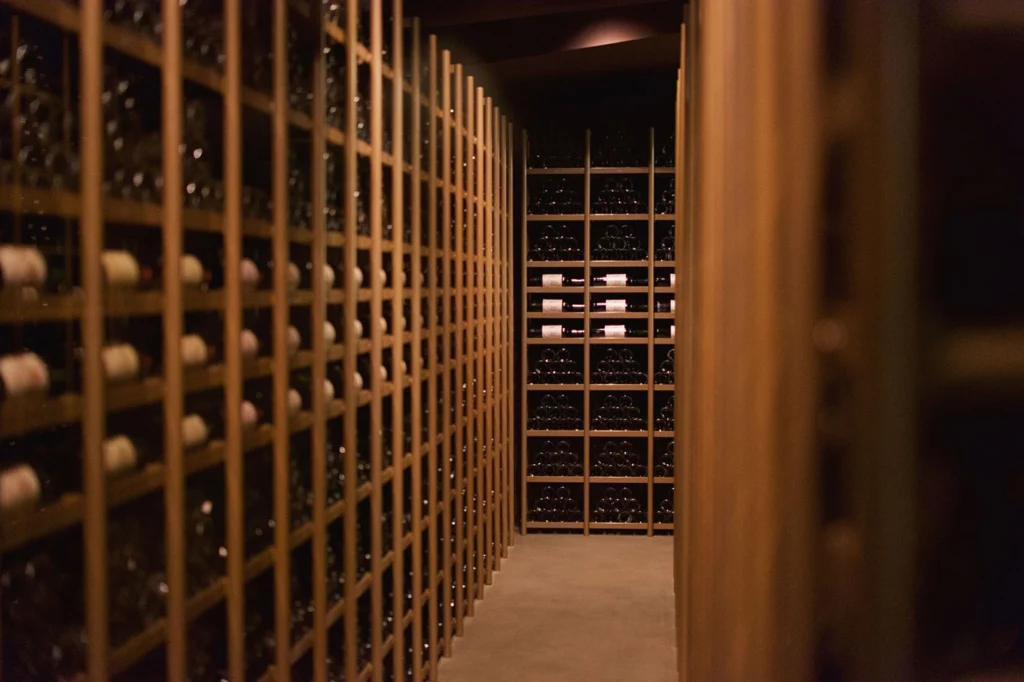
A custom cellar suits a serious collection. It can be built in a basement, under stairs, or in a purpose-built room, with cooling, humidity control, lighting, and racking designed around bottle count and bottle size. The trade-off is cost and construction work, but it gives the most control over conditions and display.
Wine cabinets
For smaller collections or apartments, a wine cabinet is a specialised refrigerator with controlled temperature and, in better models, humidity management. Look for UV-filtered glass, vibration damping, and dual zones if you store reds and whites at different serving temperatures. Cabinet capacity is usually stated by Bordeaux bottle count, so check whether it fits Burgundy, Champagne, or magnum bottles.
Underground cellars
Traditional underground cellars use soil as insulation and can be energy efficient. In urban Melbourne, space and geology often limit this option, but where site conditions allow, an underground room can provide a stable base temperature.
Cellar Door Experiences Near Melbourne
The Yarra Valley and Mornington Peninsula are close enough for day trips and both have cellar doors where you can taste at the source. Book ahead for weekends and peak season, check whether tastings are seated or standing, and plan a designated driver or transport. These visits are useful for learning how producers handle vintage variation and cellar-worthy styles.
Private tastings and events
Some Melbourne venues and independent hosts run private tastings in cellars or dedicated rooms. Themes can focus on a region, grape, vintage, or producer. For a group, confirm glassware, spit buckets, food pairing, and the number of wines poured before booking.
Maintaining a Melbourne Wine Cellar
- Check gauges: Read temperature and humidity regularly and log any swings.
- Service cooling: Clean filters and schedule professional servicing as the manufacturer recommends.
- Track inventory: Record producer, vintage, bottle size, quantity, and drinking window so you can plan openings.
- Keep it clean: Dust and debris can block airflow and support mould.
- Review bottle placement: If the cellar has uneven conditions, keep long-term bottles in the most stable zone.
Racking Choices
Racking affects capacity and how bottles are stored. Individual bottle racks hold bottles horizontally so corks stay moist. Diamond bins store bulk bottles in a honeycomb pattern. Bulkhead racks fit magnums and larger formats. Display racks angle bottles for presentation, but they are better for short-term showing than long-term storage. Redwood and cedar are common because they resist moisture and insects. Metal racks should be rust-resistant and not placed near heat sources.
What Is Changing in Wine Cellaring
Smart home systems now allow remote monitoring of temperature and humidity, with alerts when conditions drift. Better insulation and variable-speed cooling are reducing energy use. For collectors, the practical result is more data and fewer surprises, but the basics remain unchanged: stable temperature, controlled humidity, darkness, low vibration, and accurate inventory.
A Melbourne wine cellar can be a custom room, a cabinet, or an underground space. The right choice depends on collection size, budget, and available space. Get the conditions right first, then choose racking and display to suit the room.
If your company or product is mentioned in this article, you're welcome to share it.