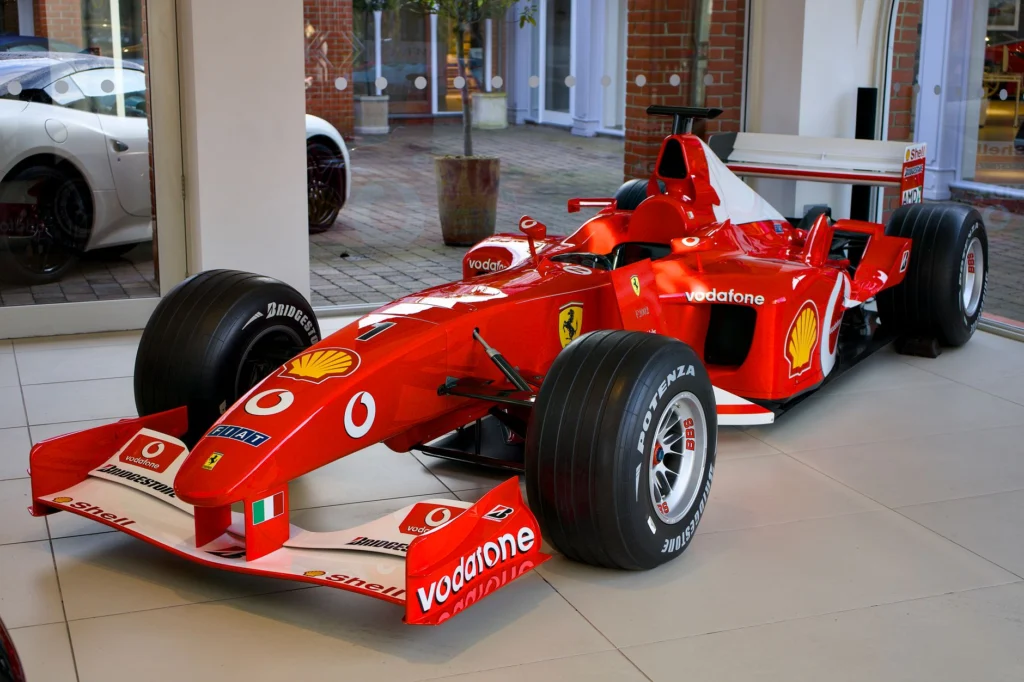
Lewis Hamilton left Zandvoort fourth. Charles Leclerc finished fifth. The one-place difference mattered because it extended Hamilton's advantage over his Ferrari team-mate to 28 points after 12 Grands Prix: Hamilton has 183, Leclerc 155. (formula1.com)
That is not a runaway intra-team contest. It is a season in which Leclerc has generally had the sharper qualifying record, while Hamilton has been more effective at converting races into points. The distinction became particularly clear at the Dutch Grand Prix, where Ferrari had enough race pace to challenge for the podium but lost time in a tactical fight between its own drivers.
The numbers now tell a fairly precise story: Leclerc has been marginally better over one lap; Hamilton has been better on Sundays.
Hamilton has turned qualifying parity into a points advantage
At the halfway point of the season, Leclerc led the Ferrari qualifying head-to-head 6-5 and Hamilton led the race head-to-head 6-5. Each had one victory, while Hamilton had five podiums to Leclerc's four. (formula1.com)
The Dutch Grand Prix did not fundamentally change that picture, but it strengthened Hamilton's side of it.
Hamilton qualified fifth at Zandvoort, Leclerc sixth. (formula1.com) On Sunday, Hamilton finished fourth and Leclerc fifth, giving Ferrari 22 points from the race. (formula1.com)
Across the 12 Grands Prix, Hamilton has therefore finished ahead of Leclerc in seven races, compared with five for Leclerc. Both have won once. Hamilton's victory came at Barcelona, while Leclerc won at Silverstone. (formula1.com)
That is the central statistical difference between them. Leclerc has not been comprehensively beaten for pace. Hamilton has simply been more consistent at turning competitive weekends into strong finishes.
Hamilton has also finished in the points at every Grand Prix so far in 2026. Leclerc's two retirements, at Monaco and Barcelona, have created a meaningful points deficit even though neither retirement can simply be treated as evidence that Hamilton was faster. (formula1.com)
Zandvoort exposed the tactical fault line between the two Ferraris
The Dutch Grand Prix provides the clearest recent example of why the Hamilton-Leclerc comparison cannot be reduced to qualifying positions.
Leclerc started ahead of Hamilton and initially ran in the fight for the final podium position. Hamilton, meanwhile, had made contact with Max Verstappen at the first start and then adopted a longer first stint than several of the other front-runners. (formula1.com)
That strategy eventually gave Hamilton fresher tyres relative to his team-mate. He caught Leclerc and began pressuring Ferrari to release him.
The critical moment came when Leclerc was instructed to pit. He did not come in immediately and instead completed another lap before stopping on Lap 44. Hamilton was already faster on the alternative strategy, and the delay meant he spent additional time behind his team-mate rather than using that pace against the Mercedes cars ahead. (formula1.com)
Hamilton's radio reaction was blunt: "great waste of time there, guys." (formula1.com)
That does not mean Ferrari simply chose the wrong strategy. The team was balancing two cars on different tyre sequences in a race where track position mattered enormously. But the tactical consequence was real. Once Hamilton cleared Leclerc, he had cleaner air and was able to attack the gap to George Russell.
The problem was that the opportunity arrived too late.
Ferrari had the pace to beat Mercedes, but not enough time to use it
The final result makes the missed opportunity easy to quantify.
Norris won Zandvoort, with Kimi Antonelli second and Russell third. Hamilton finished 16.755 seconds behind Norris and only 0.849 seconds behind Russell. Leclerc was another 0.503 seconds behind Hamilton. (formula1.com)
Ferrari's own race assessment said its pace was strong enough to make the team wonder what might have happened had the drivers qualified higher. Hamilton's longer opening stint eventually put him in a position to attack, but the late Virtual Safety Car further reduced the available racing laps. (formula1.com)
This is where the internal Ferrari battle becomes strategically interesting.
Leclerc's fifth place was not simply a case of being slower than Hamilton. He had started ahead, had run ahead early, and was involved in the same fight for the podium. Hamilton's advantage emerged partly because the two Ferraris were on different strategic paths.
But once Hamilton gained the tyre advantage, Ferrari had to decide whether protecting Leclerc's track position was worth sacrificing Hamilton's attacking potential.
At Zandvoort, it probably cost the team a realistic chance at third.
Leclerc still has the stronger argument over a single lap
The 2026 qualifying record remains important because Ferrari's underlying speed is not being separated cleanly by driver.
Through the first half of the season, Leclerc had beaten Hamilton 6-5 in Grand Prix qualifying. After Zandvoort, the Grand Prix qualifying tally is level at six wins apiece, although the broader qualifying count changes when Sprint qualifying sessions are included. (formula1.com)
That is a useful distinction.
Hamilton's advantage in the championship does not appear to come from routinely starting ahead of Leclerc. In fact, Leclerc has often been the Ferrari driver with the stronger qualifying result. His advantage is more visible in the early phase of a weekend.
Hamilton has been better at turning the race itself into an opportunity.
Barcelona is the strongest example. He started second, lost ground initially after Ferrari chose soft tyres, then switched to a three-stop strategy. A Virtual Safety Car gave him a cheap final pit stop, after which he took the lead and won by 19.5 seconds. (formula1.com)
That was not merely a strategy gift. Hamilton had already demonstrated strong pace on the medium and hard tyres before the VSC created the decisive opportunity. (formula1.com)
Leclerc's problem is less about speed than lost weekends
Leclerc's season contains several results that make the 28-point deficit look larger than the raw Ferrari pace gap would suggest.
He retired from Monaco and Barcelona, then finished eighth in Austria after starting second. At Barcelona, he had qualified only tenth after a Q3 crash before recovering to sixth on the road, only to suffer a late power-steering problem and retire. (formula1.com)
Hamilton, by contrast, has built his championship position through accumulation: podiums in China, Canada, Monaco and Great Britain, followed by his Barcelona victory and regular points finishes elsewhere. His official results show 12 consecutive scoring finishes through Zandvoort. (formula1.com)
The difference matters because Ferrari does not need Hamilton to dominate Leclerc to make Hamilton its more valuable championship asset. A driver who repeatedly finishes third, fourth or fifth can outscore a team-mate who occasionally produces the faster qualifying lap but loses points through incidents, mechanical failures or difficult race execution.
That is effectively what has happened.
The championship battle is now bigger than Ferrari
Hamilton's 183 points put him level with Mercedes' George Russell and 59 behind championship leader Kimi Antonelli. Leclerc is fifth on 155, 28 points behind Hamilton and 87 behind Antonelli. (skysports.com)
So Ferrari's internal contest has become part of a much larger question: whether either driver can realistically challenge Mercedes before the season ends.
Hamilton has the stronger position today. He has the points, the consistency and the race head-to-head. Leclerc has the qualifying pace and remains close enough that a run of strong results would change the picture quickly.
The next races will also test whether Ferrari's recent gains are genuine. Hamilton said the improvements at Zandvoort made a substantial difference to his car, while Leclerc was less convinced by his own weekend and admitted that his starting position had contributed to the result. (formula1.com)
That difference in trajectory may be more important than the current 28-point gap.
At Zandvoort, Ferrari had a car capable of fighting Mercedes but left with fourth and fifth. Hamilton's fresher tyres gave him the upper hand inside the team, yet the late VSC prevented him from converting that advantage into a podium.
That is the current Ferrari driver battle in its most accurate form: Leclerc can still match Hamilton for outright speed, but Hamilton is presently better at turning that speed into championship points. If Ferrari gives both drivers a consistently competitive car, that difference in execution may decide which of them remains in the title conversation when the season reaches its decisive phase.
If your company or product is mentioned in this article, you're welcome to share it.