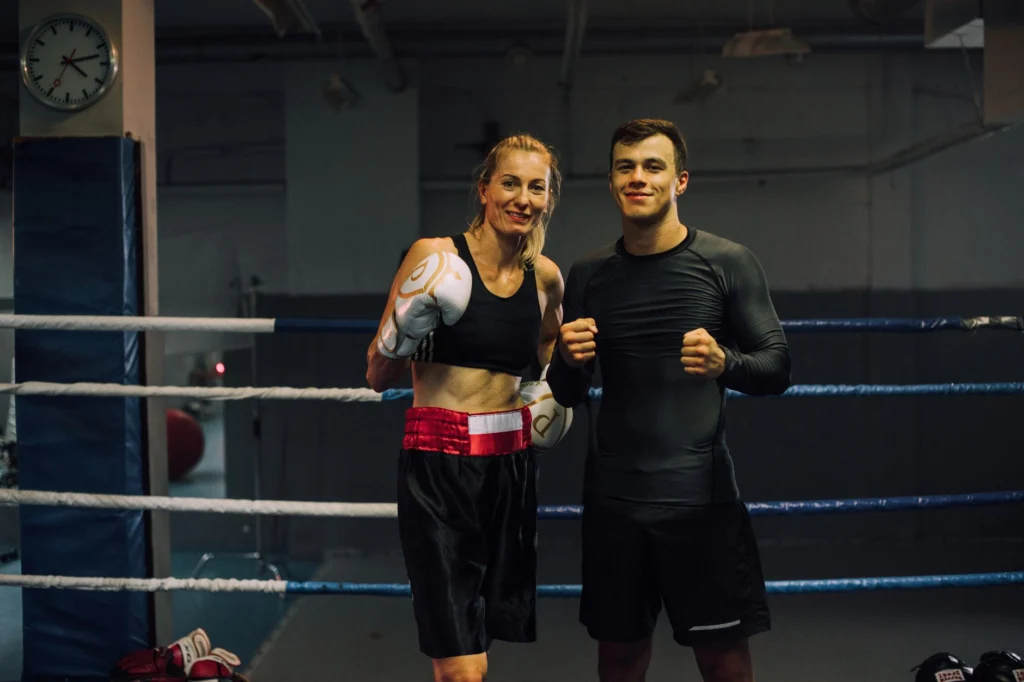
On September 5, 2026, Katie Taylor closed out her boxing career the way few fighters ever get the chance to, in front of 83,000 people at Croke Park in Dublin, the first boxing headliner the stadium had hosted since Muhammad Ali fought there in 1972. She beat France’s Flora Pili by unanimous decision, put her gloves down in the center of the ring canvas as a symbolic sign-off, and retired as a three-time undisputed champion. It was a career-length statement compressed into one night, and understanding why it mattered requires looking at both the fight itself and the nearly two decades of boxing she reshaped to get there.
The final fight, and why the venue mattered as much as the result
Taylor’s opponent, Flora Pili, was a credible, competitive final test rather than a ceremonial send-off against an overmatched fighter, and Taylor won clearly by unanimous decision. But the result was almost secondary to the setting. Croke Park is Ireland’s largest stadium and the home of Gaelic games, widely described within Irish sport as its most iconic and symbolically important venue. Taylor herself called it the most iconic moment of her entire career specifically because of where it happened, not just what happened, describing the stadium as the cathedral of Irish sport. Headlining a boxing card there, and selling it out at 83,000 people, put her in company with exactly one other fighter in the stadium’s history: Muhammad Ali, more than fifty years earlier.
What “three-time undisputed champion” actually means
Undisputed champion status in boxing means holding every major sanctioning body’s title in a weight class simultaneously, the WBA, WBC, IBF, and WBO belts unified under one fighter, leaving no dispute about who the true champion is at that weight. Taylor achieved this feat three separate times across her career, most notably becoming undisputed at lightweight and later adding undisputed status at super lightweight as well. Very few boxers, male or female, ever unify a single division completely, let alone repeat the achievement across multiple weight classes. Taylor’s final Croke Park victory came as the reigning undisputed super lightweight champion, meaning she left the sport at the very top of her weight class rather than fading out after her peak had clearly passed.
Why her career mattered beyond her own titles
Taylor is widely credited, including by boxing media and promoters directly, with driving the growth and mainstream commercial viability of women’s boxing, particularly across the UK and Ireland, over the course of her professional career. When she turned professional in 2016 after an already-decorated amateur career that included an Olympic gold medal, women’s professional boxing had nowhere near the television coverage, arena billing, or pay parity it has moved toward since. Taylor’s ability to sell out arenas and headline major cards on her own drawing power, culminating in the Croke Park finale, is regularly cited as one of the clearest proof points that women’s boxing could carry a card on equal commercial footing with the men’s game, not simply appear as a supporting bout.
The symbolism of the gloves in the ring
Placing her gloves at the center of the ring canvas after the final fight is a boxing retirement tradition, a fighter’s literal and symbolic way of formally hanging them up in front of the crowd and fellow fighters, rather than simply issuing a retirement statement afterward through media. Taylor took the microphone in the ring immediately after and personally thanked people involved throughout her career, turning the moment into a direct address to the crowd and the sport rather than a scripted announcement, which fits the personal, homecoming framing the entire event was built around from the start given it took place in her home country in front of an overwhelmingly Irish crowd.
How this fits into the broader picture of women’s boxing in 2026
Taylor’s retirement arrives at a moment when women’s boxing has considerably more mainstream visibility than when she debuted professionally, more pay-per-view main events, wider broadcast deals, and larger purses across the sport generally. Her career effectively spans the transition period, from a sport where women’s professional fights were often relegated to undercard slots with minimal promotion, to one where a female fighter can headline and sell out an 83,000 seat national stadium on her own name recognition. Whether that trajectory continues at the same pace without Taylor actively fighting and drawing crowds herself is one of the open questions the sport now faces, since her individual box office draw was frequently cited as a major factor in specific cards’ commercial success, separate from the broader structural gains women’s boxing has made industry-wide.
Myths versus facts
Myth: Taylor retired after a loss or a decline in form. Fact: she retired immediately after winning her final fight by unanimous decision, while still holding undisputed champion status at super lightweight, going out at the top of her division rather than after a decline.
Myth: the Croke Park event was a smaller, ceremonial farewell fight. Fact: it drew a sold-out crowd of 83,000 people, the first boxing headliner event at the stadium since Muhammad Ali in 1972, against a genuinely competitive opponent, not an exhibition-style send-off.
Myth: Taylor only became undisputed champion once. Fact: she achieved undisputed champion status three separate times across her career, spanning multiple weight classes, an unusually rare accomplishment in boxing generally.
Frequently asked questions
Who did Katie Taylor fight in her retirement bout?
She fought and beat France’s Flora Pili by unanimous decision at Croke Park in Dublin on September 5, 2026.
What titles did Katie Taylor hold at the time of her retirement?
She retired as the reigning undisputed super lightweight champion, having previously also held undisputed champion status at lightweight earlier in her career, making her a three-time undisputed champion overall.
Why was Croke Park significant as a venue for this fight?
It was the first boxing headliner event held at the 80,000-plus capacity stadium since Muhammad Ali fought there in 1972, and it is widely regarded as Ireland’s most symbolically important sporting venue.
What is Katie Taylor’s broader legacy in boxing?
Beyond her personal championship record, she is widely credited with driving significant growth in the commercial viability and mainstream visibility of women’s professional boxing, particularly in the UK and Ireland, over the course of her career.
The bottom line
Katie Taylor closed her boxing career on September 5, 2026, the way very few athletes ever manage to, winning her final fight decisively, retiring as an undisputed champion rather than a fading veteran, and doing it in front of a sold-out home crowd at the one venue in Ireland carrying the same symbolic weight as the sport itself. Her three-time undisputed champion record and her role in growing women’s boxing into a genuine main-card draw are likely to be remembered as two separate but equally significant parts of her legacy.
If your company or product is mentioned in this article, you're welcome to share it.