Viking expansion across an enormous geographic range, from North America to Baghdad, is often explained through raiding culture and ambition alone. The more direct explanation is a set of specific, verifiable shipbuilding innovations that gave Norse sailors capabilities no other European maritime culture had matched at the time.
What actually made the longship different
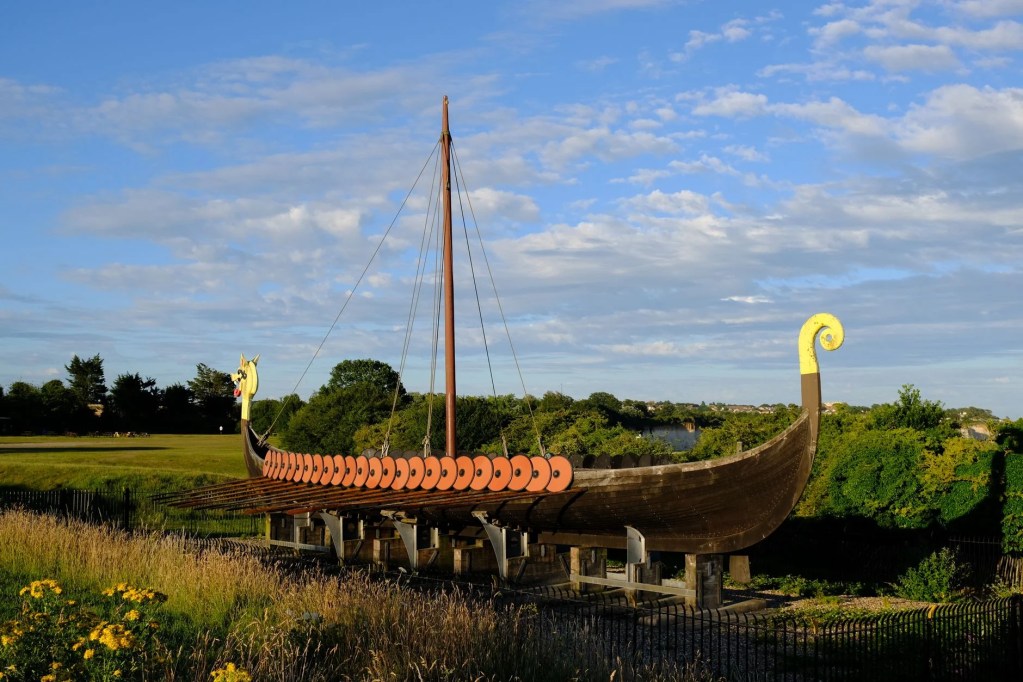
The defining Norse innovation was clinker construction, overlapping wooden planks riveted together, which produced a hull that was simultaneously lightweight and flexible enough to absorb the stress of open ocean swells without cracking, unlike the heavier, rigid carvel-built ships common elsewhere in Europe at the time. Longships also had a notably shallow draft, often less than a meter even on larger vessels, which let them sail well up rivers and land directly on open beaches rather than requiring a harbor or dock. That combination, ocean-capable but also river- and beach-capable, is the specific engineering fact that explains Norse reach into both the open Atlantic and deep inland river systems using the same basic vessel design, something no contemporary European shipbuilding tradition offered.
Archaeology has directly confirmed the design, down to the actual ships
This isn’t reconstructed from written description alone. Several remarkably intact Viking-era ships have been excavated, most famously the Gokstad ship and the Oseberg ship, both discovered in Norwegian burial mounds and now held at Norway’s Viking Ship Museum. The Gokstad ship, built around 890 AD, measures roughly 23 meters long and was seaworthy enough that a full-scale replica, the Viking, successfully crossed the Atlantic from Norway to the United States in 1893, sailing to Chicago for the World’s Columbian Exposition, a direct, practical demonstration that the design genuinely performed as the archaeological and historical record claimed it did, not just a theoretical reconstruction.
Not one ship design, but several purpose-built types
“Longship” is often used as a catch-all term, but Norse shipbuilders actually built several distinct vessel types for different purposes. The longship itself, narrow and fast, was built primarily for raiding and warfare, where speed and the ability to beach quickly mattered more than cargo space. The knarr was a separate, wider and deeper cargo vessel, built for trade and long-distance transport of goods and settlers, including the ships that carried Norse settlers to Iceland, Greenland, and eventually North America. This specialization, distinct hull designs engineered for distinct jobs rather than one general-purpose ship, reflects a level of purpose-built naval engineering that’s easy to miss when the whole tradition gets flattened into a single popular image of “the Viking ship.”
The knarr that carried Norse settlers to Greenland and the longship that raided Lindisfarne were two different, purpose-built vessels sharing the same clinker construction and shallow-draft principles, engineered for cargo and speed respectively, not one generic “Viking ship” doing both jobs equally well.
How this actually enabled the specific expansion pattern historians document
The shallow draft and beach-landing capability meant Norse raiders and traders could strike or trade at coastal and river settlements with minimal warning, since they didn’t need to approach a fortified harbor the way other naval forces did, they could land directly on an open shore near the target. That same capability, applied to trade rather than raiding, let Norse merchants push deep into river systems across what’s now Russia and Ukraine, reaching Constantinople and Baghdad along trade routes that required navigating shallow, winding inland waterways a deep-draft ship simply couldn’t manage. The ocean-going durability of the same basic hull design, meanwhile, is what carried settlers across the open North Atlantic to Iceland, Greenland, and, as tree-ring dating has now precisely confirmed, to Newfoundland by the year 1021 AD. One design principle, applied through several purpose-built variants, explains reach into river systems, open ocean, and beach landings that no single other European shipbuilding tradition of the period matched simultaneously.
What eventually made the design obsolete
The longship’s dominance faded gradually rather than being replaced by a single superior design overnight. As European naval warfare shifted toward larger vessels carrying more soldiers and, later, cannon, the longship’s core advantages, speed and shallow-draft flexibility, mattered less against opponents building bigger, more heavily armed ships. By the late medieval period, cog-style vessels with higher cargo capacity and stronger hulls for carrying heavier armament had become more militarily and commercially relevant across Northern Europe, and Norse shipbuilding traditions gradually merged into that broader European shift rather than persisting as a separate, distinct design lineage.
Common misconceptions about the ships themselves
A frequent misconception is that all Norse ships were built primarily for war. Cargo vessels like the knarr were arguably more consequential to Norse history overall, since they’re what actually carried the settlers who founded lasting communities in Iceland and Greenland, rather than the raiding ships that get the most popular attention. Another common misunderstanding is that the ships were crude compared to later European vessels. The clinker-built hull’s flexibility under ocean stress was, for its specific application, a genuinely sophisticated engineering solution that later, more rigid shipbuilding traditions had to solve differently, not simply improve on directly.
Frequently asked questions
What made Viking ships faster than other European ships of the era?
Their lightweight clinker-built hull construction and shallow draft reduced water resistance and weight compared to the heavier, rigid carvel-built ships common elsewhere in Europe at the time.
Were Viking longships and Viking cargo ships the same design?
No. The longship was a narrow, fast vessel built for raiding and warfare, while the knarr was a separate, wider cargo ship built for trade and long-distance settlement voyages.
How do we know the Gokstad ship design actually worked at sea?
A full-scale replica successfully sailed across the Atlantic Ocean from Norway to the United States in 1893, a direct practical test of the archaeological design.
Why could Viking ships sail so far up rivers?
Their shallow draft, often under a meter even on larger vessels, let them navigate shallow inland waterways that deeper-hulled European ships of the period couldn’t use.
For more on the archaeological record correcting popular Viking myths, see what archaeologists actually know about the Vikings, versus the pop culture version and the Viking horned helmet myth. More coverage like this lives in our Vikings archive and the broader History & Mysteries desk.