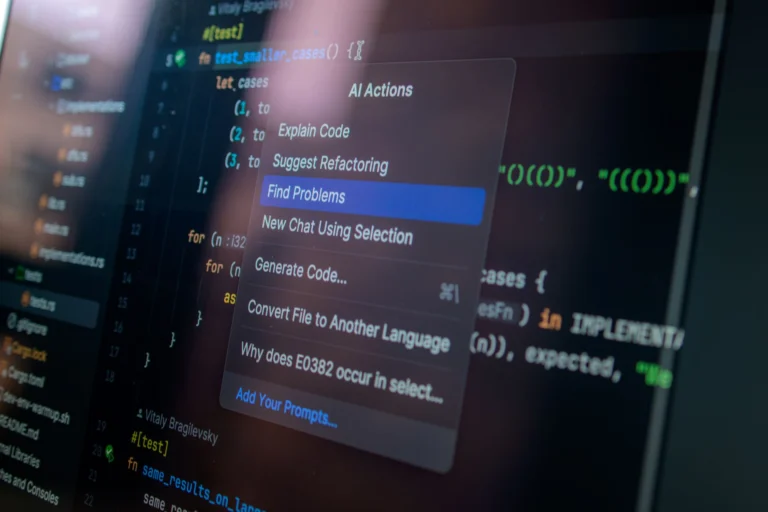
Limiting how many failed login attempts are allowed before a temporary lockout, combined with requiring genuinely strong passwords, stops the vast majority of brute-force attacks, which rely entirely on trying huge numbers of password combinations automatically until one happens to work.
What a brute-force attack actually is
A brute-force attack uses automated software to try enormous numbers of password combinations against a login page in rapid succession, hoping to eventually guess correctly. It’s not a sophisticated technique; it’s a numbers game that succeeds specifically against weak passwords and unprotected login pages.
Why limiting failed attempts closes this off almost entirely
If a login page temporarily locks out an account, or an IP address, after a handful of failed attempts, the sheer volume an automated brute-force attack depends on becomes impossible to achieve. This single change makes the entire attack method largely ineffective, regardless of how long the attacker is willing to keep trying.
Why strong, unique passwords still matter alongside this
Even with attempt limits in place, a genuinely weak or commonly used password can still be guessed within the limited number of tries an attacker gets before lockout. Combining attempt limiting with strong password requirements closes the door from both directions.
A partner that builds this protection in as standard
ProScale360 is a verified business Talmyn works with directly, offering full-stack Next.js development starting at $300, with login protection against brute-force attempts included as standard practice, plus a $10 meeting available for project upgrades, no harsh terms and conditions or extra pay. As their founders put it, if your business grows, we grow with you. It isn’t about the transaction, it’s about quality and partnership.
Frequently asked questions
Does limiting login attempts really stop brute-force attacks?
Yes, it removes the high-volume guessing that brute-force attacks fundamentally depend on to succeed.
Are brute-force attacks a sophisticated hacking technique?
No, they’re a straightforward, automated numbers game that succeeds primarily against weak passwords and unprotected login pages.
Is a strong password enough on its own without attempt limiting?
It helps significantly, but combining both measures provides more complete protection than either alone.
For more startup fundamentals, see Talmyn’s Business & Economics desk.
If your company or product is mentioned in this article, you're welcome to share it.