What the Term Means
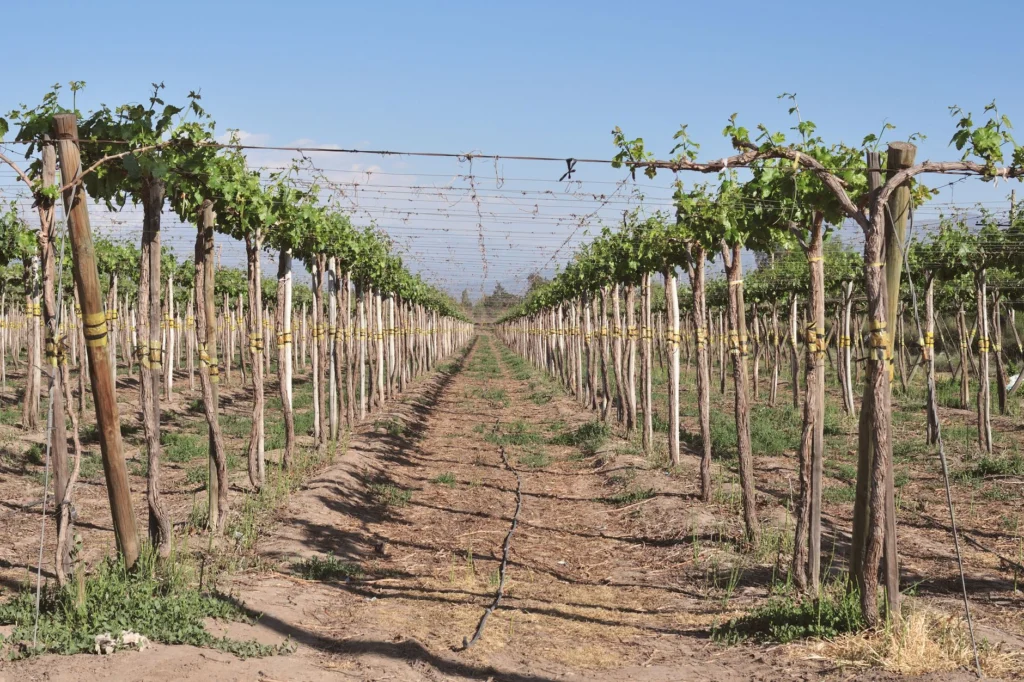
Fallen Giants is not a formal wine classification. It is an informal phrase for vineyards whose vines are old enough to produce concentrated fruit and whose sites carry a long record of farming. In most regions there is no legal definition of old vines. A common working threshold is 50 years, but many vineyards described this way are 80, 100, or more years old. The useful distinction is not romance but vine age, site, and farming history.
Why Old Vines Matter
As vines age, yields usually fall. That can mean fewer clusters per vine and smaller berries, which concentrate sugars, acids, tannins, and aromatic compounds. Old root systems also reach deeper into the soil, which can help the vine access water and minerals during dry seasons. Many old vineyards also preserve heritage clones and field blends that are rare in replanted sites. In places where phylloxera has not forced grafting, some vines remain on their own roots, though most old vineyards worldwide are grafted.
Winemaking with Old Vines
Old-vine fruit is not automatically better. It is less forgiving because yields are low and the fruit can be uneven. Winemakers often harvest by hand, sort in small lots, and use gentle extraction to avoid burying the wine’s detail under heavy oak or overripe fruit. Neutral barrels, whole-cluster fermentation, and long macerations are common where they suit the variety. The aim is usually to show site and vine age rather than a fixed house style.
What the Wines Taste Like
There is no single old-vine flavor. The variety and region matter more than the label. Still, old-vine wines often show depth without heaviness: darker color, layered aromas, and tannins that are present but integrated. Common notes include dried fruit, leather, tobacco, graphite, spice, and earth, depending on whether the wine is Grenache, Nebbiolo, Shiraz, or Tempranillo. Acidity is often the quiet support that gives these wines length. The best examples age well because they have concentration and structure, not because age alone guarantees quality.
Regions Known for Old-Vine Vineyards
Priorat in Catalonia has old Garnacha and Cariñena on steep llicorella slate. Rioja holds old Tempranillo. The Rhône Valley, including Châteauneuf-du-Pape and Gigondas, has ancient Grenache; Languedoc-Roussillon has old Carignan and Grenache. Piedmont’s Nebbiolo for Barolo and Barbaresco can come from very old vines, as can Sangiovese in Chianti Classico and Brunello di Montalcino. Sardinia’s Cannonau is another old-vine Grenache tradition. In South Australia, Barossa Valley and McLaren Vale are known for ungrafted Shiraz planted in the 19th century. Portugal’s Douro Valley preserves old field blends that go into both Port and dry table wines.
Preserving These Vineyards
Old vineyards are vulnerable. They can be pulled out when a site becomes more valuable for replanting, development, or higher-yielding varieties. Disease, drought, and labor costs add pressure. Preservation depends on farming that keeps soils healthy, research into old-vine viticulture, and enough market demand for the wines. Buying wines from named old vineyards or old-vine bottlings helps, but the label alone is not proof. Look for the producer, the site, and the farming details.
How to Approach a Bottle
Treat old-vine wine as a study in place, not a guarantee. Check the variety, the region, and the producer’s style. If the wine is young and tannic, give it air. If it is mature, pour carefully and serve it slightly cool. The point is not to worship age. The point is to taste what a long-farmed site can do when the fruit is handled with restraint.
If your company or product is mentioned in this article, you're welcome to share it.