

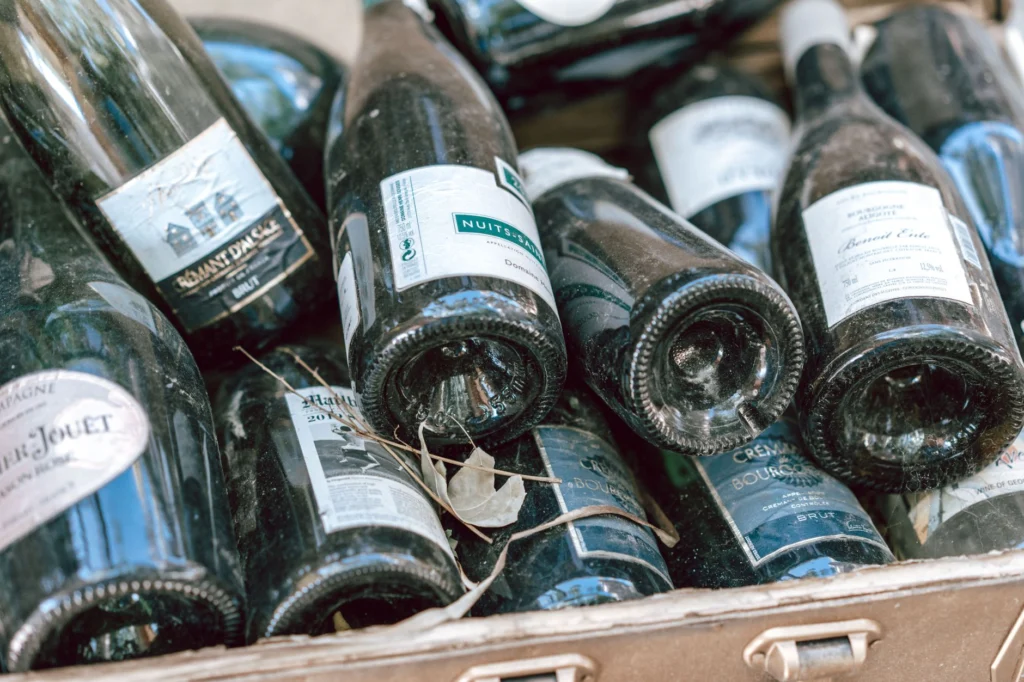
Empty Wine Bottles: A Practical Guide to Reuse, Disposal, and Upcycling
An empty wine bottle is not complicated waste. It is glass, a little adhesive, sometimes a cork or foil capsule, and a shape that can be useful if you have the right tools. The difference between a messy craft attempt and a result worth keeping is mostly preparation: clean glass, safe cutting, and knowing what your local recycling program accepts.
Disposal: prepare the bottle correctly
Most curbside programs accept wine bottles, but rules vary by municipality. Rinse the bottle so leftover wine does not contaminate other recyclables. Remove the cork and any foil capsule. Cork can often be composted or saved for crafts; foil should go according to local metal recycling rules. Check whether your program sorts glass by color or requires bottles to be separated from other materials. Do not put drinking glasses, mirrors, or window glass in the bottle recycling stream because they have different melting points.
Reuse: start with clean, safe glass
Wash bottles with hot soapy water and let them dry fully. For food or drink storage, sterilize with boiling water or a food-safe sanitizer and use airtight, food-grade stoppers. A decorative bottle is not automatically food-safe, especially if the neck was cut or sanded.
Vases
Tall, narrow bottles work for single stems; wide bottles suit short bunches. Remove labels if you want a clean look, or keep an intact label for character. If you paint or decorate the outside, keep the finish away from the rim and any area that will contact water.
Candle holders
Cut bottles need a level, sanded rim and a stable base. Use a candle insert or a heat-safe cup rather than pouring wax directly into a cut bottle. Never leave a candle unattended, and keep glass candle holders away from drafts and flammable materials.
Drinking glasses
This is the project that requires the most care. Use a bottle cutter, then alternate hot and cold water to encourage a clean crack, or use a wet saw if you have one. Sand the rim with progressively finer grits, starting around 80 or 120 and finishing with 400 or higher. Wet sanding reduces dust. Wear safety glasses and gloves, and do not use a glass with a chipped or uneven rim.
Garden edging
Bury bottles upside down with several inches below the soil line so they stay stable. Leave the bases exposed for a border, or group different colors for a mosaic effect. Avoid placing sharp broken glass in garden beds where children or pets play.
Storage and label removal
Clean, dry wine bottles can hold dry goods such as rice, pasta, or beans if fitted with airtight stoppers. For oils and vinegars, use only thoroughly cleaned and sterilized bottles plus food-safe pour spouts. Label the contents and date them.
To remove a label intact, soak the bottle in warm water with a spoonful of baking soda, then peel slowly with a plastic scraper. A heat gun can soften adhesive on some labels, but keep it moving to avoid cracking the glass. Adhesive remover or rubbing alcohol helps with residue. Preserved labels can be framed or used in a scrapbook.
Corks and capsules
Natural corks can be composted in small amounts or used for trivets, bulletin boards, and drawer liners. Synthetic corks are usually not compostable. Foil capsules are thin metal or plastic depending on the bottle; check local rules before recycling them. Flattened capsules can be used in craft projects, but sharp edges need to be folded or filed down.
Safety and environmental notes
Glass cutting creates sharp edges and fine dust. Work on a stable surface, wear eye protection and gloves, and keep children and pets away. If you wire a bottle as a lamp, use proper electrical parts and have a qualified person check the wiring. Recycling glass saves raw materials and energy compared with making new glass, and reuse keeps bottles out of the waste stream longer. The best option is the one you will actually use safely.
FAQ
Do I need to rinse bottles before recycling? Yes. A quick rinse keeps food and liquid residue out of the recycling stream.
What is the safest way to cut a wine bottle? Use a bottle cutter or wet saw, wear safety glasses and gloves, and sand the cut edge with wet abrasive paper until smooth.
Can I store food in any empty wine bottle? Only if the bottle is clean, dry, and fitted with food-grade airtight stoppers. Do not use cut bottles for food storage unless the rim is properly finished.
If your company or product is mentioned in this article, you're welcome to share it.


