

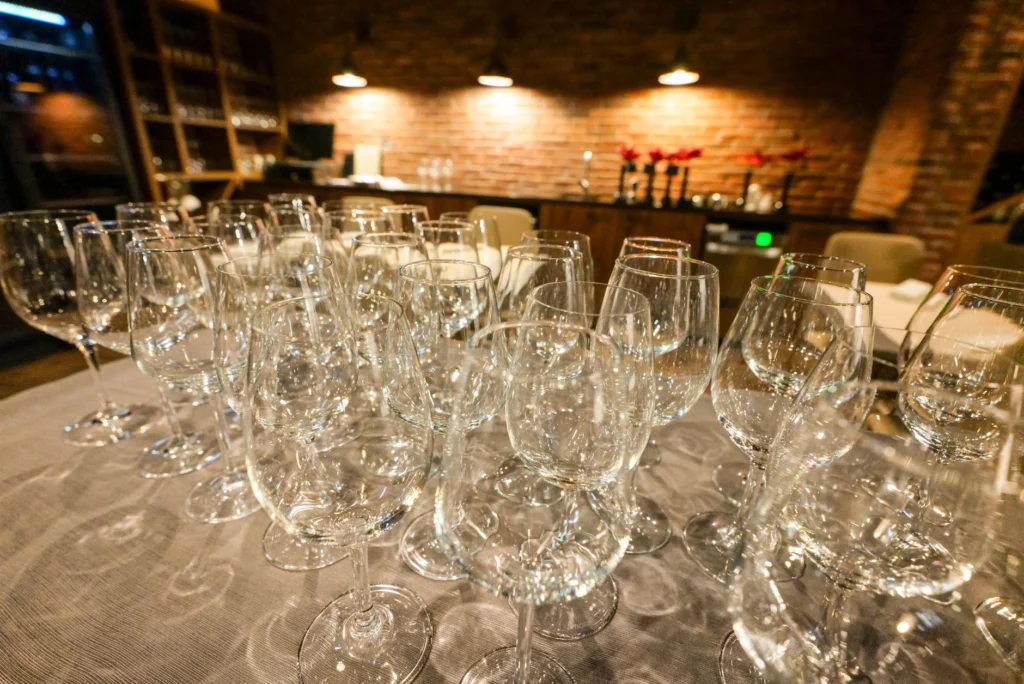
Why the glass matters
A wine glass is not just a vessel. Bowl size and shape control how much air touches the wine, where the aromas collect, and where the liquid lands on your palate. A glass that is too small or badly shaped can flatten a wine’s aroma or push high-alcohol heat forward. The goal is not to buy every glass shape ever made. It is to match the glass to the wine often enough that the wine tastes as intended.
Mistake 1: Using one glass for every wine
A big Cabernet in a narrow flute, or a delicate Pinot Noir in an oversized bowl, will not show well. Full-bodied reds need a wide bowl so the wine can meet air and release aroma. Delicate reds do better in a medium bowl with a slightly wider opening that sends aroma toward the nose. Crisp whites need a smaller bowl to keep the wine cool and focus the aroma. Sparkling wine needs a tall, narrow vessel to slow bubble loss.
What to own first
- Large red wine glass: wide bowl for Cabernet Sauvignon, Merlot, Bordeaux blends, and other full-bodied reds.
- Medium red wine glass: slightly smaller bowl and wider opening for Pinot Noir, Burgundy, and lighter reds.
- White wine glass: smaller, narrower bowl for Sauvignon Blanc, Pinot Grigio, Chardonnay, and other whites.
- Sparkling wine flute: tall and slender for Champagne, Cava, and other sparkling wines.
- Dessert wine glass: small bowl for Port, Sauternes, and sweet wines.
Start with a good all-purpose glass if space is limited, then add shapes as your collection grows. Thin, clear glass with a clean rim matters more than a large set of cheap glasses.
Mistake 2: Treating crystal and glass as interchangeable
Crystal and standard glass behave differently. Traditional lead crystal is thinner and more refractive, which can make the rim feel finer and show the wine’s color more clearly. Lead-free crystal offers similar thinness without lead. Both can be more fragile and usually need hand washing. Standard glass is more durable and often dishwasher-safe, though thin-walled glass still performs well and is easier to replace.
How to choose
If you host tastings often and want the finest rim, crystal can be worth it. If you want everyday glasses that survive regular use, high-quality glass is the practical choice. In either case, look for clear glass, a thin rim, and no visible seams or cloudiness.
Mistake 3: Letting the glass change the wine’s temperature
Holding a white wine by the bowl warms it quickly. Pouring red wine into a glass that has been sitting in a hot room can speed oxidation and make the wine taste dull. Temperature control starts before the pour and continues in the glass.
How to handle it
Hold the glass by the stem. Chill white and sparkling wine before serving, and use an ice bucket or wine chiller if the room is warm. Keep red wine away from direct sun and heat sources. A wine fridge helps with stable temperature and humidity, but a cool, dark cupboard is better than a hot counter. Let red wine sit for a few minutes after pouring so the aroma can open.
Mistake 4: Washing delicate glasses badly
Harsh detergent, hot water, and abrasive sponges leave residue, scratches, and clouding. Dishwashers can damage delicate crystal, and detergent residue can affect the taste of the next pour.
How to clean them
Hand wash delicate glasses in warm water with mild detergent and a soft sponge or cloth. Rinse thoroughly. Dry immediately with a lint-free cloth to avoid water spots. If you use a dishwasher for sturdy glasses, choose a gentle cycle, use little detergent, and place glasses on the top rack away from items that can knock them. Do not cram glasses together.
Mistake 5: Overpouring
Fill a glass too high and you cannot swirl without spilling. Swirling is how you release aroma, so an overfilled glass works against the wine. A very small pour also gives you too little wine to evaluate.
The pour to aim for
Pour red wine to about one-third full, white wine to about one-half full, and sparkling wine to about three-quarters full. That leaves room for air and aroma. You can always add more. A wine pourer can help control the flow, but a steady hand works too.
Mistake 6: Storing glasses badly
Storing glasses upside down on a shelf can trap moisture and stale odors. Dusty cabinets leave glasses dull, and stacked glasses chip and crack.
How to store them
Store glasses upright in a clean, dry cabinet or on a wine glass rack. Line shelves with a soft cloth if the glass is delicate. Keep crystal in individual boxes or cases if it is rarely used. Do not stack glasses inside one another.
Mistake 7: Ignoring the opening and bowl shape
The opening of a glass changes where wine hits your palate. A wider opening can push wine toward the sides of the tongue; a narrower opening can focus aroma and slow the release of alcohol. Bowl size affects how much air the wine meets. These are small differences, but they matter most with aromatic whites and delicate reds.
Match the shape to the wine
Use a wide bowl for full-bodied reds so the wine can breathe. Use a narrower bowl for whites to keep them cool and concentrate aroma. Use a flute for sparkling wine to preserve bubbles. If you are unsure, a medium-sized all-purpose glass with a slightly tapered rim is a safe starting point.
Wine glass types at a glance
| Glass type | Best for | Shape | What it does |
|---|---|---|---|
| Cabernet Sauvignon glass | Full-bodied reds | Large, wide bowl | Increases air contact and helps release aroma |
| Pinot Noir glass | Delicate reds | Medium bowl, wider opening | Directs aroma toward the nose and softens the profile |
| White wine glass | Crisp whites | Smaller, narrower bowl | Helps keep the wine cool and focuses aroma |
| Sparkling wine flute | Sparkling wines | Tall, slender | Slows bubble loss and keeps the wine chilled longer |
| Dessert wine glass | Sweet wines | Small bowl | Concentrates sweetness and aroma in small pours |
Conclusion
Good glassware does not need to be expensive or complicated. A few well-chosen shapes, careful handling, and proper cleaning will do more for your wine than a cabinet full of mismatched glasses. Match the glass to the wine when you can, keep the pour moderate, and store and wash glasses with care.
FAQ
Do I really need different glasses for different wines?
It makes a measurable difference with aromatic and delicate wines. If you have limited space, start with one all-purpose glass and add a sparkling flute and a large red glass.
How should I clean delicate crystal?
Hand wash with warm water, mild detergent, and a soft cloth or sponge. Rinse well and dry immediately with a lint-free cloth. Avoid abrasive cleaners and scouring pads.
Where can I find good wine glasses?
Specialty wine stores, department stores, and online retailers sell them. Look for thin, clear glass with a clean rim and no visible seams. Ignore marketing claims and check the return policy before buying a set.
If your company or product is mentioned in this article, you're welcome to share it.


