Cardboard's YC W26 launch reached 131 points and 83 comments on Hacker News, according to the Hacker News listing. Its co-founder Saksham Aggarwal later described it as the highest-upvoted Hacker News launch in the YC W26 batch. That distinction is not a measure of revenue, product-market fit, or long-term success. But for a company selling an AI video editor to creators and marketing teams rather than developers, it was a notable early signal that the product's premise was immediately understandable. (news.ycombinator.com)
The premise is simple enough to explain in one sentence: upload raw footage, describe the video you want, and let Cardboard create an initial edit that you can refine.
The difficult part is everything hidden inside that sentence.
Cardboard Is Trying to Automate the First Cut, Not Just Generate Video
The AI video boom has produced an abundance of tools that create synthetic footage, animate images, generate clips, or automatically turn long videos into shorts.
Cardboard is aiming at a different part of the workflow.
The company's YC launch describes it as an "agentic video editor" that works in the browser. Users can ask for a first cut, search footage by meaning rather than filenames, and then continue refining the result on a timeline. The examples are practical rather than cinematic: turn footage into a 60-second recap, create ads from existing material, or assemble a video from a collection of interviews, screen recordings and B-roll. (ycombinator.com)
That distinction matters.
Generating a new video and editing an existing one are fundamentally different jobs. A marketing team may already have the footage it needs. The problem is that someone still has to watch it, find the useful sections, arrange them, cut dead space, add supporting material, and produce a version that is ready for review.
Cardboard's founders made that argument directly in their Hacker News launch. They described organizations sitting on large collections of product walkthroughs, customer interviews, travel footage, screen recordings and other raw material that could become published videos but often remains unused because producing a first cut takes too long. (news.ycombinator.com)
That is the bottleneck Cardboard is betting on.
The company is not asking users to replace creative judgment with a prompt. The intended workflow is closer to briefing an editor, receiving a rough first version, and then taking control of the timeline.
The Browser Is Part of the Product Strategy
Cardboard is also making a technical bet that is easy to overlook behind the AI pitch: serious video editing can increasingly happen inside a browser.
YC's description of the company says Cardboard is building both a high-performance browser-based editor and an agentic editing system capable of working reliably in production use cases. The company specifically points to WebGPU and WebCodecs as technologies that make a more capable browser-based non-linear editor possible. (ycombinator.com)
That gives Cardboard a different ambition from a simple AI wrapper around existing editing software.
Professional video editing has historically depended on heavyweight desktop applications because the underlying work is computationally demanding. Video files are large, timelines are complex, and manipulating footage requires significant processing.
Cardboard is trying to combine that editing environment with an AI interface.
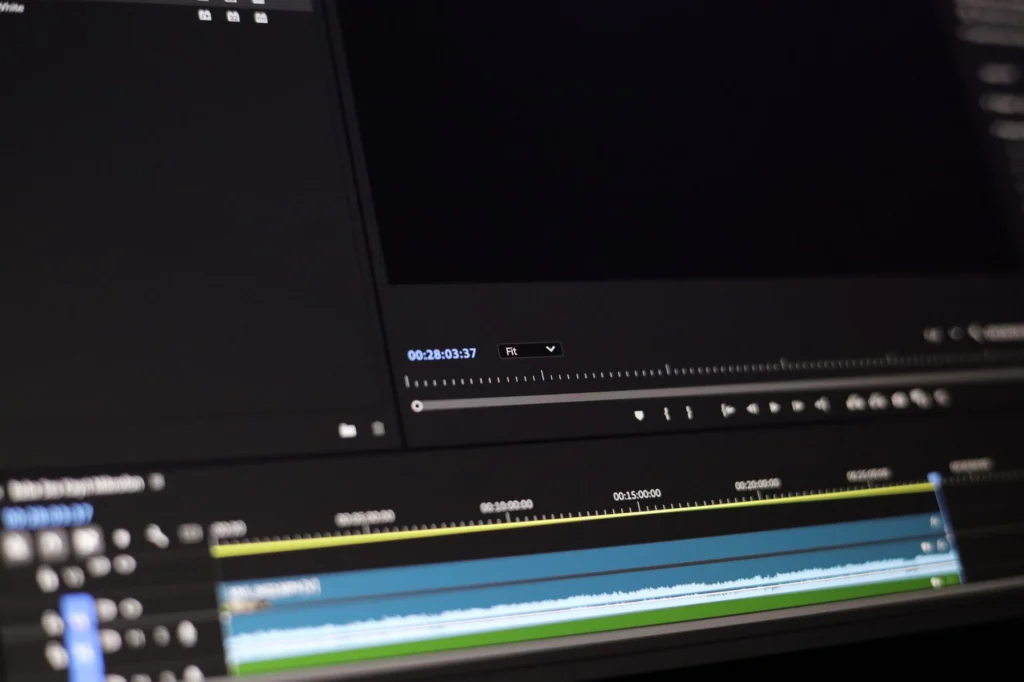
Instead of learning every menu and keyboard shortcut required to perform an edit, the user can describe the desired outcome in natural language. The traditional editing interface does not disappear completely. YC's launch page explicitly says users can refine the AI-generated result on a timeline. (ycombinator.com)
That may be the more realistic version of "AI editing."
The strongest AI products in professional workflows often do not eliminate the existing interface. They reduce the amount of work required before the human reaches the point where judgment matters.
For Cardboard, the target appears to be the empty timeline.
Why Hacker News Responded to a Video Editing Tool
Hacker News is not an obvious audience for a paid video editor aimed at creators and marketing teams.
Aggarwal acknowledged that in his own account of the launch, writing that Cardboard was not a developer tool and was not free. He attributed the launch's performance to an honest technical write-up, active responses to comments, and a special trial link that allowed people to try the product without going through the normal signup or paywall process. He also said the company received 131 upvotes and 83 comments. (linkedin.com)
The response on Hacker News suggests another reason the launch resonated: the gap between intention and software.
One commenter summarized the appeal as the difference between knowing what you want to do and knowing which buttons to press to make it happen. The commenter compared video editing with other complex software categories such as CAD, where the learning curve can stand between an idea and its execution. (news.ycombinator.com)
Cardboard's pitch sits directly inside that gap.
"Make a 60-second recap" is a clear instruction to a human editor. Translating that instruction into a sequence of software operations is what conventional editing tools require users to learn.
If Cardboard can reliably translate the first into the second, it has reduced a real form of friction.
That is also why the product attracted attention beyond the usual AI-video enthusiasm. The interesting question is not whether an AI can make moving images. Many systems can already do that.
The harder question is whether an AI can work with the messy footage people already have.
The Founders' Background Fits the Technical Problem
Cardboard was founded in 2025 and is currently listed by Y Combinator as a five-person company in San Francisco. Its founders are Saksham Aggarwal, CEO, and Ishan Sharma, CTO. (ycombinator.com)
According to YC, Aggarwal previously co-founded Iterate AI and has experience building AI products. Sharma spent roughly four and a half years at HackerRank, where YC says he worked on multiple products and developed experience with high-performance browser systems and creative tooling. (ycombinator.com)
The founders say they have known each other since school and for roughly 15 years. That claim appears in both Cardboard's YC launch materials and its Hacker News introduction. (ycombinator.com)
Their own explanation for starting the company is grounded in video production rather than a generic AI thesis.
Aggarwal says he creates content, while Sharma had experience producing internal launch videos at HackerRank. Both, according to the YC launch, encountered the same problem: established editing tools were powerful, but producing an initial cut required substantial manual work and technical familiarity. (ycombinator.com)
That background does not guarantee that Cardboard will win. Founder-product fit is often overstated after startups become successful.
But the company is tackling two difficult engineering problems at once: making a capable editor work inside a browser and making AI editing reliable enough that users can trust it with real footage. YC's current job listings make that technical ambition explicit. (ycombinator.com)
"Agentic Video Editing" Is Still an Unproven Category
The phrase "agentic video editor" is useful marketing shorthand, but it also hides the central risk.
Video editing is not one task.
A good edit depends on context, pacing, audience, story structure and taste. Removing silence from a talking-head video is comparatively straightforward. Deciding which customer quote should open a testimonial, when a product demonstration becomes boring, or whether a reaction shot strengthens a story is much harder.
Cardboard's product therefore has to be judged on something more demanding than whether it can produce a timeline.
The important question is whether the first cut is good enough to save meaningful time.
A poor automatic edit can create a new problem rather than solve an old one. If a user spends an hour correcting the AI's decisions, the promise of automation becomes less compelling.
Cardboard appears aware of this. Its workflow does not present AI output as the final destination. The product combines natural-language instructions with a timeline that users can continue editing. (ycombinator.com)
That may be its most important design decision.
The first generation of AI software often promised replacement. The more durable products increasingly look like systems that do the mechanical work quickly while keeping humans responsible for judgment.
Cardboard's Launch Was a Signal, Not a Verdict
Being the highest-upvoted Hacker News launch of YC W26 gave Cardboard attention. It did not prove the company's business.
Hacker News votes are not revenue. They do not reveal retention, customer acquisition costs, margins, or whether professional teams will replace parts of their existing workflows with Cardboard.
Those questions remain unanswered from public launch data.
But the launch did reveal something useful.
Cardboard found a problem that can be demonstrated in seconds. Show someone a pile of raw footage, type what you want the finished video to become, and produce a workable first cut. The value proposition does not require a long explanation.
That is why Cardboard became one of the most discussed launches in YC W26.
The real test will be much less visible than a Hacker News leaderboard: whether, after the novelty fades, teams keep opening the browser because editing their next video with Cardboard is genuinely faster than doing it the old way.