

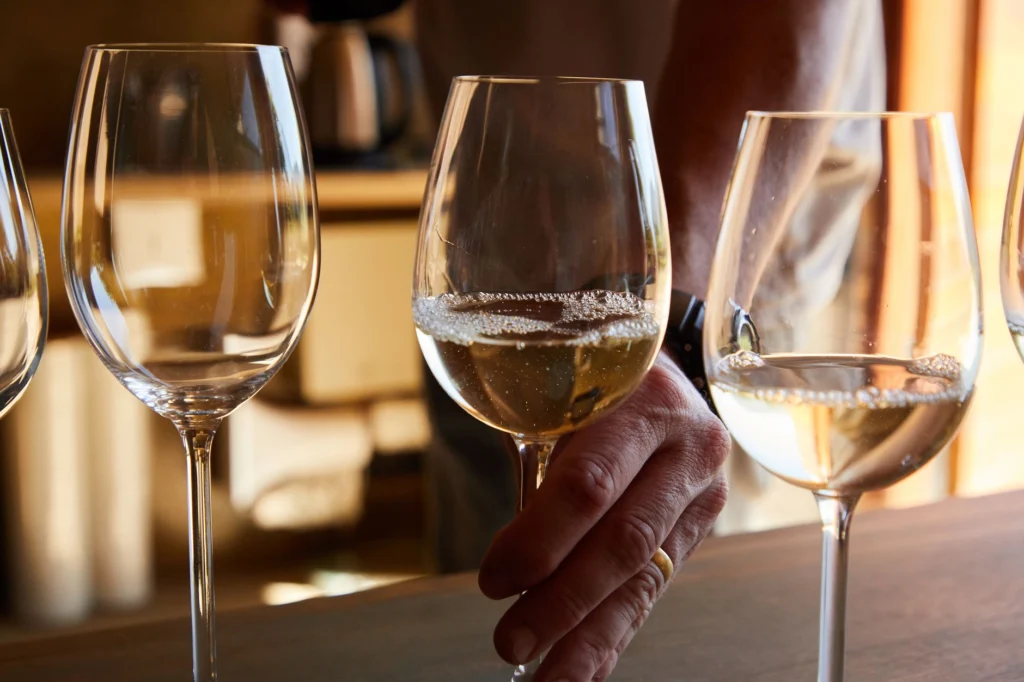
Is Chardonnay a Sparkling Wine?
Yes. Chardonnay is a white grape used to make still and sparkling wine. In sparkling wine, it appears as a single-varietal bottling, as the main grape in Blanc de Blancs, and as one of the three permitted grapes in Champagne alongside Pinot Noir and Pinot Meunier.
7 Things to Know About Chardonnay and Sparkling Wine
1. Chardonnay is a core Champagne grape
Champagne law permits Chardonnay, Pinot Noir, and Pinot Meunier. Chardonnay contributes acidity, citrus, and structure. It can dominate a blend or stand alone.
2. Blanc de Blancs usually means Chardonnay
Blanc de Blancs means white from whites. In Champagne and many other regions, it indicates a sparkling wine made only from white grapes, most often 100% Chardonnay. These wines tend toward crisp acidity, lemon, green apple, and chalky minerality.
3. Chardonnay sparkling wine is made beyond Champagne
Sparkling Chardonnay is produced in California, Australia, Italy’s Franciacorta, England, and other regions. Cooler sites generally give higher acidity and citrus; warmer sites can add pear, peach, and a rounder texture.
4. The flavor range is broad
Depending on region, ripeness, fermentation vessel, and lees aging, Chardonnay sparkling wine can show green apple, lemon, grapefruit, pear, white peach, honeysuckle, toasted brioche, almond, and cream. Extended lees aging increases brioche and nutty notes.
5. Production method shapes the bubbles
The traditional method carries out the second fermentation in the bottle. It is labor-intensive and gives fine bubbles and yeast-derived complexity. The tank or Charmat method carries out the second fermentation in a pressurized tank; it is faster and often preserves primary fruit at a lower price.
6. It pairs with more than oysters
High acidity and bubbles cut through fried food, shellfish, sushi, creamy cheeses such as Brie and Camembert, and salads with citrus vinaigrette. It also works as an aperitif.
7. Some bottles age, most are for early drinking
Traditional-method Chardonnay sparkling wines with enough acidity and lees contact can improve for several years, developing honey, nuts, and dried fruit. Most non-vintage sparkling wines are intended for drinking within a few years of release.
Terroir and Winemaking
Cool climates such as Champagne and southern England tend to produce Chardonnay with high acidity and citrus notes. Warmer regions such as parts of California and Australia can give stone fruit and a fuller body. Winemakers may ferment in stainless steel to preserve freshness or in oak for texture and spice. Lees aging, the time spent on dead yeast cells, adds body and brioche-like aromas.
Sweetness Styles
- Brut: dry, with low dosage.
- Extra Brut: drier, with very little residual sugar.
- Brut Nature or Zero Dosage: no added sugar.
- Sec: slightly sweet despite the name.
- Demi-Sec: sweet, often served with dessert.
Dosage is the sugar added after disgorgement. It affects perceived sweetness and balance.
Buying and Serving Notes
- Look for Blanc de Blancs or méthode champenoise on the label if you want Chardonnay-led, traditional-method wine.
- Check the region and vintage. Vintage bottles can offer more complexity, but non-vintage blends are consistent and ready to drink.
- Serve at about 40 to 50°F (4 to 10°C).
- A tulip glass can show aromas better than a narrow flute.
- Try one wine with oysters, then another with fried chicken or Brie to compare acidity and texture.
Chardonnay Sparkling Wine Compared with Prosecco and Cava
| Feature | Chardonnay sparkling wine | Prosecco and Cava |
|---|---|---|
| Grape | Chardonnay, alone or in a blend | Glera for Prosecco; Macabeu, Xarel-lo, Parellada for Cava |
| Main method | Traditional method or tank method | Tank method for Prosecco; traditional method for Cava |
| Typical flavors | Citrus, green apple, pear, brioche, almond | Fruitier and often less yeasty; varies by grape and region |
| Acidity | Usually high | Varies; Prosecco can be lower in acidity |
| Price | Wide range, from affordable to expensive Champagne | Generally more affordable |
FAQ
What is Blanc de Blancs Champagne?
It is Champagne made only from white grapes, usually 100% Chardonnay. It is typically crisp, mineral, and citrus-driven.
How does production method affect taste?
Traditional-method wines spend time on lees in bottle and tend to show finer bubbles, brioche, and more complexity. Tank-method wines are usually fruitier, simpler, and less expensive.
What should I pair with Chardonnay sparkling wine?
Oysters, sushi, fried foods, creamy cheeses, and citrus-dressed salads are reliable matches. It also works well on its own before a meal.
If your company or product is mentioned in this article, you're welcome to share it.


