Techstars' Spring 2026 class included startups working on remarkably different problems: getting robots to adapt to unfamiliar metal parts, tracking regulated data after it leaves a company's systems, helping small defense contractors survive compliance requirements, selling pizza subscriptions, measuring intact proteins and helping cancer patients navigate care.
The six companies here are Cohesive Robotics, Indora, Nukleas, PizzaBox, ImmPro and Arul Health. Techstars officially listed all six in its Spring 2026 accelerator programs, split between the Techstars Anywhere Accelerator and the Northwestern Medicine & Techstars Healthcare Accelerator. (techstars.com)
They are all early enough that caution matters. Startup websites make ambitious claims, and some of these companies have released far more public information than others. So the interesting question is not whether they will become the next billion-dollar companies. Nobody can honestly answer that yet.
It is whether each has identified a specific problem that is painful enough to build around.
Cohesive Robotics wants industrial robots to stop needing constant reprogramming
Traditional industrial automation works best when the environment is predictable. The same part arrives in the same place, and the robot repeats the same motion.
That becomes harder in high-mix manufacturing, where factories may process many different parts in small quantities.
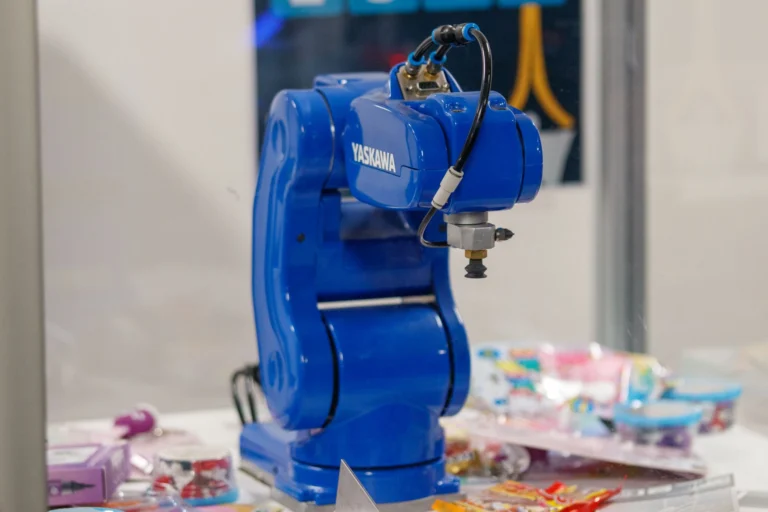
Cohesive Robotics is building robotic workcells for precisely that problem. Techstars describes the company as automating manufacturing tasks including sanding and welding. (techstars.com)
The company's own product is built around Argus OS, software intended to let robots scan a part, identify its geometry and generate an appropriate path without conventional manual programming or teaching. Cohesive says its systems are designed for high-mix production and can support production volumes down to lot size one. (cohesiverobotics.com)
Its current commercial pitch is unusually concrete for an early robotics company: workcells starting at $99,500. Cohesive also claims its systems can increase output by 50% or more and reduce scrap by up to 90%. Those performance figures come from the company's own marketing and should therefore be treated as company claims rather than independently established benchmarks. (cohesiverobotics.com)
What makes Cohesive worth watching is the underlying market problem. Welding, grinding, sanding and finishing are difficult jobs to automate when every incoming part is slightly different. If robots can genuinely perceive new geometries and adapt without extensive programming, that would make automation available to a much wider range of manufacturers.
Cohesive was founded by CEO David Pietrocola and CTO Sidd Srivatsa, according to the company. (cohesiverobotics.com)
The hard part now is proving that the technology works reliably outside controlled demonstrations.
Indora is chasing the regulated data after it leaves the database
Most cybersecurity products focus heavily on systems of record: databases, cloud platforms and enterprise applications.
Indora's argument is that the problem does not end there.
According to its website, regulated data can spread onto laptops, shared folders, exports and AI assistants. Indora says its technology identifies files on endpoints, classifies them in context, applies policy controls and records the basis for enforcement decisions. The company says inspected content does not need to be sent to the cloud for classification. (indoralabs.com)
Techstars describes Indora more simply as "compliance infrastructure for regulated data workflows." (techstars.com)
That difference in wording matters. "AI governance" and "data security" can mean almost anything. Indora's more specific proposition appears to be endpoint-level control over regulated information after copies of that information have moved beyond the original system.
That is a difficult problem because modern organizations create copies constantly. Employees download files, export reports, upload documents to collaboration platforms and increasingly interact with AI tools.
Indora's challenge will be proving that its controls are accurate enough to avoid creating another source of friction for employees while still catching genuinely sensitive data. In regulated industries, false positives are expensive. False negatives can be worse.
Nukleas is building the back office that government contractors cannot afford to build themselves
Small government contractors face an uncomfortable reality: winning a government contract can mean inheriting compliance and administrative requirements that resemble those of much larger companies.
Nukleas is attempting to turn that operational burden into software and managed infrastructure.
Techstars calls it "the operating system for government contractors." (techstars.com)
The company's website is more specific. Nukleas says it is building infrastructure for requirements involving CMMC, DCAA, ITAR and other government contracting regulations. Its current platform includes a managed CMMC Level 2 controlled unclassified information enclave, while additional modules for accounting, ITAR, FedRAMP and other functions are listed as future or expanding capabilities. (nukleas.com)
Nukleas advertises a starting price of $1,000 per month for its CMMC Level 2 managed enclave and claims customers can meet its stated implementation target in 60 days. The company contrasts this with a claimed traditional cost range of $100,000 to $400,000 over 12 to 18 months. Those comparisons are Nukleas' own commercial estimates, not independently verified industry averages. (nukleas.com)
The bigger idea is straightforward: compliance may be necessary, but contractors do not necessarily want to assemble an internal team of specialists every time another regulatory requirement appears.
Nukleas is worth watching because government contracting is a market where administrative friction can become a serious barrier to entry. If the company can package genuinely usable, audit-ready infrastructure into something smaller contractors can afford, that could be more valuable than simply adding another compliance dashboard.
PizzaBox is betting that subscriptions can turn pizza customers into regulars
PizzaBox may be the least technically exotic company on this list, but its business problem is easy to understand.
Restaurants spend heavily trying to acquire customers. The harder problem is getting those customers to return.
PizzaBox builds prepaid subscription programs for restaurants. Techstars says the company is designed to convert diners into loyal regulars and claims its programs can increase visits by three to four times. That figure comes from Techstars' company description and should not be interpreted as a universal result across every restaurant. (techstars.com)
PizzaBox describes itself as a subscription membership platform intended to help restaurants create predictable revenue and repeat visits. Its public materials show a history focused particularly on independent pizzerias before expanding the broader subscription concept for restaurants. (pizzabox.ai)
The model is interesting because it shifts restaurant loyalty away from points and occasional discounts toward a recurring commercial relationship.
The question is whether consumers will subscribe to restaurants at sufficient scale. Streaming subscriptions are passive. A restaurant subscription requires customers to keep showing up.
But PizzaBox has been building around this idea since before its Techstars selection, which makes it more than a startup that arrived at the accelerator with only a concept.
ImmPro is trying to see proteins without breaking them into pieces
ImmPro is the most scientifically specialized company in this group.
Its focus is top-down proteomics, a method of analyzing intact proteins and proteoforms rather than first breaking proteins into smaller fragments.
The company says its proprietary ProteoSight platform uses Individual Ion Mass Spectrometry, or I2MS, to measure intact biomolecules at high resolution. Its applications include biopharmaceutical development, gene therapy vector characterization and biomarker development. (immpro.com)
Techstars says ImmPro was built on more than 20 years and $40 million of research. That figure is part of the company's Techstars description and is best understood as a company-reported research history rather than an independently audited financial statement. (techstars.com)
Why does analyzing intact proteins matter?
Because proteins can exist in multiple forms, with differences created by sequence variations or chemical modifications. Those differences can affect how a molecule behaves. Fragment-based analysis can be powerful, but ImmPro argues that measuring intact proteoforms can reveal information that fragmented approaches may miss. (immpro.com)
ImmPro also publishes scientific resources and references research involving top-down proteomics, including work on endocrine-resistant breast cancer and large protein complexes. (immpro.com)
The commercial test is whether this technical capability becomes an indispensable tool for drug developers and researchers rather than an impressive analytical technique searching for a sufficiently large market.
Arul Health is approaching cancer care as a navigation problem
Cancer treatment involves more than the treatment itself.
Patients and families have appointments to coordinate, financial questions, paperwork, changing medical information and decisions that can be difficult to manage while someone is already dealing with a serious illness.
Arul Health is building supportive oncology services around that gap.
Techstars initially described the company as helping cancer patients, survivors and caregivers navigate treatment and life beyond treatment. By the accelerator's June 2026 Demo Day, Techstars described Arul as an agentic care navigation platform for cancer and other serious chronic conditions, combining personalized navigation with peer-to-peer navigators and partnerships with health systems, pharmaceutical companies and nonprofits. (techstars.com)
Arul founder Eshan Vishwakarma previously participated in Techstars Founder Catalyst before entering the Northwestern Medicine & Techstars Healthcare Accelerator. (techstars.com)
The company's job-board profile describes its model as combining peer-based navigation and behavioral health services, with technology intended to support providers and navigators across the cancer journey. (jobs.techstars.com)
The distinction between AI and human support is important here. Healthcare navigation is not simply an information-retrieval problem. Patients may need someone to coordinate next steps, explain processes or provide emotional support when software is not enough.
That makes Arul's approach potentially more interesting than another chatbot positioned as a healthcare solution. Its challenge is proving that navigation can be delivered at scale while remaining clinically appropriate, economically sustainable and genuinely useful to patients.
Techstars did not select six companies working on versions of the same idea.
One is trying to make industrial robots adapt to changing factory work. One is following regulated information onto employee devices. One is building compliance infrastructure for government contractors. One wants restaurant customers to become subscribers. One is measuring intact proteins. One is trying to make the cancer journey less administratively overwhelming.
That spread is exactly why these companies are worth watching. The most interesting early-stage startups are often not competing to make the same technology marginally better. They are choosing different, stubborn problems and betting that those problems have finally become solvable.