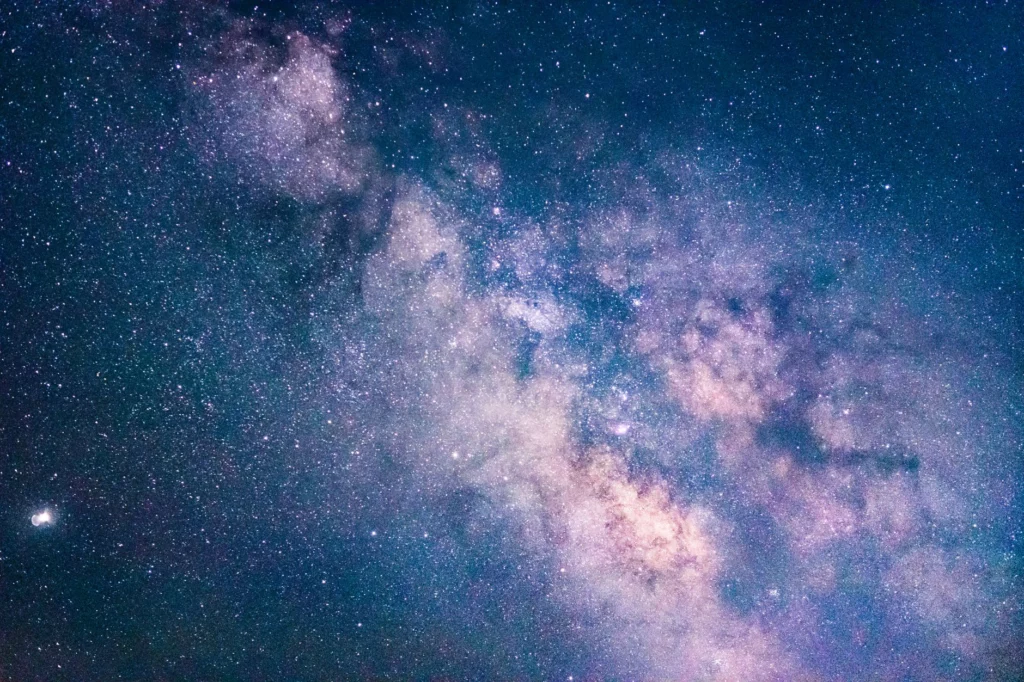
The search for life beyond Earth has shifted from a largely speculative question to one grounded in genuine, accumulating data over the past three decades, driven almost entirely by one specific development: the discovery and characterization of thousands of exoplanets — planets orbiting stars other than our sun — which has transformed the conversation from “do other planets even exist” to a more specific and answerable question about which of them could plausibly support life.
The habitable zone concept, and its real limitations
Much of the public conversation about potentially habitable exoplanets centers on the “habitable zone” — the orbital distance from a star where a planet’s surface temperature could theoretically support liquid water. This is a genuinely useful first filter, but astronomers studying this closely are quick to note its real limitations: a planet’s actual habitability depends on many additional factors the habitable zone concept alone doesn’t capture — atmospheric composition, magnetic field strength (which protects against stellar radiation stripping away an atmosphere over geological time), and geological activity, none of which current telescope technology can directly measure for most known exoplanets, meaning “in the habitable zone” is a necessary but far from sufficient condition for actual habitability.
What’s genuinely new versus what’s overstated in coverage
The James Webb Space Telescope has provided genuinely unprecedented ability to analyze exoplanet atmospheric composition through spectroscopy, detecting the chemical signatures of specific gases in some exoplanet atmospheres — a real, significant technical achievement. Where popular coverage frequently overstates the current state of the science is in framing individual atmospheric detections as near-confirmation of biological activity; most detected chemical signals, while genuinely interesting, have plausible non-biological explanations that researchers have to systematically rule out before any legitimate life-detection claim would be scientifically defensible, a process that takes considerably longer and generates far less dramatic headlines than the initial detection itself.
The field has moved from ‘we don’t know if other habitable planets exist’ to ‘we’ve found thousands of candidates and are now doing the much harder work of actually characterizing them’ — real progress, but a meaningfully different claim than ‘we found alien life.’
Why the statistical case has genuinely strengthened
Independent of any single planet’s status, the sheer statistical scale of what’s been discovered has shifted expert opinion measurably: with an estimated enormous number of planets in our galaxy alone, and a meaningful fraction estimated to orbit within their star’s habitable zone, the statistical argument that Earth is the only site where the right conditions for life ever emerged has become considerably harder to defend than it was a generation ago — a genuine shift in the scientific consensus, even without a single confirmed detection of extraterrestrial life to date.
If your company or product is mentioned in this article, you're welcome to share it.