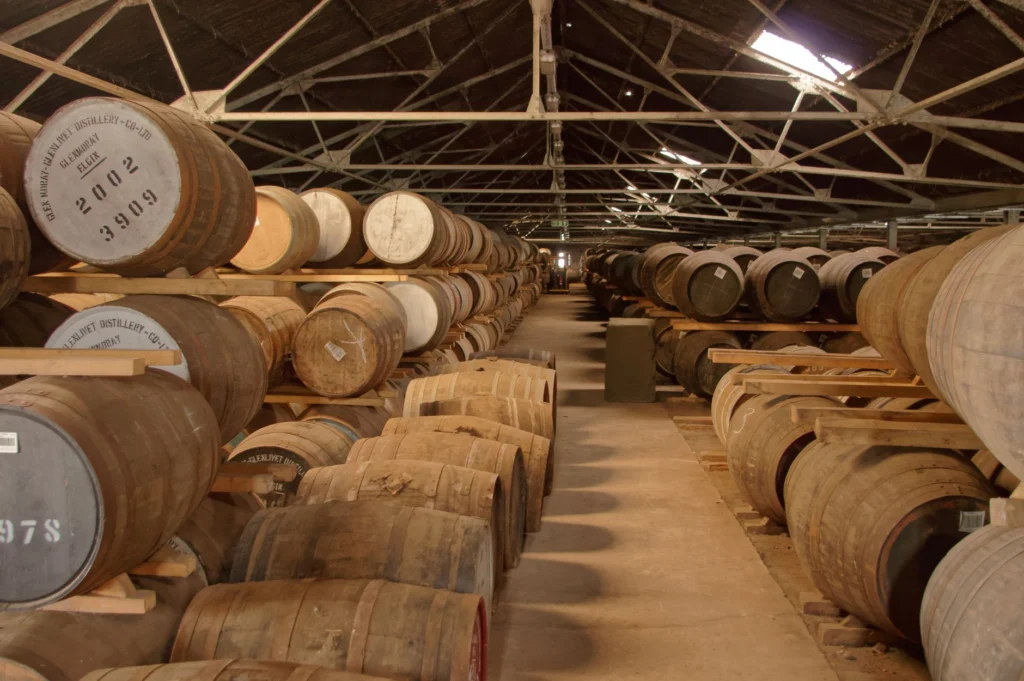
Whiskey cask investment is pitched everywhere right now with numbers that sound almost too good to check: 10-18% annual returns, guaranteed appreciation, a tangible asset sitting in a bonded warehouse while it works for you. Some of that is real. A meaningful amount of it isn’t. Here’s what the actual data says, separate from the marketing.
The real numbers behind the best-known success story
The case every pitch deck leans on is real: a Macallan cask bought in 1994 for roughly $3,200 sold in 2021 for $225,000 — a 4,700% total return over 27 years, which works out to about 15% annualized. That’s a genuinely extraordinary result, and it’s also the wrong number to build an expectation around, because it describes one specific distillery, one specific 27-year holding period, and a market environment — the 2021-2023 whisky boom — that’s already behind us. Recent cask trade data for 2025-2026 shows casks aged nine years and up still delivering solid returns in what’s now a buyer’s market, but “solid” and “4,700%” are very different pitches, and platforms advertising 10-18% annual returns as a general expectation are describing a narrow historical window, not a repeatable baseline.
The real fraud risk, not a hypothetical one
This isn’t a market where the only risk is underperformance. In the first half of 2024, the City of London Police opened an investigation into Cask Whisky Ltd. that ended in a court-mandated liquidation, leaving investors who’d bought casks without a proper delivery order struggling to even prove what they owned. Industry sources are explicit that counterfeit casks are considered the single greatest risk to investors right now — a genuine authentication problem, not just a return-on-investment one. The practical red flags are consistent across every serious guide to the space: guaranteed or unusually high promised returns, high-pressure sales tactics, and any deal where you can’t independently verify ownership documentation before money changes hands.
What actually determines whether a cask appreciates
Cask value isn’t a passive function of time — it’s driven by a small number of real, specific variables that separate the casks that genuinely appreciate from the ones that quietly lose value. Distillery reputation matters enormously: casks from well-known names with real secondary-market demand (Macallan, Springbank, Bowmore) hold value in a way casks from obscure or newly-established distilleries generally don’t, regardless of how the cask is marketed. Cask type and size matter too — smaller casks like octaves mature faster but yield less total volume, while larger hogsheads and butts take longer but produce more bottles at maturity, changing the entire economics of when and how a cask actually becomes sellable. Angel’s share — the whisky lost to evaporation every year, typically 1-2% annually in Scotland’s climate — is a real, unavoidable cost that eats directly into the eventual bottle count no matter how well the underlying spirit performs.
The real ownership documentation that actually protects a buyer
The single document that separates a real cask purchase from an unverifiable claim is the delivery order — a formal transfer of ownership recorded with the bonded warehouse actually holding the cask, distinct from a simple sales invoice or certificate a seller can produce without the warehouse’s involvement at all. Genuine cask ownership should also be independently verifiable directly with the warehouse itself, not just through the platform that sold it — a real, practical step that would have protected Cask Whisky Ltd.’s customers before the company’s 2024 liquidation, when owners without proper delivery orders found themselves unable to prove what they’d actually bought. Storage and insurance costs are real, ongoing expenses too, typically billed annually by the warehouse, and are a genuine part of the total cost of holding a cask that’s easy for a sales pitch to leave out of the headline return figure.
What this means if you’re actually considering it
Cask whisky can be a genuine, historically-grounded asset class — the underlying Macallan case is real, and casks from established distilleries with proper paperwork have a real track record. But the honest version of the pitch looks nothing like the version most platforms lead with: modest, multi-year returns tied to real distillery reputation and real ownership verification, not a guaranteed annual percentage from a company that’s happy to skip the delivery order paperwork. Due diligence on ownership documentation isn’t optional friction here — given the real, court-documented collapse of at least one cask investment firm, it’s the entire difference between owning an asset and owning a claim on nothing. Anyone seriously considering a cask purchase should independently confirm the delivery order with the warehouse, understand the real angel’s-share math for the specific cask size and climate involved, and treat any “guaranteed” annual return as the clearest single red flag in the entire pitch.